

TruDiagnostic is the deepest consumer epigenetic test on the market. It does not read the letters of your DNA. It reads the chemical marks on top of them and uses peer-reviewed algorithms to estimate how old your body is at the cellular level. At $499 one-time or $249 on Subscribe & Save, it is worth the price if you plan to retest and act on the data; if you only want a one-time curiosity score, the cheaper options in the comparison table below make more sense.
Below: what you get for the money, the science behind the numbers, how TruAge compares to other biological-age tests in 2026, and who should buy versus skip.
Our Verdict
At $499 one-time (or $249 on Subscribe & Save), TruDiagnostic is the deepest consumer epigenetic test available. It is worth the price for buyers who plan to retest every three to six months and use the data to guide diet, exercise, sleep, or supplementation decisions. It is overkill as a one-time curiosity purchase. A cheaper saliva-based option like Elysium Index or Tally Health makes more sense for a single snapshot.
Key Takeaways
- It measures biological age, not genetic ancestry. This is an epigenetic test that reads chemical modifications on your DNA, not the DNA sequence itself. It tells you how old your body acts, not where your family came from.
- The report is detailed. You get a biological age score (OMICmAge), a pace-of-aging measurement (DunedinPACE), 11 organ-system ages (SYMPHONYAge), a methylation-based telomere-length estimate, immune cell profiles, a Fit Age report, and 75+ longevity biomarkers.
- The science is peer-reviewed but still evolving. TruDiagnostic uses algorithms published in eLife, Nature Aging, and Genome Biology by groups at Duke, Harvard, and Yale. A 2025 Nature Communications paper comparing 14 epigenetic clocks confirms there is no single gold standard.
- The price is steep but tracking-friendly. $499 one-time, $249 per test on Subscribe & Save, or $849 for the TruAge + TruHealth combo. The subscription is built for the retest-every-quarter use case.
- First-party kit walkthrough planned for v2. Our editorial team has not yet completed an in-house TruAge order. Real report screenshots and our own biological age scores will be added in the next update.
What Is Biological Age?
Biological age is a model-based estimate of how old your body appears at the cellular level, calculated from the chemical state of your DNA rather than the calendar. Two people born the same year can have biological ages that differ by a decade depending on lifestyle, environment, and genetics, which is why researchers consider it a more informative predictor of health outcomes than chronological age alone.
The underlying biology is DNA methylation. Your DNA sequence, the A, T, C, G letters that spell out your genome, stays largely the same throughout your life. What changes is the layer of chemical tags sitting on top of it. These tags, called methyl groups, attach to specific locations on the DNA strand and can influence how genes are expressed without altering the sequence itself. The locations where methylation occurs are called CpG sites, places in the genome where a cytosine nucleotide is followed by a guanine.
Methylation patterns change predictably with age and shift in response to diet, exercise, stress, sleep, infection, and environmental exposures. By reading the methylation state at hundreds of thousands of CpG sites, researchers build statistical models that estimate how old a person’s tissues “look” biochemically. That estimate is biological age. The National Human Genome Research Institute describes methylation as one of the most well-studied epigenetic modifications, and a foundational PMC review establishes its role across aging, rejuvenation, and age-related disease.
Chronological age is fixed; biological age is not. The point of an epigenetic test is to find out whether the gap between them is moving in the right direction, and what you can do about it.
How Do Epigenetic Clocks Work?
Epigenetic clocks are statistical models that translate methylation patterns into an age estimate. They have evolved through three rough generations since 2013, each trained on a different target, and later generations generally do better at predicting disease, though no single clock has emerged as the gold standard.
First generation (2013): Horvath and Hannum
The field opened with two papers in 2013. Steve Horvath’s Genome Biology paper introduced a multi-tissue clock built on 353 CpG sites that could estimate chronological age across more than 30 human tissue types. The same year, Gregory Hannum’s Molecular Cell paper described a 71-CpG clock trained specifically on blood. Both were trained to predict chronological age from methylation, and both still serve as foundational reference points. Their weakness: predicting calendar age is not the same as predicting health.
Second generation (2018–2019): PhenoAge and GrimAge
The next leap came when researchers stopped training clocks to predict birthdays and started training them to predict things people actually care about: disease, mortality, healthspan. Morgan Levine’s PhenoAge (2018, Aging) used 513 CpG sites trained on a composite of nine clinical biomarkers and mortality outcomes, predicting disease risk more strongly than first-generation clocks. Ake Lu and Steve Horvath’s GrimAge (2019, Aging) went further, training on methylation-based surrogates for smoking and twelve plasma proteins. GrimAge is one of the strongest predictors of all-cause mortality in the published literature and has held up across independent validation cohorts.
Third generation (2022): DunedinPACE
DunedinPACE is the clock TruDiagnostic features most prominently, and for good reason. Published by Daniel Belsky and colleagues in eLife in 2022, DunedinPACE does not report a static age. It reports a pace: how fast you are biologically aging per chronological year. It was trained on the Dunedin Study, a New Zealand birth cohort followed for more than four decades, which gives it a validation foundation few other clocks can match.
Where TruAge fits: OMICmAge and SYMPHONYAge
TruDiagnostic’s headline biological-age score is OMICmAge, a clock its research collaborators describe in Nature Aging (2026). OMICmAge is a multi-omic-informed DNA-methylation model: it uses methylation-derived proxies for proteomic, metabolomic, and clinical signals to build a richer estimate, but the TruAge assay itself is still a methylation test; it does not measure your proteins, metabolites, or medical records directly. For the 11-organ-system breakdown, TruDiagnostic uses an approach related to Systems Age, published in Nature Aging in 2025, a single blood methylation test that quantifies aging heterogeneity across brain, heart, liver, kidney, lung, immune, inflammatory, blood, musculoskeletal, hormone, and metabolic systems. TruDiagnostic brands its version SYMPHONYAge.
How well does any of this work? A 2025 Nature Communications paper provides the most useful answer to date. The authors compared 14 epigenetic clocks against 174 incident disease outcomes in nearly 19,000 individuals. The headline finding: second- and third-generation clocks (PhenoAge, GrimAge, DunedinPACE) generally outperform first-generation clocks for disease prediction, but there is no single gold-standard measure of biological aging. TruAge’s choice of OMICmAge plus DunedinPACE puts it on the right side of that evidence, while the field continues to move.
TruAge OMICmAge vs DunedinPACE: What’s the Difference?
Both numbers come back in the same report. They answer different questions.
OMICmAge is your biological age as a single number, for example 38.4 years for a 42-year-old. It is a snapshot of how old your body looks at the moment of the test, built from methylation patterns plus methylation-derived proxies for proteomic, metabolomic, and clinical signals. If your OMICmAge is lower than your chronological age, your body is, by this model, aging more slowly than calendar time would suggest.
DunedinPACE is your pace of aging: a speedometer rather than an odometer. A score of 1.0 means you are aging at roughly one biological year per chronological year. 0.85 means about 15% slower than average; 1.10 means roughly 10% faster.
The practical reason both numbers exist: OMICmAge tells you where you stand right now, but it is dominated by years of accumulated biology you cannot change. DunedinPACE is designed as a pace-of-aging biomarker and is most useful for longitudinal tracking across repeat tests. Caloric restriction shifted DunedinPACE scores at 12 and 24 months in the CALERIE trial, for example. That said, a single retest shift is a data point, not proof an intervention is working. Watch the trend, but interpret movement alongside your clinical and functional markers. Use OMICmAge as the headline baseline and DunedinPACE as the trajectory line. Both are model outputs.
What’s in the TruAge COMPLETE Report
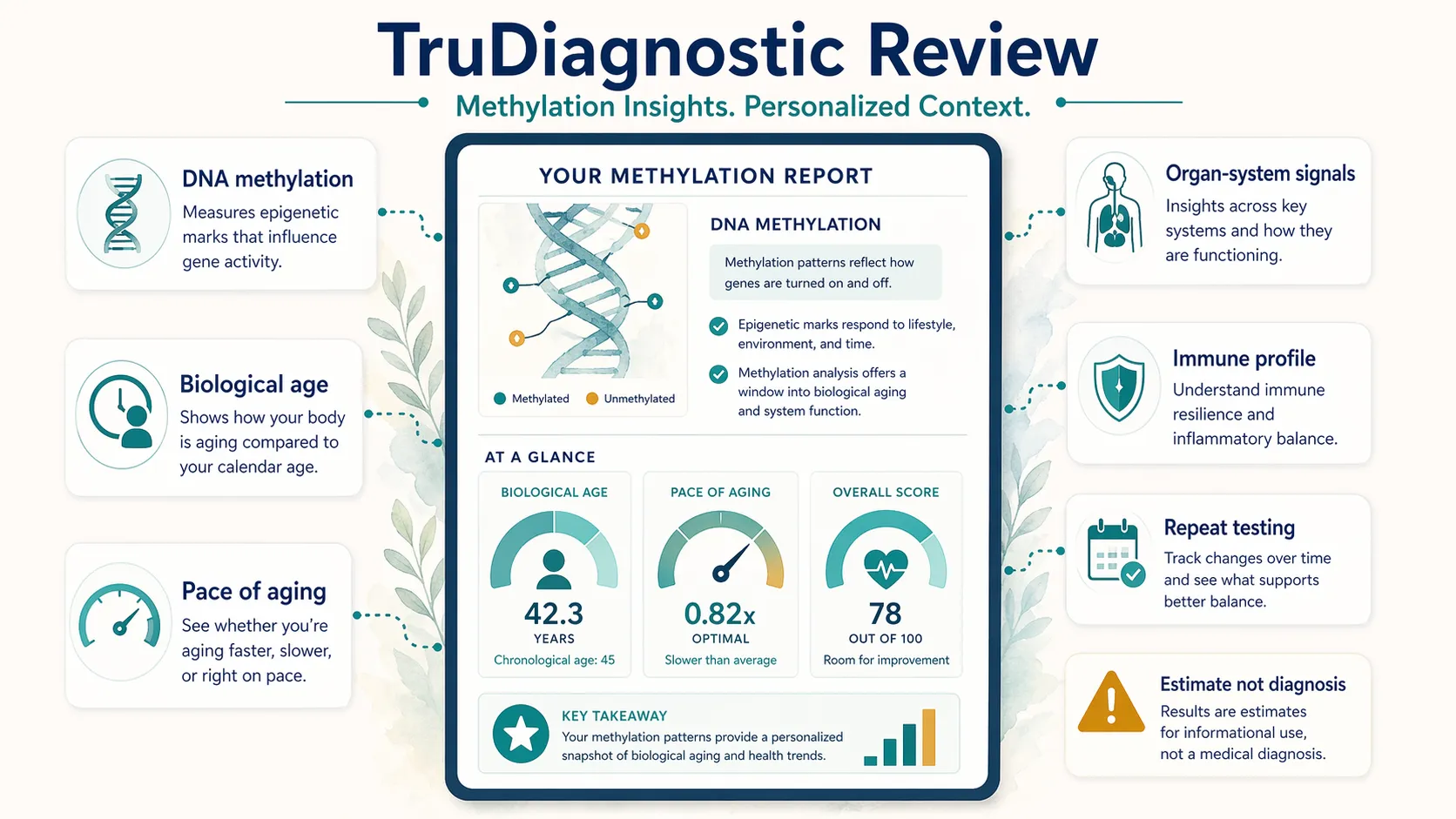
TruDiagnostic’s TruAge COMPLETE report covers more ground than any other consumer-facing epigenetic kit we have evaluated.
First-party walkthrough planned for v2: we have not yet completed a TruAge order for KYD editorial. The panel description below is built from TruDiagnostic’s product documentation, the peer-reviewed algorithm papers cited above, and verified third-party report walk-throughs. Real sample-report screenshots and dashboard imagery will replace the placeholder illustration once we have run an order through.
The current panel includes:
- Biological age (OMICmAge): A multi-omic-informed DNA-methylation model published in Nature Aging, built from methylation-derived proxies for proteomic, metabolomic, and clinical signals. The TruAge assay itself does not measure proteins, metabolites, or medical records directly; it is the number you reference when someone asks “how old is your body?”
- Pace of aging (DunedinPACE): Your current rate of aging, validated in eLife against the Dunedin birth cohort. The metric designed for longitudinal tracking across repeat tests.
- 11 organ-system ages (SYMPHONYAge): Methylation-derived age estimates for brain, heart, liver, kidneys, lungs, immune, inflammatory, blood, musculoskeletal, hormone, and metabolic systems. Based on the Systems Age framework published in Nature Aging in 2025.
- Fit Age report: Methylation-predicted fitness biomarkers including grip strength, VO2Max, and gait speed.
- Methylation-based telomere-length estimate: A DNA-methylation-derived estimate related to telomere biology and cellular replication history. It is not a direct telomere-length assay.
- Immune cell profile: A breakdown of immune cell subtypes, which shift with aging and chronic inflammation.
- 75+ longevity biomarkers: Methylation-predicted estimates for cancer risk signals, diabetes risk signals, alcohol response, and weight-loss response, among others. These are statistical-association readouts, not diagnoses.
TruDiagnostic currently states that TruAge measures 1 million+ CpG sites per sample (verified on the May 20, 2026 product page; this copy has changed in past versions, so confirm the current figure during final product-data QA). Most SKUs pair your results with a 30-minute expert consultation. Verify inclusion at checkout, since the consultation has moved between included and add-on across recent pricing updates.
How it differs from standard DNA tests
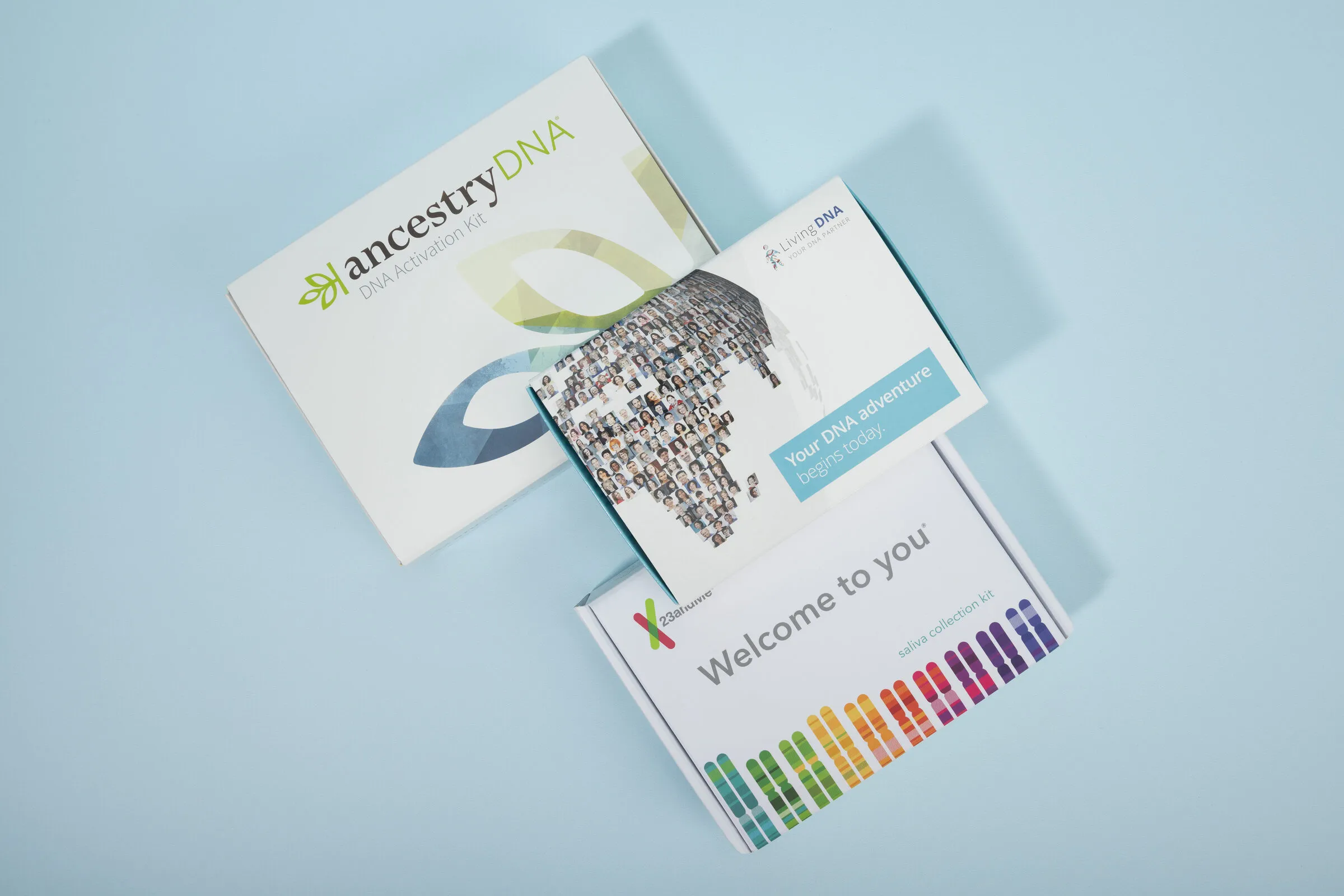
TruDiagnostic is not the right product if you want ancestry, relative matching, carrier status, or genetic health-risk reports. For ancestry estimates and relative matching, AncestryDNA serves that purpose. For DTC carrier-status or genetic-health-risk reports, choose a product that explicitly offers those reports, such as 23andMe Health + Ancestry, and treat those results as risk reports, not diagnostic screening. Both options cost a fraction of what TruAge does. TruDiagnostic occupies a different category: a longevity and wellness tool, not a genetics test in the traditional sense. One tells you what your DNA says; the other tells you how your body is responding to your life.
Our Editorial Walk-Through
First-party walkthrough planned for v2. We have not yet completed a TruAge COMPLETE order for KYD editorial in this batch. The notes below describe TruDiagnostic’s publicly documented ordering and report-delivery flow, cross-referenced against independent customer reports. Real-result screenshots, dashboard imagery, and our own consultation notes will replace this placeholder once we have run a kit through.
Ordering and sample collection (publicly documented flow)
The TruAge COMPLETE kit ships within roughly a week of ordering. Inside the box: a blood-spot collection card, two lancets for a finger prick, a bandage, a return envelope, and an activation code. The finger-prick collection takes about five minutes and feels similar to a blood-glucose check. The blood-spot format is more stable in transit than saliva, which is why TruDiagnostic uses it. Saliva is easier to collect, but methylation accuracy from blood is generally higher for the algorithms TruAge uses.
After activating the kit online and mailing the sample back, results are delivered through TruDiagnostic’s online dashboard. The company’s product page states a 3–4 week turnaround after lab receipt; the FAQ references a 4–6 week window for some configurations. Plan for roughly a month.
What the reports look like (per documentation)
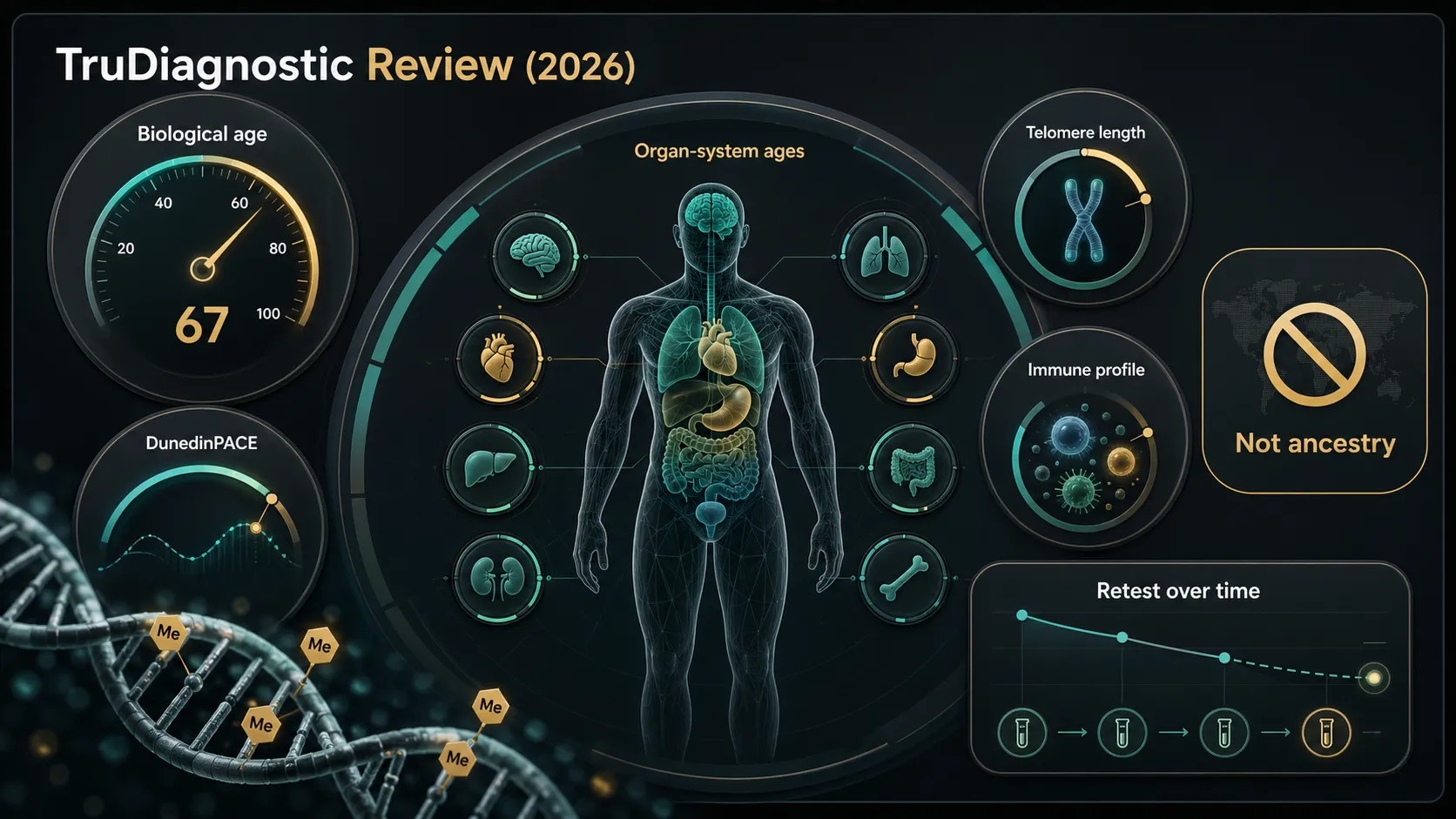
TruDiagnostic’s dashboard centers the OMICmAge biological age number, followed by DunedinPACE, SYMPHONYAge organ breakdowns, the methylation-based telomere-length estimate, the Fit Age report, and the longer list of methylation-predicted biomarkers. Each section compares your scores to population averages and offers lifestyle recommendations calibrated to your results. The 30-minute consultation walks through the dashboard with a TruDiagnostic-affiliated expert; we will report on our own consultation experience in v2.
Pricing and subscription options
TruDiagnostic currently sells the test in three configurations (verified on trudiagnostic.com/truage, accessed May 20, 2026):
- TruAge COMPLETE (one-time): $499 for a single full-panel test
- TruAge COMPLETE Subscribe & Save: $249 per test, cadence selected at checkout (most users pick every 3–6 months)
- TruAge + TruHealth combo: $849 one-time, pairing the methylation panel with TruHealth’s broader wellness biomarker workup
The Subscribe & Save price is the most sensible entry point for anyone who plans to retest. A $499 snapshot tells you where you stand; repeated $249 tests across two to four quarters tell you whether your interventions are moving the needle.
How TruAge Compares to Other Biological Age Tests
TruAge is the deepest consumer epigenetic test we have evaluated, but it is not the only one. Several companies have entered the biological-age testing space, each with different methodologies, price points, and output depth.
| Test | Price (2026) | Sample type | Methodology | What it measures | Key strength |
|---|---|---|---|---|---|
| TruDiagnostic TruAge COMPLETE | $499 one-time / $249 Subscribe & Save | Finger-prick blood | DNA methylation, 1 million+ CpG sites; OMICmAge + DunedinPACE + SYMPHONYAge | Biological age, pace of aging, 11 organ-system ages, Fit Age, methylation-based telomere-length estimate, 75+ longevity biomarkers | Most comprehensive panel; algorithms peer-reviewed in Nature Aging and eLife |
| Elysium Index | ~$299 | Saliva | DNA methylation, smaller CpG panel; proprietary algorithm | Biological age + organ system scores | Most accessible saliva-based option; simpler reporting |
| myDNAge | ~$299 | Blood or urine | Horvath clock (~2,000 CpG sites) | Biological age (single number) | Built on the original peer-reviewed Horvath 2013 clock; multiple sample types |
| Tally Health TallyAge | ~$229 | Saliva | DNA methylation; David Sinclair–lab algorithm | Biological age + lifestyle recommendations | Lowest entry price; designed to pair with supplement protocols |
| GlycanAge | ~$329 | Finger-prick blood | IgG glycan biomarkers (not methylation) | Inflammation-driven biological age | Different biological signal: immune aging through glycomics rather than methylation |
A note on competitor pricing: The figures above reflect each company’s main consumer-facing product page as of May 2026, as public marketing prices rather than regulator-filed prices, and this category moves quickly. Verify the current price at checkout before buying.
The practical breakdown:
- Want the most thorough single test and plan to retest? TruDiagnostic. The OMICmAge + DunedinPACE + SYMPHONYAge + 75+ biomarker readout is unmatched in the consumer category.
- Want something cheaper and saliva-based? Elysium Index or Tally Health. Both are simpler and roughly half the one-time price of TruAge.
- Want the most peer-reviewed clock specifically? myDNAge. It uses the original Horvath 2013 clock.
- Care about inflammation rather than methylation? GlycanAge. It measures a different signal: immune-driven aging via IgG glycans, and works as a complement, not a substitute.
A note on “Rejuvenation Olympics”: This is not a competing test but a community leaderboard where TruDiagnostic and Elysium customers post their DunedinPACE and biological age scores. Useful for benchmarking your result against a self-reported biohacker population; it provides context, not a buying alternative.
Who Should Buy This Test
TruDiagnostic is a niche product with a specific audience. It is not a general-purpose DNA test, and it is not for everyone.
Good fit
- Longevity-focused individuals actively working on diet, exercise, sleep, or supplementation who want objective data on whether those efforts are affecting their biological aging rate
- Biohackers and health optimizers who already track biomarkers and want epigenetic data layered in
- People committing to repeat testing with a baseline now and a Subscribe & Save retest every three to six months to track progress
- Anyone working with a functional-medicine provider who can incorporate the data into a broader care plan. TruDiagnostic offers a practitioner portal for clinical integrations.
- Buyers who want methylation plus wellness biomarkers in one order: the $849 TruAge + TruHealth combo covers both lanes.
Not the right fit
- People looking for ancestry or genetic-health information. For ancestry or relative matching, AncestryDNA is the standard pick. For DTC carrier-status or genetic-health-risk reports, choose a product that explicitly offers those reports, such as 23andMe Health + Ancestry, and read those as risk reports, not diagnostic screening. Both cost a fraction of TruAge.
- Budget-conscious buyers. At $499 one-time, this is not an impulse purchase. If cost is a primary concern, see more affordable health-focused DNA options or consider Tally Health or Elysium Index from the comparison above.
- People who want a clinical diagnosis. TruAge is marketed as a wellness/biological-age test and should not be used to diagnose, monitor, or guide treatment for disease. It has not received FDA PMA approval, FDA De Novo authorization, or FDA 510(k) clearance. If your results raise concerns, consult a physician or genetic counselor.
A note on the science
Epigenetic aging clocks are among the most-studied tools in longevity research, but they are model-based estimates, not fixed measurements. Biological age scores from different validated clocks can differ by several years on the same sample, as the 2025 Nature Communications 14-clock comparison documented. Use the trend across repeat tests, alongside clinical and functional markers, rather than any single score, as your signal. TruAge uses two of the better-studied clocks available: DunedinPACE has prospective cohort data behind it and showed movement under caloric restriction in the CALERIE trial, while OMICmAge is a multi-omic-informed methylation model with richer signal, but they are data points, not guarantees, and most useful when tracked over time.
A note on privacy
TruDiagnostic’s posted privacy policy states samples are de-identified, tracked by barcode, and that individual-level data is not shared with third parties without explicit consent. You can request deletion of your account and personal information. The policy itself does not explicitly use the word “HIPAA,” so framing the company’s data handling as “HIPAA-aligned” is more accurate than asserting full HIPAA coverage. For broader context on consumer DNA-test privacy, the Electronic Frontier Foundation maintains an ongoing analysis of genetic-information privacy worth reading before sending any sample anywhere.
The Bottom Line
TruDiagnostic is the most thorough consumer epigenetic test on the market in 2026. The TruAge COMPLETE report gives you a layered picture of how your body is aging, from a headline biological age (OMICmAge) down to 11 organ-system ages (SYMPHONYAge), pace-of-aging trajectory (DunedinPACE), a methylation-based telomere-length estimate, Fit Age, and 75+ methylation-derived biomarkers.
The value depends entirely on what you plan to do with the information. If you are actively managing your health and want molecular feedback to track over time alongside your clinical markers, the $499 one-time investment is justifiable, and the $249 Subscribe & Save price makes repeat testing genuinely affordable. The TruAge + TruHealth combo at $849 makes sense if you want methylation plus broader wellness biomarkers in a single order. If you are simply curious about your DNA in a general sense, a standard consumer DNA test will give you more for less; for cheaper biological-age options specifically, see Elysium Index or Tally Health in the comparison table above, and for a genetics-focused health alternative, SelfDecode is the more practical pick.
The science is real, the algorithms are peer-reviewed, and the panel depth is unmatched in the consumer category. The honest caveat is that the field is still evolving and there is no single gold-standard clock, but TruDiagnostic is built on two of the better-studied options the field has produced to date.