

TruDiagnostic is not a typical DNA test. It does not tell you where your ancestors came from or whether you carry certain genetic health risks. Instead, it measures how your body is aging at the molecular level using DNA methylation — and it does this better than any other consumer-facing kit we have tested.
The key decision is value at $499. Below, we break down exactly what you get, how the test works, and who should buy it versus skip.
Our Verdict
We weighed the practical tradeoffs — cost, data depth, and who actually benefits — to arrive at a clear recommendation.
Key Takeaways
Quick verdict:
- It measures biological age, not genetic ancestry. This is an epigenetic test that reads chemical modifications on your DNA, not the DNA sequence itself. It tells you how old your body acts, not where your family came from.
- The report is detailed and actionable. You get a biological age score, a pace-of-aging measurement (DunedinPACE), telomere length, immune cell profiles, and age estimates for 11 organ systems including brain, heart, and liver.
- The science is validated but still evolving. TruDiagnostic uses algorithms developed alongside researchers at Harvard, Yale, and Duke. The DunedinPACE clock is among the best-studied aging metrics in epigenetics, but the field itself is still maturing.
- The price is steep for a single snapshot. At $499 per test, this is a premium product. It makes more financial sense if you plan to retest over time — the quarterly subscription brings the cost down to $250 per test.
What TruDiagnostic Actually Tests
Most consumer DNA tests use genotyping to read the letters of your genetic code. TruDiagnostic does something different. It looks at DNA methylation — tiny chemical tags that sit on top of your DNA and influence how your genes are expressed.
These methylation patterns change as you age. They are also influenced by diet, exercise, stress, sleep, and environmental exposures. By analyzing over one million CpG sites in your DNA, TruDiagnostic builds a picture of how your body is aging compared to your chronological age.
What the report covers
The TruAge COMPLETE report includes several layers of analysis.
- Biological age (OMICmAge): A single number representing how old your body appears at the cellular level. If your biological age is lower than your chronological age, your body is aging more slowly than average.
- Pace of aging (DunedinPACE): A “speedometer” for aging. It measures how fast you are currently aging per year. A value of 1.0 means you are aging at a typical rate. Below 1.0 is slower. Above 1.0 is faster.
- Organ-system ages: Age estimates for 11 systems including brain, heart, liver, kidneys, lungs, and immune system. These can help identify which parts of your body may be aging faster than others.
- Telomere length: A measurement of the protective caps on your chromosomes, which tend to shorten with age and cellular stress.
- Immune cell profile: A breakdown of your immune cell subtypes, which can shift with aging and chronic inflammation.
How it differs from standard DNA tests
If you are looking for ancestry estimates, relative matching, carrier status, or genetic health risk screening, TruDiagnostic is not the right product. Tests like 23andMe and AncestryDNA are built for those purposes.
TruDiagnostic occupies a different category entirely. It is a longevity and wellness tool, not a genetics test in the traditional sense. The two types of testing answer fundamentally different questions — one tells you what your DNA says, the other tells you how your body is responding to your life.
Our Testing Experience
We ordered the TruAge COMPLETE kit from the TruDiagnostic website. The process was straightforward.
Ordering and sample collection
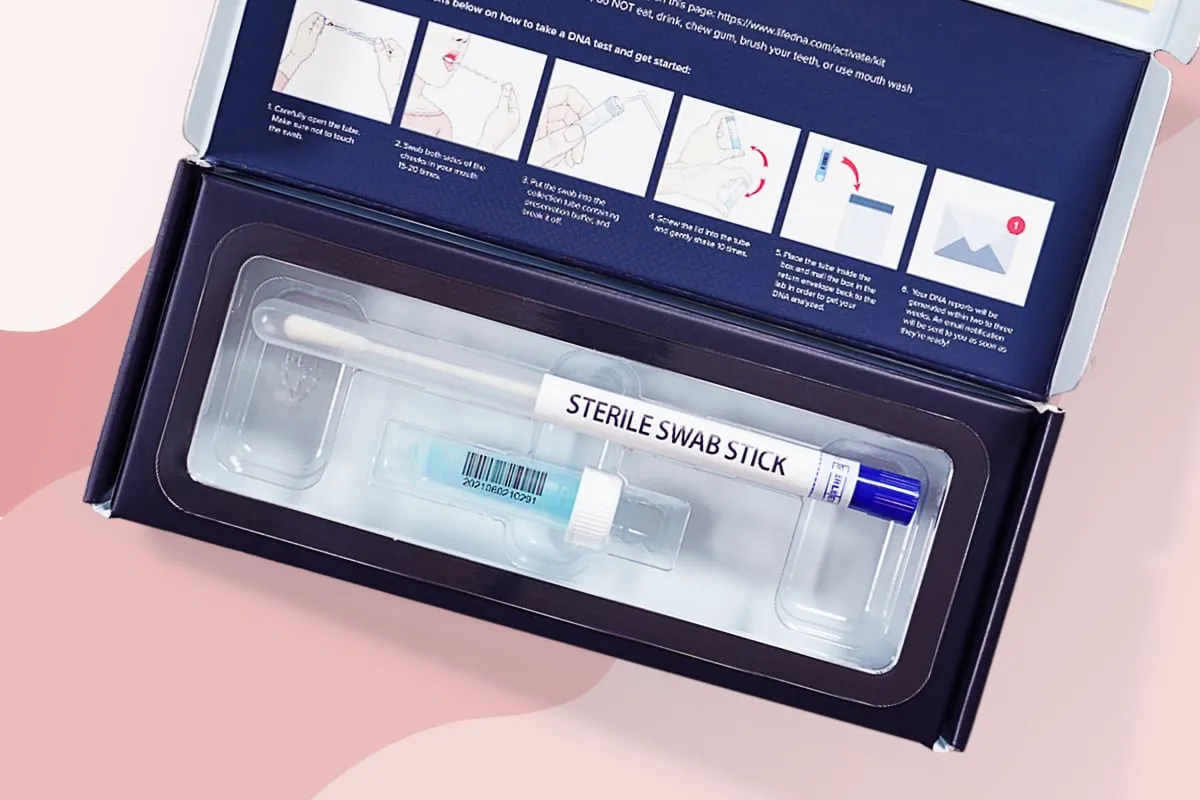
The kit arrived within about a week. Inside, we found a blood spot collection card, lancets for a finger prick, a bandage, a return envelope, and an activation code.
The finger-prick collection is quick but may not appeal to everyone. If you are comfortable with a standard blood sugar check, this will feel familiar. The instructions are clear, and the whole process takes about five minutes.
After activating the kit online and mailing the sample back, results arrived in just under three weeks.
What the reports look like
The TruAge dashboard is well organized. The headline biological age number is front and center, followed by your DunedinPACE score and the organ-system breakdowns.
Each section includes context explaining what the numbers mean and how they compare to population averages. The report also offers lifestyle recommendations — things like sleep optimization, exercise strategies, and dietary adjustments — based on your specific results.
The included 30-minute consultation with a TruDiagnostic expert adds real value. It helps translate the data into practical next steps, especially if you are new to epigenetic testing.
Pricing and subscription options
TruDiagnostic offers two main paths.
- TruAge COMPLETE (one-time): $499 for a single full-panel test
- Quarterly subscription: $250 per test ($998 per year for four tests)
The subscription makes the most sense if you plan to track your biological age over time, which is arguably the most useful way to use this kind of test. A single snapshot tells you where you stand. Repeated testing tells you whether your interventions are working.
Who Should Buy This Test
TruDiagnostic is a niche product with a specific audience. It is not a general-purpose DNA test, and it is not for everyone.
Good fit
- Longevity-focused people who are actively working on diet, exercise, sleep, or supplementation and want objective data on whether their efforts are affecting their rate of aging
- Biohackers and health optimizers who already track biomarkers and want epigenetic data layered into their health picture
- People considering repeat testing who want a baseline measurement now and plan to retest in 3 to 6 months to track progress
- Anyone working with a functional medicine provider who can incorporate the results into a broader health plan
Not the right fit
- People looking for ancestry or genetic health information. Standard DNA tests like 23andMe or AncestryDNA serve that purpose at a fraction of the price.
- Budget-conscious buyers. At $499 per test, this is not an impulse purchase. If cost is a primary concern, there are more affordable health-focused DNA options.
- People who want a clinical diagnosis. This test is an informational tool, not a medical test. It does not diagnose or treat any condition.
A note on the science
Epigenetic aging clocks are among the most promising tools in longevity research, but they are not perfect. Biological age estimates can vary between different algorithms, and the field is still refining what these numbers mean in practical terms.
TruDiagnostic uses some of the best-validated clocks available, including DunedinPACE. But it is worth understanding that your biological age score is a model-based estimate, not a fixed measurement like your blood pressure or cholesterol level.
The Bottom Line
TruDiagnostic is the most thorough consumer epigenetic test on the market. The TruAge COMPLETE report gives you a genuinely useful picture of how your body is aging, from a headline biological age score down to organ-system-level detail.
The value depends on what you plan to do with the information. If you are actively managing your health and want data to guide your decisions, the $499 investment can feel justified — especially with the quarterly subscription bringing repeat tests down to $250 each.
If you are simply curious about your DNA in a general sense, a standard consumer DNA test will give you more for less. TruDiagnostic solves a different problem, and it solves it well for the right person.
If you want a cheaper health-focused DNA product centered on genetic insights rather than epigenetic aging, SelfDecode is the more practical alternative.