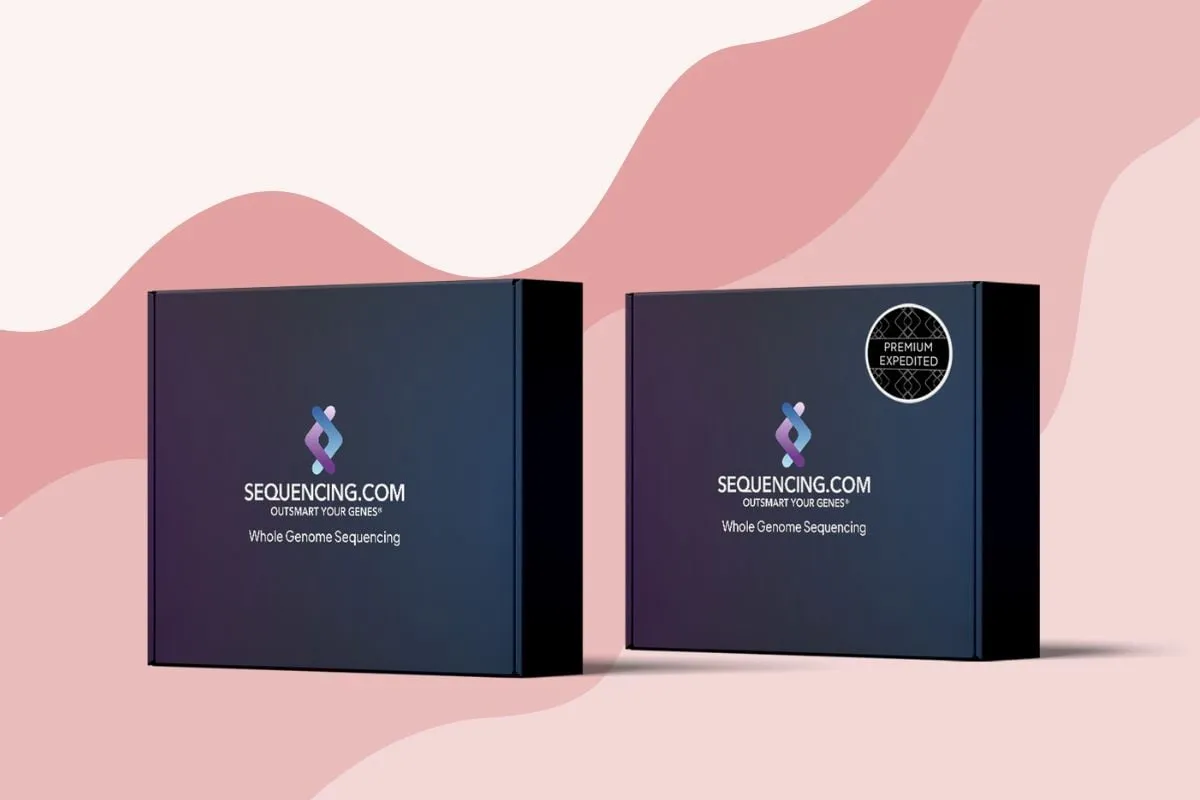

Sequencing.com sells whole genome sequencing at 30x coverage for around $399 and pairs it with an app store of 20+ analysis tools. That gives you far more raw data than the ~650,000 SNPs a standard consumer chip reads — but interpretation requires more effort on your end.
If you want clear, curated reports from a single dashboard, a mainstream kit like 23andMe is simpler. Below, we cover what Sequencing.com delivers, what the apps actually do, and who gets real value from whole genome data.
Key Takeaways
- Whole genome sequencing at 30x coverage (~$399) reads your entire genome — billions of base pairs versus the ~650,000 SNPs a chip-based test covers.
- The app marketplace lists 20+ tools for health risks, medication interactions, ancestry, fitness, and nutrition. Some are free; others cost $5 to $99 each.
- Sequencing.com accepts uploads from 23andMe, AncestryDNA, MyHeritage, and other major providers — you do not need to buy their sequencing to use the platform.
- Output is a VCF or genome file you own and can reuse across third-party analysis platforms.
- Health findings from any consumer service are not diagnoses. Follow up with a genetic counselor for anything medically significant.
Our Verdict
Sequencing.com is the right buy if you specifically want whole genome data and understand that interpretation is a separate step. The ~$399 kit delivers 30x coverage — enough depth to detect rare variants, structural changes, and pharmacogenomic markers that chip-based tests miss entirely.
The product is not built for first-time DNA testing buyers. The value depends on your willingness to navigate a marketplace of apps rather than receive one tidy report. 23andMe delivers a streamlined health-plus-ancestry experience with less friction. Sequencing.com fits buyers who have outgrown chip-based testing or who need raw genome files for downstream analysis.
What You Get
Sequencing.com is built around two components: the sequencing product itself and the app store that interprets the data.
Whole genome sequencing
The core product sequences your entire genome at approximately 30x coverage. According to the National Human Genome Research Institute, whole genome sequencing reads all 6 billion base pairs of your DNA. That is a fundamentally different scale than the ~650,000 SNPs a genotyping chip from 23andMe or AncestryDNA reads.
The output is a VCF or genome file you own and can reuse. Whole genome data matters if you care about rare variants, structural changes, or long-term data utility. It matters less if you only want ancestry percentages or a basic health screening.
App marketplace
Instead of bundling one fixed report set, Sequencing.com runs an app store with free and paid options. Free apps handle basic ancestry and trait reports. Paid apps covering disease risk, pharmacogenomics, or carrier status typically cost $5 to $99 each. The platform currently lists 20+ apps across health, ancestry, fitness, and nutrition categories.
This model gives advanced users flexibility. It also means beginners face a decision layer that mainstream kits handle automatically. You choose which apps to run, and app quality varies across the marketplace.
Upload compatibility
Sequencing.com accepts raw data uploads from 23andMe, AncestryDNA, MyHeritage, FamilyTreeDNA, and other major providers. That makes the app store accessible even if you never buy their sequencing kit. If you already have raw data and want broader interpretation options, the upload path removes the biggest cost barrier.
For more on what you can do with raw files from any provider, see our raw data guide.
Pros and Cons
Here is the practical tradeoff between Sequencing.com and mainstream alternatives.
Pros
- Deepest consumer-accessible data: 30x whole genome sequencing covers variants that chip-based tests miss entirely
- Flexible app marketplace: Choose and pay for only the analyses you want, starting at $0
- Upload-friendly: Use existing raw data from 23andMe, AncestryDNA, MyHeritage, and others at no sequencing cost
- Long-term data value: Genome files remain useful as new analysis tools and research databases emerge
Cons
- Steeper learning curve: No single curated dashboard — you navigate apps individually and evaluate quality yourself
- Interpretation costs add up: Free apps cover basics, but meaningful health analysis often requires paid apps at $10 to $99 each
- Not built for genealogy: Relative matching and family trees are not part of the platform
- Health results are not clinical: Findings require professional follow-up for medical decisions
Who It Is Best For
If you already know why whole genome coverage matters — rare variant screening, pharmacogenomics research, or long-term data ownership — Sequencing.com is one of the most accessible ways to get it. The ~$399 price point undercuts clinical whole genome sequencing by a wide margin. Clinical labs typically charge $1,000 or more for comparable 30x coverage.
If you tested with 23andMe or AncestryDNA and want deeper analysis, the upload path lets you explore the app marketplace without retesting. That makes it a useful second step for experienced DNA testing users who want to go beyond chip-based results.
This product is not the right fit if you want a simple answer to “what is my ancestry?” or “what health risks should I know about?” Mainstream kits answer those questions faster and with a friendlier interface. It is also not the right choice if your main goal is finding relatives — AncestryDNA’s 25+ million-user matching database is built for that, and Sequencing.com is not.
Pricing, Privacy, and Accuracy
Whole genome sequencing runs around $399 for a standard kit. Verify current pricing on the Sequencing.com site before purchasing, as promotional pricing shifts. For a market-wide pricing comparison, see our genetic testing cost guide.
On top of sequencing, budget for app costs. Free apps handle basic ancestry and trait reports. Health-focused apps that analyze disease risk or medication response typically cost $10 to $99 each. Total spend depends on how many analyses you run.
Privacy is a different tradeoff here than with matching-focused platforms. Sequencing.com does not center its product on social discovery or relative matching, which reduces one category of privacy risk. Review the current privacy policy before uploading or testing, especially if whole-genome data retention concerns you. For a broader look at DNA testing privacy, see our privacy guide.
On accuracy, whole genome sequencing captures more data than genotyping chips. But more data does not guarantee better interpretation. The clinical validity of any consumer report depends on the analysis layer, not the sequencing depth alone. If a result flags something medically relevant, talk to a genetic counselor before acting on it.
The Bottom Line
We recommend Sequencing.com for buyers who want whole genome depth and are comfortable assembling their own analysis workflow. The combination of ~$399 sequencing at 30x coverage, a flexible app marketplace, and upload compatibility from major providers makes it one of the most versatile raw-data platforms available.
For simpler health-plus-ancestry reporting, start with our 23andMe review. If you want guided health analysis without managing apps yourself, read our SelfDecode review. For help deciding what to do with raw DNA data from any provider, see our raw data guide.