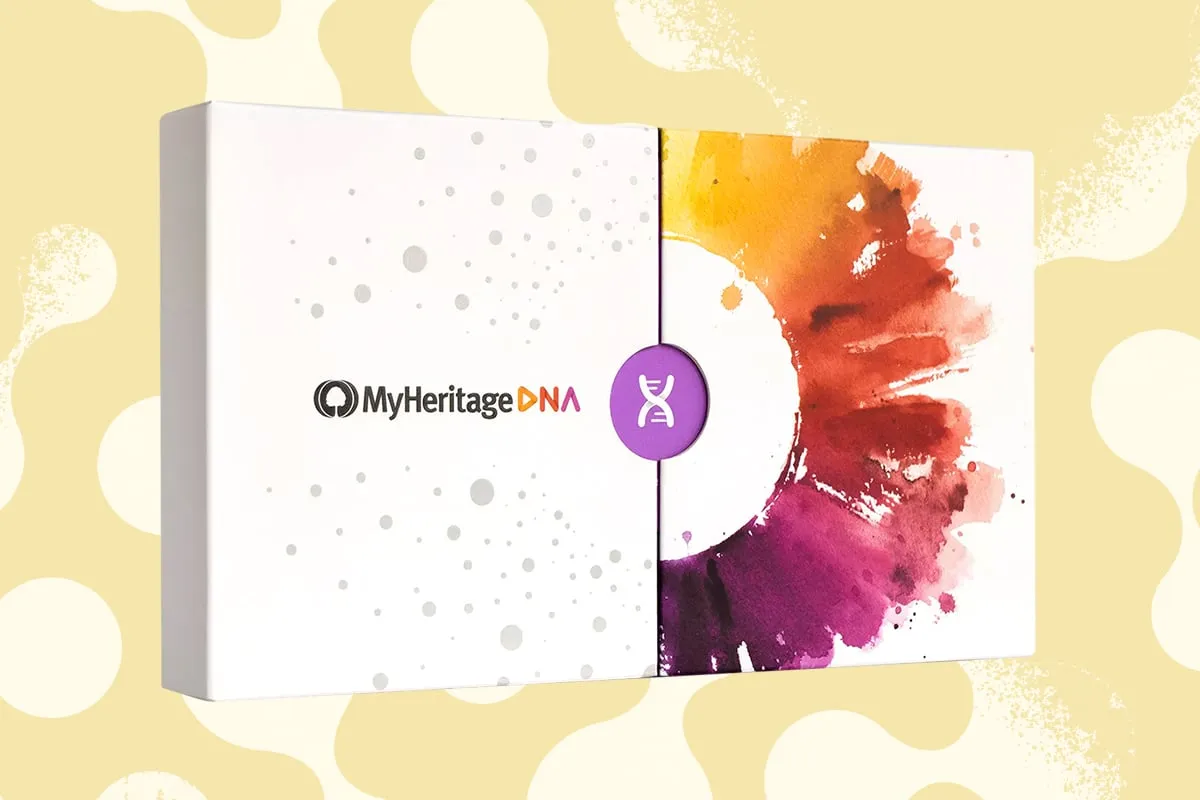

MyHeritage DNA costs $89 at regular price and connects your results to a genealogy platform with 80+ million registered users across 42 languages. It is not the default first test for most buyers — AncestryDNA still holds that position.
But if your family history crosses borders — migration through Europe, relatives in South America, records scattered across multiple countries — MyHeritage is built for that job. Below, we break down what the kit delivers and who should buy it.
Key Takeaways
Here is the short version before the full review.
- MyHeritage DNA is the stronger pick for international genealogy. The platform supports 42 languages and connects DNA matches to cross-border records.
- AncestryDNA is still the better first buy for most people. Its 25+ million DNA-tester database gives you higher odds of matching relatives.
- The kit costs $89 at regular price. Promo pricing frequently drops it below $40, making it one of the cheapest entry points in the category.
- Raw DNA uploads are no longer supported. MyHeritage ended uploads in May 2025. Older reviews that recommend transferring data are out of date.
- The October 2025 whole-genome sequencing upgrade is real but secondary. The buying case still centers on international family history.
Our Verdict
MyHeritage DNA earns its place when your genealogy research is genuinely international. The platform pairs DNA matching with historical records across dozens of countries, and its 42-language interface removes friction that other services create for non-English speakers.
AncestryDNA’s DNA-matching database includes over 25 million testers. MyHeritage’s active matching pool is smaller, which means fewer potential close-relative matches in the United States. If your family history stays mostly domestic, AncestryDNA fits better. Start with MyHeritage when the cross-border angle is central to your research.
What You Get
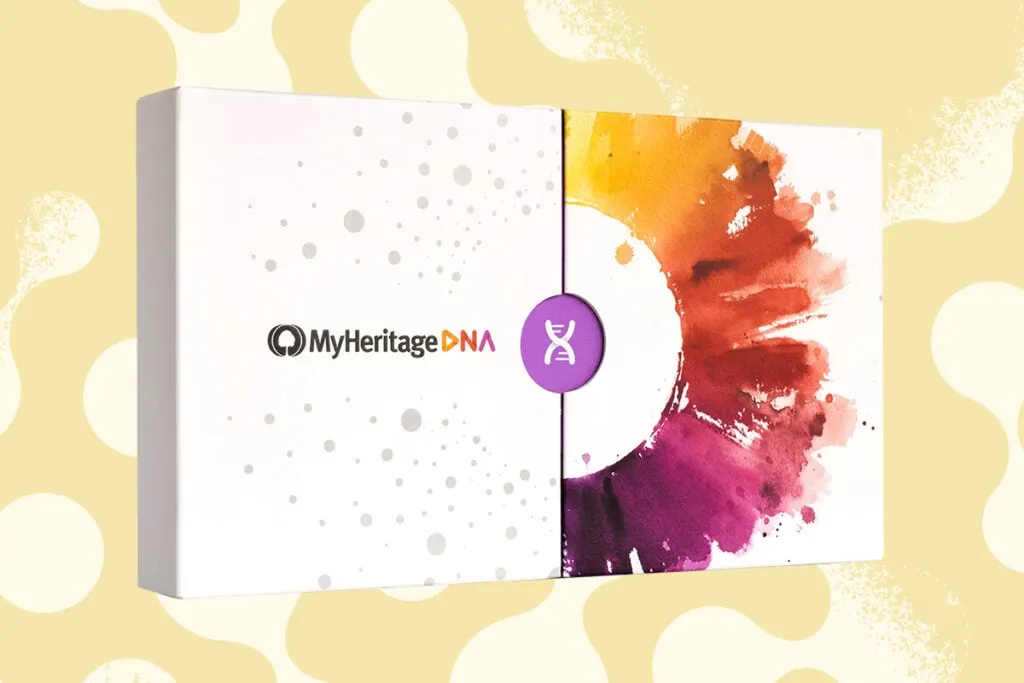
The $89 kit includes an ethnicity estimate covering 42 regions, DNA matching against the full user database, and access to MyHeritage’s family-tree builder and historical record collections. Results arrive in about 3 to 4 weeks.
Ethnicity and ancestry
The February 2025 Ethnicity Estimate v2.5 update refined the ancestry model with finer regional breakdowns. Results now separate populations with more granularity than earlier versions. Treat ethnicity percentages as modeled probabilities, not fixed truth — but the update made them more useful.
DNA matching
Matches include estimated relationship ranges and shared DNA segments. The matching pool draws from MyHeritage’s 80+ million registered users across 48 countries. That international spread is the differentiator — you are more likely to match relatives in Europe, Latin America, and other regions where AncestryDNA’s coverage is thinner.
Records and tree tools
The platform provides access to billions of historical records spanning dozens of countries. The family-tree builder integrates with DNA matches so you can attach a match to a specific branch and verify the connection with documents. Some advanced records features require a paid subscription beyond the kit price.
What changed in 2025
Three updates reshaped the product this year.
- Ethnicity Estimate v2.5 (February 2025): Improved ancestry modeling with finer regional breakdowns.
- Upload policy change (May 2025): Raw DNA uploads from other services are no longer accepted.
- Whole-genome sequencing (October 2025): New kits use whole-genome technology instead of genotyping chips. Existing users keep their original results.
Pros and Cons
MyHeritage DNA has a clear strength and a clear limitation. The value depends on which one matters more to you.
Pros:
- International records access: The platform connects DNA matches to historical records across dozens of countries and supports 42 languages.
- Competitive promo pricing: Sale prices frequently drop below $40, making it one of the cheapest entry points for DNA testing.
- Improved ethnicity model: The v2.5 update brought the ancestry estimates closer to what competitors offer.
- Clear privacy controls: You can manage DNA matching visibility, download your data, and request deletion through the help center.
Cons:
- Smaller matching network: The active DNA-tester pool is smaller than AncestryDNA’s 25+ million, which reduces your odds of finding close relatives in the U.S.
- No upload path: Raw DNA from 23andMe or AncestryDNA cannot be transferred in since May 2025.
- Subscription layer: Some records and advanced tree features require a paid plan beyond the $89 kit price.
- Less relevant for domestic-only research: If your family history stays within one country, the international advantage does not apply.
Who It Is Best For
If you are researching family lines that span multiple countries, MyHeritage is the better buy. The combination of international records, multilingual tools, and DNA matching across a global user base gives you a workflow that AncestryDNA does not replicate as well.
Adoptees with possible international origins also benefit. The cross-border record access opens research paths that a U.S.-focused platform handles poorly.
Skip it if your family history is mostly American and you want the largest possible matching pool. Skip it if you want health reports — MyHeritage does not offer them. For health-plus-ancestry, read the 23andMe review instead.
Pricing and Privacy
The regular kit price is $89. MyHeritage runs frequent promotions that drop it below $40, especially around holidays. At promo pricing, the barrier to entry is the lowest in the category.
After the kit, a paid subscription unlocks deeper records access and advanced tree features. The free tier includes DNA results and basic matching. Decide based on how actively you plan to research — casual users get value without paying more.
On privacy, MyHeritage provides download and deletion controls through the help center. You can adjust DNA matching visibility and revoke consent. These options are clearer than many older third-party reviews suggest.
The Bottom Line
MyHeritage DNA is worth it when international genealogy is the job. At $89 regular price — and often under $40 on sale — the kit pairs DNA matching with a cross-border records workflow that mainstream competitors do not match. The 80+ million user platform spans 48 countries and 42 languages.
If you want the broadest first buy for genealogy, start with AncestryDNA instead. If you want health reports alongside ancestry, read the 23andMe review. If your family history crosses countries and languages, MyHeritage is the sharper tool.