


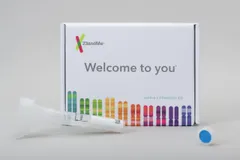
LifeDNA is a practical option if you want ancestry and health reporting with some skincare and beauty-focused traits. Its biggest strength is helping first-time buyers collect more signal in one place than a basic ancestry-first kit. If that is your goal and you are comfortable with its limits, it can still be a reasonable starting point.
Check LifeDNA pricing here.
Key Takeaways
LifeDNA stands out for its skincare and beauty trait reports alongside standard health and wellness coverage. The one-on-one consultation adds real value, especially for first-time buyers.
Our Verdict
LifeDNA is a reasonable choice if you want health, fitness, and skincare insights in one bundle. The consultation alone can justify the cost, but the reports themselves can feel less detailed than competitors at similar price points.
Product Review Summary
The most common pros and cons from LifeDNA buyer reviews break down like this:
Pros
- Customer service was quick, courteous, and dependable, as many people—even those unhappy with the service or reports—said that the company was quick to respond or reach out if they were dissatisfied
- Many liked that there was a skincare component to the reports, which isn’t a common feature in many tests
- One-on-one consultations were a specific highlight that was always mentioned, with many saying that their consultant was kind, understanding, and professional
Cons
- Some buyers reported that a few of the reports were underwhelming or vague
- Some reviewers felt the price tag was not worth it compared to other DNA tests that seemed to offer better value
What Does LifeDNA Offer?
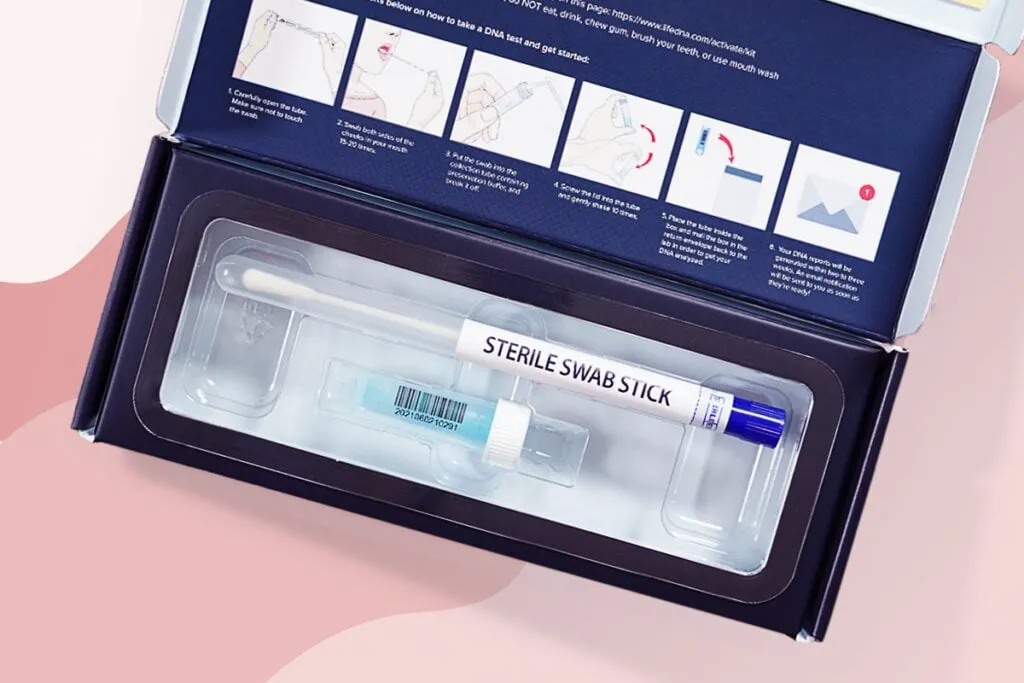
LifeDNA offers three different DNA Wellness Bundles. These three plans give you the option to either take a test that LifeDNA will send or to upload raw DNA data from any tests you’ve already taken, like 23andMe, Ancestry, MyHeritage, Living DNA, and Family Tree DNA.
The DNA test is about $70 extra, so plan accordingly.
These three bundles are:
- Diet and wellness pack — $59, comes with a nutrition report and a vitamins and supplements report
- Wellness report bundle — $129, comes with one-year platinum membership, nutrition report, fitness report, vitamins and supplements report, wellness report, personality and cognition report, and skincare report
- Wellness test bundle — $199, comes with a DNA test kit, one-year platinum membership, nutrition report, fitness report, vitamins and supplements report, wellness report, personality and cognition report, and skincare report
What’s Included in LifeDNA’s Test?
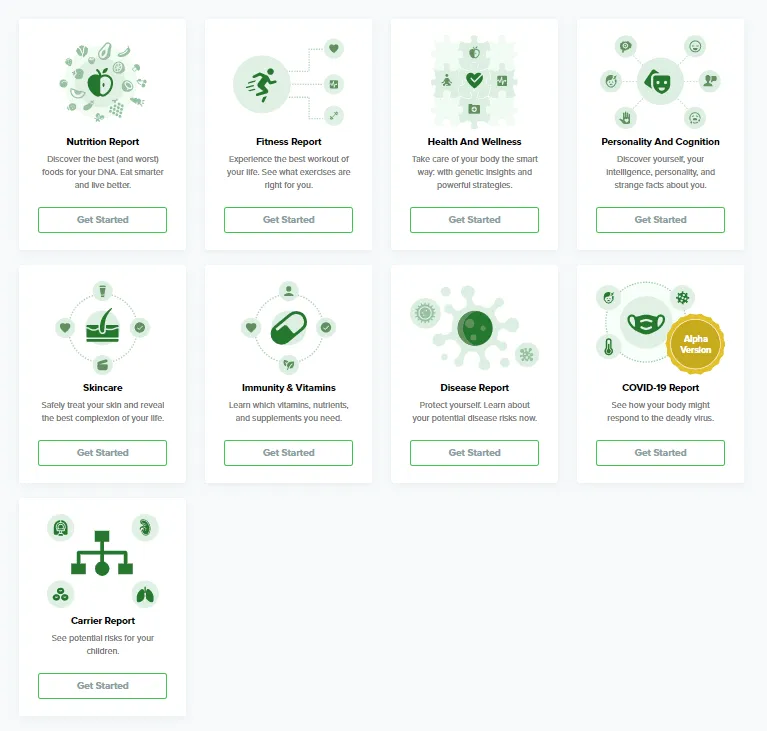
- Personality, intelligence, nutrition, supplementation, fitness, and skincare DNA reports.
- Report on 130+ genetic traits, including an actionable recommendation for each trait report.
- Unlimited access to updates
After submitting your raw DNA data, you get reports that include these traits:
1. Health and Wellness - 23 traits
- Smoking Behavior & Nicotine Dependence
- Alcohol Consumption
- Insomnia
- Appendicitis
- Resting heart rate
- Attractiveness to Mosquitoes
- Inguinal Hernia
- Motion Sickness
- Inflammatory response,
- Cannabis Dependence
- Mental Health
- Job-related exhaustion
- DNA Damage and Detoxification Ability
- Menstrual cycle length
- Excessive Sweating
- Kidney Stone Predisposition
- Male Pattern Baldness
- Longevity
- Alcohol response
- Alcohol addiction
- Sleep Duration
- Sleep Depth
- Nearsightedness
2. Personality & Cognition - 36 traits
- Agreeableness
- Conscientiousness
- Openness
- Extraversion
- Neuroticism
- Loneliness
- Resilience
- Instant Gratification
- Risk-taking
- Morningness
- Social rejection
- Impulsivity
- Fear of Pain
- Positive Affectivity
- Reward Dependence
- Harm Avoidance
- Hearing Function
- Sensitivity to Stimuli
- Educational Attainment
- Hypnotizability
- Perceptual
- Speed
- Creativity
- Cognitive Control
- Optimism
- Aggressive Behavior
- Emotional Support Seeking
- Depression
- Maternal Sensitivity
- Hearing function
- Gambling
- Mathematical Ability
- Intelligence
- Verbal memory
- Musical Ability
- Multitasking
- Intergenerational transmission of qualities
3. Nutrition - 27 traits
- Carbohydrate metabolism
- Protein Intake
- Saturated fat metabolism
- Sodium sensitivity
- Peach Allergy
- Peanut Allergy
- Shrimp Allergy
- Gluten sensitivity
- Lactose Intolerance
- Response to Ketogenic Diet
- Caffeine sensitivity
- Phytoestrogen need
- Sugar preference
- Hunger
- Satiety
- Vegetable consumption
- Fiber need
- Sensitivity to bitter foods
- Snacking behavior
- Appetite
- Preference for fatty foods
- Antioxidant status
- Tendency to binge eat
- Weight change
- Spice sensitivity
- Unhealthy food intake
- Soda consumption
4. Fitness - 24 traits
- Lactate Clearance
- Power vs. Endurance
- Metabolic Rate and Metabolic Syndrome
- Aerobic Capacity
- Muscle Strength
- Weight Loss and Exercise
- Blood Pressure and Exercise
- HDL Cholesterol and Exercise
- Insulin Sensitivity and Exercise
- Motivation to Exercise
- Exercise Heart Rate Profile
- Injury Predisposition
- Hand Grip Strength
- Bone Density and Fracture Risk
- Leisure-Time Physical Activity
- Testosterone
- Habitual Physical Activity
- Post-Exercise Recovery Rate
- Exercise-Induced Ischemia
- Inflammation and Pain Tolerance
- Energy Balance and Production
- Circadian Rhythm
- Triglyceride and Exercise
- Flexibility
5. Skincare - 14 traits
- Skin Sensitivity
- Skin Dryness
- Oiliness (sebum production)
- Acne
- Skin Pigmentation
- Skin Elasticity
- Sun Sensitivity
- Rosacea
- Stretch Marks (Striae distansae)
- Skin Aging
- Freckles
- Psoriasis
- Eczema
- Facial Wrinkles
6. Immunity & Vitamins (Supplements) - 34 traits
- Vitamin C levels
- Vitamin E levels
- Zinc levels
- Iron levels
- Cholesterol levels
- Copper levels
- DHA levels
- Liver enzyme levels
- Vitamin B6 levels
- Vitamin B12 levels
- Vitamin B9 (folate levels)
- CoQ10 levels
- Probiotic need
- Magnesium levels
- Iodine levels
- Thyroid function
- Melatonin levels
- Male Fertility (male reproductive health)
- Erectile dysfunction (male reproductive health)
- Folate need (female natal health)
- Iron levels (female natal health)
- Choline need (female natal health)
- Calcium levels
- Vitamin D levels
- Phosphorus levels
- Vitamin K levels
- Glomerular filtration rate
- Proteinuria
- Visual acuity
- Vitamin A levels
- Biotin levels
- Vitamin B5 levels
- Rheumatoid arthritis
- Osteoarthritis
Other reports are also available, such as:
7. Disease Predisposition - 10 traits
- Age-related macular degeneration
- Celiac Disease
- Familial Hypercholesterolemia
- Iron Overload Disorder
- G6PD Deficiency
- Hereditary Amyloidosis (TTR-Related)
- Hereditary Thrombophilia
- MUTYH-Associated Polyposis
- Late-Onset Alzheimer’s Disease
- Parkinson’s Disease
8. Covid-19 - 6 traits
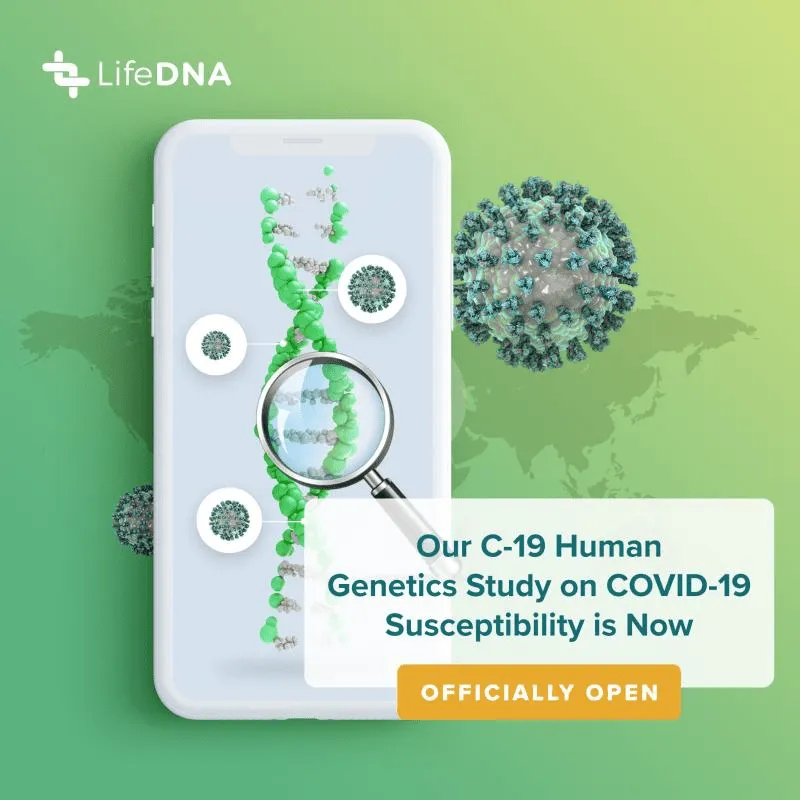
In response to the pandemic, LifeDNA announced the availability of the Covid-19 Susceptibility Report.
- Predisposition to coronavirus infection
- Infection Severity
- Reaction to Oseltamivir
- Reaction to Chloroquine
- Response to Hydroxychloroquine
- Response to Lopinavir
9. Carrier Status - 11 traits
The Carrier Status report became available to LifeDNA customers in late 2020.
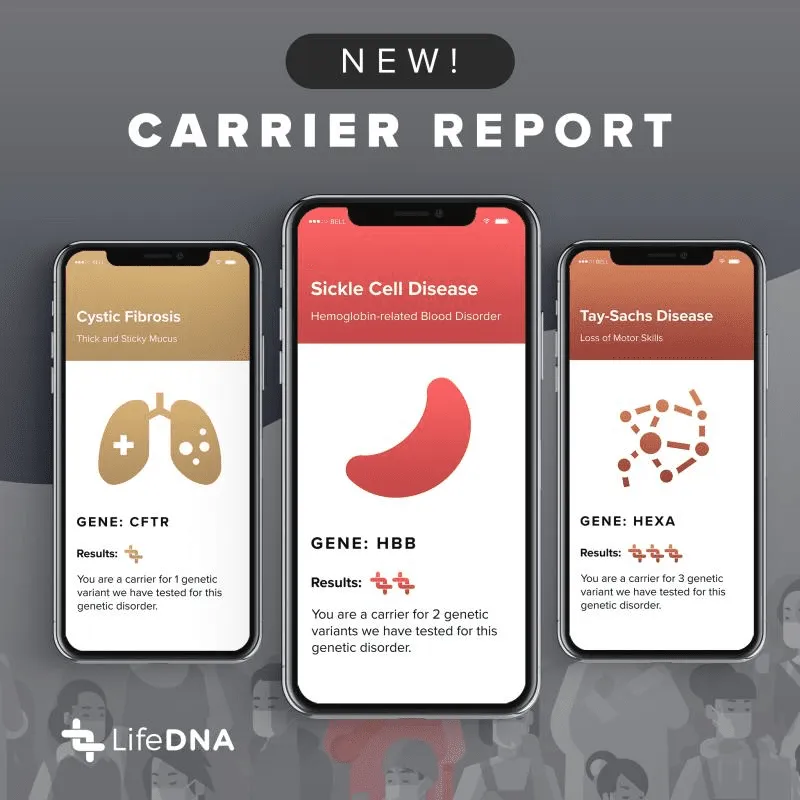
- Sickle Cell Disease and Other Hemoglobinopathies
- Cystic Fibrosis
- Tay-Sachs Disease
- Canavan Disease
- Familial Hyperinsulinism
- Hereditary Sensory Neuropathy
- Phenylketonuria
- Hereditary Fructose Intolerance
- Autosomal Recessive Polycystic Kidney Disease
- Familial Mediterranean fever
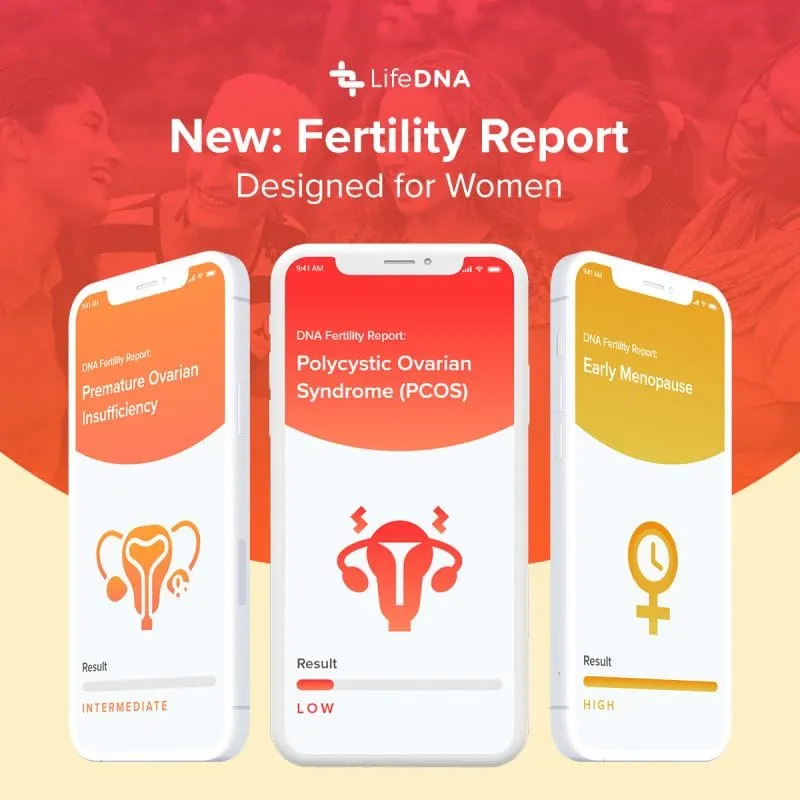
10. Fertility (exclusive to women) - 9 traits
- Polycystic Ovarian Syndrome (PCOS)
- Early Menopause
- Premature Ovarian Insufficiency
- Ovarian Reserve
- Recurrent Pregnancy Loss
- Recurrent Implantation Failure (IVF)
- Endometriosis
- Placental Abruption
- Preeclampsia
The Fertility report, designed for women, became available in May 2021.
How Does LifeDNA Work?
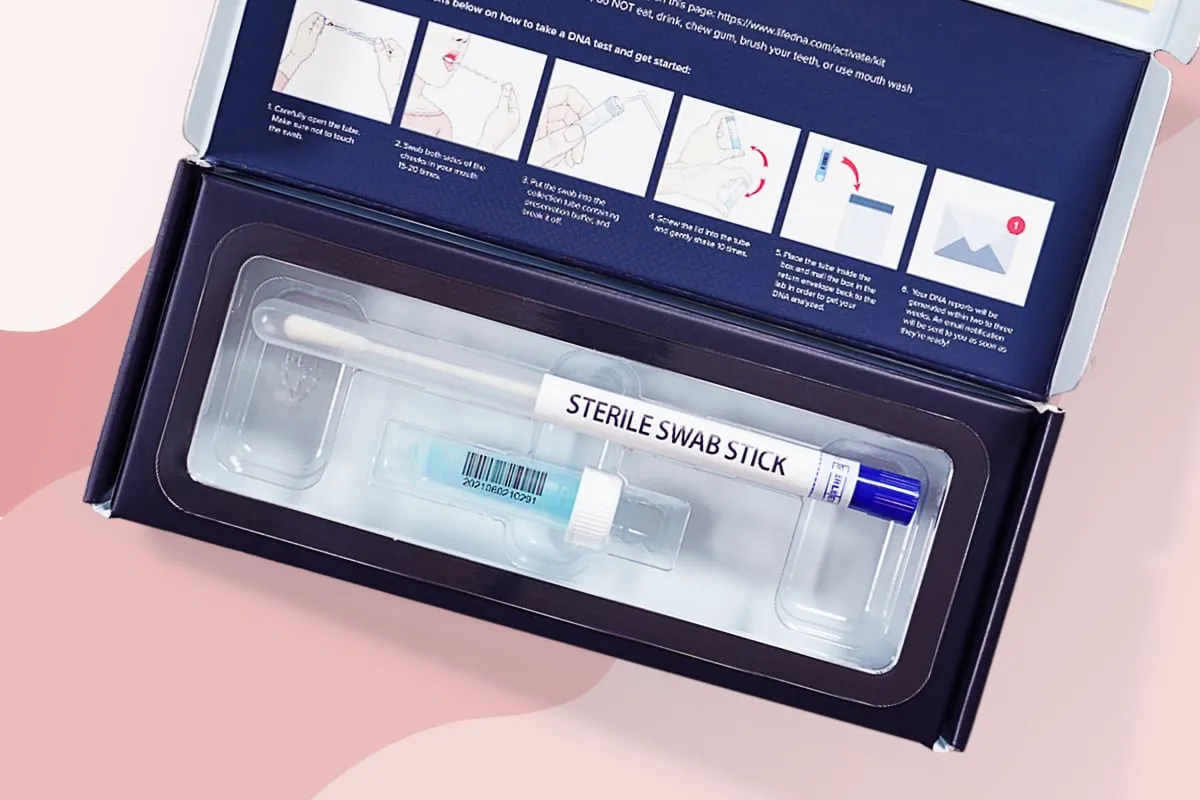
- LifeDNA sends its DNA test kit and has you take a cheek swab. Alternatively, it can also analyze your raw DNA data from other DNA testing companies, including 23andMe, Ancestry, MyHeritage, Living DNA, and Family Tree DNA. If you want a simpler upload-first option built around guided health reporting, our SelfDecode review is a useful alternative to compare.
- Researchers compare the single nucleotide polymorphisms (SNPs) in your DNA with LifeDNA’s database.
- Based on your DNA data, you receive a personalized, unbiased report to help improve your skin, body, mind, and health.
It takes around two weeks to process your LifeDNA test results.
Is LifeDNA Accurate?
Yes, for the most part. Some buyers felt like their results were not totally spot-on, but many others who used the one-on-one counseling found their results were accurate and clearly explained by the genetic expert.
However, tests may vary in accuracy no matter where you take them. It depends on many factors, such as whether your sample was properly collected, delivered, and handled. Mistakes may occur at any step.
Take into account that DNA analysis isn’t always foolproof either. So there may be some discrepancies in your results.
Still, if everything goes right, you can look forward to some interesting insights into your life, health, and genetics. Always take DNA test results with a grain of salt and consult a genetic expert to best understand what they mean.
Where to Buy LifeDNA?
You can buy LifeDNA on their website.
How Much Does LifeDNA Cost?
- Diet and wellness pack — $59
- Wellness report bundle — $129
- Wellness test bundle — $199
Platinum members of LifeDNA enjoy the following perks:
- One-on-one consultation with a genetic expert
- Unlimited updates and additional traits
- Disease, Carrier Trait, Fertility, Gut Health, and Covid-19 Reports
- Access to LifeDNA smart nutrition app (launching soon)
- Complimentary membership to LifeDNA’s exclusive community on Facebook
- Free Genomics Newsletter subscription
- VIP customer service
Is LifeDNA Worth the Money?
Yes, for most buyers. The one-on-one consultation more than makes up for the price. The consultant is professional and knowledgeable, walking through your results and explaining the lifestyle changes that fit your genetic profile.
The consultation covers everything from disease risk to beauty and skincare recommendations. The reports themselves are eye-opening, especially for first-time test-takers.
The decision to test your DNA comes with a cost and ideally involves endorsement and guidance from a professional.
This keeps anyone from making health-related choices based on inaccurate, incomplete, and misunderstood test results. However, if you’re worried about a particular ailment, get tested. This can eliminate uncertainty and identify family members who are also at risk. It may not predict the age of onset, but it can guide diagnostic tests and medical care.
LifeDNA vs. Competitors
While LifeDNA reviews are mostly positive, some DNA testing companies provide DNA analysis for free or at a lower price. However, they don’t come with personalized supplements or beauty products. Furthermore, their reports may not include the genetic traits that LifeDNA offers.
| LifeDNA | Genetic Genie | MyTrueAncestry | GEDMatch | |
|---|---|---|---|---|
| Price | $59-199 | Free | Free base cost, higher tiers between $37-844 | Free base cost, $10 monthly fee for upgrade |
| Offers genetic testing? | Yes | No | Yes | No |
| Can upload DNA data? | Yes | Yes | Yes | Yes |
| Consultation? | Yes | No | No, but they have social media groups | No |
Source: 123rf
New research in genetics constantly evolves. The kind of DNA tests available today didn’t exist ten years ago. Even then, the advances in genetic testing played a role in diagnosing and treating certain diseases.
However, other factors impact gene expression. This includes age, exposure to substances, and environmental influences (LifeDNA points out that your results won’t be 100% accurate because of this).
So as much as genetic testing can help you plan, it’s a bit premature to build solid plans around just DNA results.
Genetics is a vital piece of the jigsaw puzzle that makes up life, but it’s just one part of who you are.
What is a Genomic Analysis?
Unlocking your DNA requires genomic analysis.

An organism’s genome holds the blueprint for building and maintaining that organism. In humans, every single cell in the body contains a copy of the entire genome. About 3.2 billion DNA base pairs reside in the chromosomes within the nucleus.
Genomic analysis refers to the process of identifying, measuring, and comparing features such as DNA sequence and gene expression at a genomic scale.
It involves three main steps:
- Given a DNA sequence, identifying which portions of the genome are involved in coding proteins and which aren’t
- Identifying the genome’s main elements
- Splitting a newly sequenced genome into coding and non-coding regions
Different methods and machines exist for sequencing genomes. The average sequencing project takes three to seven days to complete, depending on the sample count.
Medical DNA Test vs. Consumer DNA Test
A medical DNA test is more regulated than a number of home DNA tests because of the controlled environment. It specifically tests for a wide range of genetic mutations. These genetic mutations are often associated with particular diseases and types of cancers.
A medical DNA test involves formal genetic counseling and risk assessment before and after the test. Getting tested further won’t be necessary to confirm the results.
Your insurance most likely covers the testing costs, too, so you don’t have to spend anything out of pocket.
However, not all DNA testing kits are created equal. A home DNA test or a direct-to-consumer test may require further testing. This is to confirm a mutation noted in the test.

Source: 123rf
A home DNA test tests for select mutations in a limited number of genes related to certain diseases. It is not like a medical DNA test. Unfortunately, it isn’t covered by insurance. A genetic counselor isn’t typically involved, either. What you get is often limited to online education.
Reading your results online can be challenging as well. You can easily misunderstand parts of the health reports.
For doctors and scientists to closely examine DNA, both tests will require the following:
- Blood test
- Hair sample
- Mouth swab
Health and Wellness Benefits of Home DNA Testing
The evolution of DNA testing technology has promoted awareness of genetic diseases. Nearly a third of a poll’s respondents said that they or their family members have considered getting tested. This is because testing has become easier and cheaper.
A DTC or home DNA test kit can be obtained and used easily. It doesn’t require approval from your health insurance company or healthcare provider.
How Does Home DNA Testing Benefit You?
While it isn’t a diagnostic test, people find out right away if the risk of having cancer is high. A home DNA test can also reveal if a person is at risk for Alzheimer’s and other illnesses.
DNA testing can be instrumental in helping people take the necessary steps to protect themselves and keep healthy.
A DNA test may be used to educate family members about potential health and genetic risks. This can help them make lifestyle changes if needed.
In-depth knowledge of your risk for diseases can be beneficial in a significant way. Knowing your risk is low equally provides a sense of relief from uncertainty.
Testing will not eliminate your risks. But the information you get from a DNA test can help you make more informed lifestyle and medical decisions.
Talk to a qualified health professional about what your results mean for you.
How We Evaluated The Test
Our team spent hours researching, reading buyer reviews, and testing features firsthand. Here are the criteria behind the LifeDNA rating.
Accuracy
The evaluation started with the company’s research and development procedures. Reports should reflect the most recent findings in the relevant fields of science.
Privacy
Strong security practices matter. DNA test results contain sensitive information, and in the wrong hands, that data can be used against you. We only recommend DNA tests and services that take real steps to keep your information secure.
Price
Every product should earn its price tag. LifeDNA’s bundles were compared against equivalent offerings from other companies to confirm you are getting fair value.
User experience
Real buyer feedback shaped the rating. Widespread disappointment in a product, service, or test counted against it. Strong customer service counted in its favor.
About LifeDNA
LifeDNA is a personal genomics company based in Hawaii, USA. It was founded in 2017 by Cyril Moukarzel, Jared Kushi, and Steve Markowitz.
LifeDNA uses an algorithm built on 600+ peer-reviewed scientific studies. It generates the following DNA reports:
- Intelligence
- Personality
- Nutrition
- Supplementation
- Fitness
- Skincare
LifeDNA, unlike other testing companies, goes beyond ancestry and disease risk. It ultimately recommends skincare products and nutritional supplements based on your DNA.
Why Trust Us
KnowYourDNA is committed to making healthcare more accessible. Every featured product meets industry standards for reliability and science-backed reporting.
Only at-home kits with credible testing methods and evidence-based reports make the cut. In-house medical experts review all content before publication.