
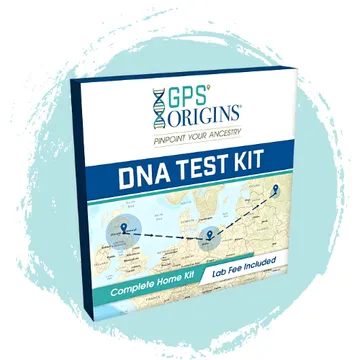

GPS Origin’s reports aren’t as comprehensive as Ancestry or 23andMe, but they do have some unique features. GPS Origins was the only test that told me the exact town/village where my ancestors likely lived.
Other tests typically only make an estimate of your ancestry’s regional origins, but GPS was surprisingly specific. You can also upload raw DNA onto their website and still get results. Overall, it’s a good way to learn more about your ancestry without taking a test.
Although it isn’t the best DNA test on the market, it’s a good starting point. GPS Origins is also a good option if you have Asian and/or African ancestry.
Our Ratings
- Reputation & trustworthiness: ⭐⭐⭐
- Test & results: ⭐⭐⭐
- Support: ⭐⭐⭐
- DNA test accuracy: ⭐⭐⭐⭐
- Privacy: ⭐⭐⭐
- Convenience: ⭐⭐⭐⭐
- Cost & additional fees: ⭐⭐⭐⭐
GPS Origins Pros & Cons
GPS Origins is a unique DNA test with its own pros and cons.
| Pros | Cons |
|---|---|
| It’s a simple, non-invasive test that requires a saliva sample. | Tests for Asian and African ancestry are sold separately. |
| It can give you the exact location of where your ancestors lived. | GPS Origins doesn’t give you much for the price it’s asking. |
| It can give detailed reports for those of Asian or African descent. | It only accepts older DNA data for uploading. |
How Does GPS Origins Work?
GPS Origins is an autosomal DNA test like Ancestry and 23andMe. This means it looks at 22 out of the 23 pairs of your human chromosomes.
GPS Origins doesn’t provide the usual ethnicity percentages you get from other autosomal DNA tests. Instead, it looks at the origins of your ancestors, pinpoints the exact village or town where your ancestors stayed, and traces their migration routes.
GPS origin results are divided into two parts: Gene Pool Percentages and DNA Migration Routes. It walks you through human evolution since it began 360 million years ago.
Compared to Ancestry or 23andMe, GPS Origins’ reports are easier to navigate. But it’s only because it fits on one page, which leaves much to be desired. Below is a breakdown of what you’ll get:
1. Gene Pool Percentages
GPS origins determine your genetic ancestry through gene pools. These are the sum of a population’s genetic makeup at a given time. This information helps GPS Origins uncover two things about your DNA:
- Which communities contributed to your unique DNA signature
- Specific places your ancestors lived
- The exact location of your ancestors including historic towns or villages.
2. DNA Migration Routes
The migration maps show the top six locations where your DNA underwent the most changes. They also tell a visual story of your ancestors’ migration journeys.
Unfortunately, GPS Origins can’t tell you which migration routes are from your mother’s or father’s side of the family. That’s because it only tests your autosomal DNA, not YDNA or mtDNA. You would have had to take different DNA tests to know your paternal or maternal lineage–like the 23andMe Ancestry Kit.
My GPS Origins Report
I took the GPS Origins DNA Test Kit since I have mostly European ancestry. Here’s what my gene pool percentage looks like:
By default, the report will include your top three gene pools. Clicking on a pool reveals the maps associated with them or the places where your ancestors lived. If you want to see your full report, click on the “All Gene Pools” button.
In my case, I have 13 gene pools:
- 19.2 percent of my DNA is from communities in Fennoscandia (now modern-day Norway, Sweden, and Finland).
- 14.3 percent of my DNA is from communities in the Orkney Islands (located north of Scotland).
- 13.9 percent of my DNA is from communities in Southern France.
- Some of these match up with my results from 23andMe and Ancestry. However, there are a few differences.
GPS Origins vs. Other Companies
My AncestryDNA report says that I share most of my DNA with people from Norway, which is close to what GPS Origins found. On the other hand, my 23andMe results say most of my DNA is shared with French and German populations (Norway only comes second).
There’s really no way of telling which DNA test is the most accurate. But it’s interesting to see some similarities in my reports.
You can learn more about your top three gene pools by clicking “Read Full Story.” This will open you up to your ancestral communities’ history, language, and migration patterns.
| GPS Origins | 23AndMe | AncestryDNA | |
|---|---|---|---|
| Chromosomes Analyzed | Autosomal DNA | Autosomal DNA | Autosomal DNA |
| Additional Chromosome Tests | None | mtDNA, YDNA | mtDNA, YDNA |
| Ethnicity | Not provided | Provided | Provided |
| Focus | Origins of ancestors, migration routes | Ancestry based on ethnicity percentages | Ancestry with additional insights from mtDNA and YDNA |
Other GPS Origins Features
Like most DNA kits, GPS Origins allows you to download your raw DNA data. You can upload it to other DNA testing companies to learn more about your genes.
GPS Origins also lets you upload genetic data from three competitors, namely: Ancestry, 23andMe, and Family Tree DNA. However, it doesn’t accept 23andMe Version 5 Data or Family Tree DNA data downloaded after November 2018.
Is GPS Origins Test Accurate?
GPS Origins is very specific when it comes to providing the exact location of your DNA’s origins. If your parents came from the same place and share similar gene pools, GPS Origins can trace their DNA signatures to the country of their origin 81 percent of the time.
GPS Origins claims to predict the correct country of origin of at least one parent 96 percent of the time. However, some genetics experts have valid concerns about GPS Origins’ accuracy.
GPS Origins Tests
GPS Origins has three DNA testing services. Here is an overview of each test:
1. GPS Origins® Ancestry Test
The DNA kit helps determine your ancestry. You’ll get reports on:
- Your maternal and paternal ancestors’ migration route
- Places where your ancestors lived and mixed with locals
- Find out which populations contributed to your genetic profile
This kit is ideal if you don’t know your family history or if you have mixed ancestry. It’s because the test can trace your ancestral origins to different places.
2. GPS Origins® African Edition
The test confirms your African ancestry. It can provide a detailed report on the migration path of your African ancestors.
It can also provide a full ethnicity estimate that shows how much DNA you share with other people. We recommend this test for people with known ancestors from Africa or who have good reason to believe they have African heritage.
3. GPS Origins® Asian Edition
The kit determines your Asian ancestry and gives you detailed results on your Asian ancestral composition. It can also provide a complete ethnicity profile that identifies people with common ancestors. It works best for people with Asian ancestors or if you think you are of Asian descent.
How GPS Origins Protects Your Privacy
Out of all the at-home DNA tests I’ve taken, GPS Origins was the least secure because it requires that you place your name on the test kit when you return it.
Other companies assign kit numbers to your tests, removing any personally identifiable information that will reveal your identity. Despite these privacy issues, GPS takes other measures to secure your privacy.
For example, the company:
- Destroys all test samples after testing is complete (except for legal paternity tests).
- Only analyzes and stores data for the specific test ordered by the customer. This means the lab won’t perform other types of analysis on existing data.
- Does not maintain publicly accessible databases of ancestry-related or other data.
- Is committed to protecting the security of customers’ information. The company uses industry-standard security technologies and procedures to help protect customer information from unauthorized access, use, or disclosure.
- Does not share or sell customer data with companies or entities not connected to DNA Diagnostics Center. Because of this policy, “opt-out” is not considered necessary.
How Much Does GPS Origins Cost?
GPS Origins’ tests cost $199 on HomeDNA’s website. However, this DNA test kit is resold by other retailers, so you’ll encounter prices ranging from $99 to $199. If you want to upload your raw DNA data, it will cost you $39.
For its price, this DNA test kit is pretty basic. You’ll get the same testing kit regardless of which test you buy, and it contains the following:
- Four cheek swabs for collecting the DNA sample
- An envelope for storing your DNA sample
- A return envelope (postage-paid for U.S. customers)
- Instructions
How Does GPS Origins Kit Work?
You can buy the test at HomeDNA’s website or other online retailers. When it arrives, the first thing you need to do is register the kit.
Afterward, you can collect test samples and send them back for analysis. To collect your DNA sample:
- Swab your check four different times
- Wait for your samples to dry
- Put the swabs in the envelope and send them back
- You’ll get an email once they have received your DNA samples.
Your personalized DNA test results should arrive within six weeks. I got mine in 17 days—one of the fastest I’ve received.
Is the GPS Origins Test Worth It?
Although GPS Origins makes the extraordinary claim of finding specific regions where your ancestors lived, it sounds dubious and doesn’t seem to be with it. While the results are unique, GPS Origins is pretty limited when put up against the likes of 23andMe or AncestryDNA.
For example, GPS Origins gives you one page of information. The competition provides health traits, possible relatives, and more in-depth ancestry information.
Moreover, the test kit can be quite expensive, and the information it provides doesn’t justify the price tag. That being said, the test goes deep when it comes to things like migration patterns.
Why Trust Us
I’ve been testing DNA kits for the last seven years and have taken every DNA test on the market. I’ve compared results and have been committed to testing and tracking any changes over time.
As an organization, we at KnowYourDNA are committed to helping you get the most accurate information about your ancestry, health risks, and other genetic traits.
We only choose at-home DNA tests that meet the standards of the DNA testing industry and provide reliable testing methods. Our in-house medical experts help ensure the accuracy of our articles by reviewing them before publication.

Pros
- A simple, non-invasive test that requires a saliva sample
- You’ll learn the exact locations where your ancestors lived
- You can get even more detailed reports if you’re of Asian or African descent
Cons
- Tests for Asian and African ancestry are sold separately
- You don’t get much for the price you pay
- Only accepts older DNA data for uploading