
Genomelink is a DNA upload service that turns raw data from 23andMe, AncestryDNA, or MyHeritage into 352-plus trait and ancestry reports, with the Unlimited Traits plan promising up to 500. The free tier gives you 100 trait reports with no credit card. Paid access is sold as the Unlimited Traits subscription (monthly or annual) plus one-time individual report purchases, and the $29 one-time tier was confirmed when we checked the live site in May 2026.
This review reverifies pricing, plan structure, privacy handling, and competitor positioning against primary sources on May 20, 2026. The short answer is unchanged: Genomelink is a smart second-step buy, not a first-step DNA test.
Key Takeaways
- Genomelink is an upload service, not a DNA test. You need an existing raw DNA file from 23andMe, AncestryDNA, or MyHeritage. Genomelink does not sell a collection kit.
- The free upload unlocks 100 trait reports with no credit card, verified on the Genomelink homepage in May 2026.
- The paid library expanded to 352-plus reports, with Unlimited Traits promising up to 500. Plan structure is the Unlimited Traits subscription (monthly or annual) plus one-time individual reports with lifetime access; stand-alone reports are not bundled into the subscription. The $29 one-time tier was confirmed in May 2026.
- Privacy controls are explicit. Research participation is opt-in, account deletion is documented, and the opt-out page covers third-party analytics treated as a “sale” under some state laws. The Privacy Policy took effect April 15, 2026.
- Accuracy is capped by your source kit. Genomelink interprets raw data and does not generate new genotypes. MedlinePlus Genetics and NHGRI both warn that raw-data third-party interpretation can produce false positives.
Our Verdict
Genomelink earns a buy for one specific reader: someone who already has a 23andMe, AncestryDNA, or MyHeritage file and wants more trait analysis without ordering another test. The free 100-trait upload is a genuine low-risk entry, and the 352-plus paid library covers categories (caffeine metabolism, sleep, fitness response, ancient ancestry) that primary testing services skip.
The paid tiers are harder to justify without a concrete goal. The $29 one-time path is the safest entry if you are unsure about a subscription. If your main question is health interpretation, SelfDecode is the better match. If you still need a first DNA test, start with the 23andMe review or the accuracy roundup before paying Genomelink anything.
Is Genomelink Legit, or Is It a Scam?
Genomelink is a legitimate DNA upload service, not a scam. The free tier delivers 100 real trait reports without a credit card, the company posts a dated Privacy Policy (effective April 15, 2026) and a separate Informed Consent document, research participation is opt-in and revocable, and account deletion is documented through the help center. None of that is the profile of a fraud operation.
The scam question comes up anyway — search for Genomelink and you will find Reddit threads calling it one. Having read the complaints and the company’s own documents, the pattern is consistent: almost all of the anger traces to subscription confusion (people who subscribed to browse and felt the recurring charge wasn’t worth it) and disappointment with individual trait reports (novelty traits resting on thin research). Those are value complaints, not fraud complaints. We found no credible pattern of unauthorized billing or undisclosed data sales, and the Informed Consent states Genomelink does not currently sell raw DNA data to third parties for marketing.
The reputation data matches that read. Genomelink’s Trustpilot page showed a 3.5 average across 1,410 reviews when we checked in May 2026 — the broad middle of consumer-DNA services, not scam territory. Positive themes cluster around the free upload and trait variety; negative themes cluster around subscription value.
Two practical safeguards if you remain cautious: stay on the free 100-trait tier (it requires no payment details), and if you do pay, prefer the one-time report purchase over the subscription so there is nothing recurring to cancel. The Privacy and Data Handling section below covers the data-safety side in detail.
What You Get
Genomelink splits its offering into free and paid tiers. Both require uploading a raw DNA file from AncestryDNA, 23andMe, or MyHeritage, per the company’s DNA Reports FAQ verified in May 2026.
Free Tier
The free upload unlocks 100 trait reports across nutrition, personality, fitness, and physical traits. No credit card. Sign-up takes a few minutes once your raw data file is ready.
These reports summarize published genetic associations, not clinical-grade health assessments. MedlinePlus Genetics notes that most direct-to-consumer results are informational or educational rather than diagnostic, and tests may not evaluate every relevant variant. Treat the free tier as a sampler before deciding whether the paid library is worth your money.
Paid Plans and Pricing
The paid library lifts you from 100 trait reports to 352-plus, with Unlimited Traits promising up to 500. As of May 2026, Genomelink’s help center describes Unlimited Traits as a subscription with monthly or annual billing, alongside Plus and Pro tiers that layer in genealogy features.
Individual reports also exist as one-time purchases with lifetime access, and Genomelink’s help center is explicit that these stand-alone reports are not bundled into the Unlimited Traits subscription. A $29 one-time tier was confirmed during our May 2026 check and remains the safest entry for buyers who want a specific report without a recurring charge. The “$14/month or $29 one-time” framing we used in earlier versions no longer captures the full plan structure, so verify current options on the live pricing page before committing.
Genomelink’s ancestry composition tool estimates how your uploaded genotype compares with its reference populations, with marketing citing 160-plus ethnicity and sub-region labels and roughly 2,000 community-level breakdowns. Treat those percentages as statistical ancestry estimates: a useful second opinion, but not a definitive ethnic identity or a bright-line biological category. NHGRI describes genetic ancestry as a statistical similarity to reference groups (not a fixed biological category), and MedlinePlus Genetics notes that SNP-based ancestry estimates can vary between providers and may be nonspecific for some populations.
Report Category Breakdown
The table below reflects Genomelink’s published DNA Reports page as of May 2026. Counts within categories shift as Genomelink adds new research, so confirm on the live page before treating a number as a purchasing signal.
| Category | Free tier access | Paid / premium required |
|---|---|---|
| Traits (physical) | Partial | Full library |
| Fitness | Partial | Full library |
| Nutrition | Partial | Full library |
| Personality | Partial | Full library |
| Wellness | Limited | Full library |
| Ancestry / heritage composition | No | Yes |
| Ancient ancestry | No | Yes |
| Hereditary cancer risk reports (e.g., BRCA1/BRCA2) | No | Not offered (Genomelink does not currently provide hereditary cancer risk reports) |
| Reproductive carrier screening | No | Not offered |
| Pharmacogenetic reports | No | Not offered |
The total trait and ancestry library is 352-plus as of May 2026, with up to 500 reports available on Unlimited Traits. The Informed Consent states the service is non-medical and does not analyze or report on medical diseases, carrier status, or medication response.
What Genomelink Does Not Do
Genomelink offers wellness and trait reports, not clinical disease-risk reports, carrier screening, or pharmacogenetic reports. The Informed Consent says the service is non-medical and does not analyze or report on medical diseases, medical-related traits, carrier status, or medication response.
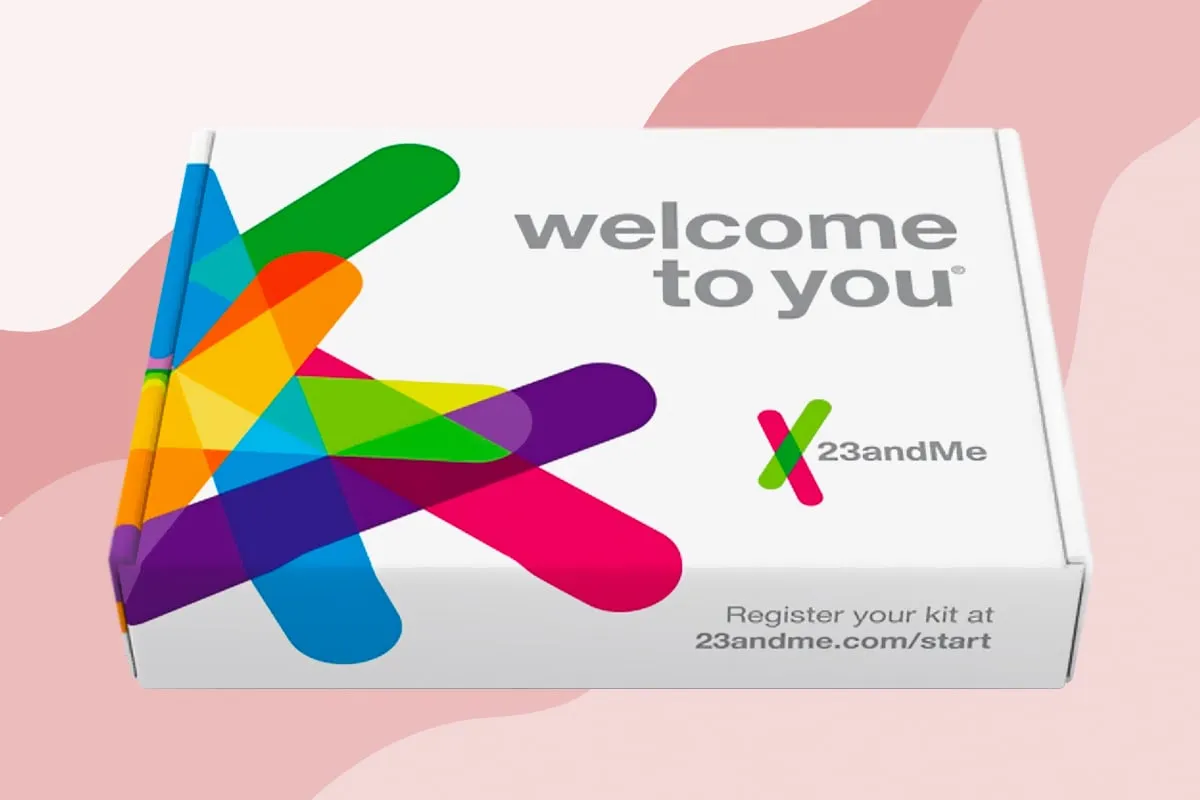
If you want those reports, you need primary DNA testing, not an upload service. 23andMe’s FDA-authorized BRCA1/BRCA2 Genetic Health Risk report is the most familiar example: it received a De Novo authorization in 2018 (DEN170046) and a later 510(k) clearance in 2023 (K223597). The filing limits the report to selected variants, says results are not a cancer diagnosis, and tells users not to make treatment decisions based on the consumer report alone. 23andMe’s pharmacogenetic reports received a separate De Novo marketing authorization on October 31, 2018 (DEN180028), with later 510(k) clearances for specific report modifications. FDA labeling frames these reports as information to discuss with a healthcare professional, and says they should not be used on their own to start, stop, or change treatment. Genomelink does not match (or claim to match) any of that.
Accuracy and the Third-Party Interpretation Limit
Genomelink does not generate new genotype data. It interprets the raw file your source kit produced, so the accuracy ceiling is set by which SNPs that kit actually read. A 23andMe v5 chip and an AncestryDNA v2 chip cover overlapping but distinct sets of variants. If a Genomelink report depends on a SNP your kit did not include, you may see a “low coverage” flag or no result. Genomelink’s help center acknowledges that missing markers in an uploaded file can affect report precision.
Individual trait results are calculated from markers linked to traits in published research or Genomelink’s internal studies. The strength of evidence behind any single report varies: well-studied traits like caffeine metabolism rest on more replicated science than novelty traits do. Most Genomelink reports rely on published genome-wide association study (GWAS) results, which are statistical associations between common variants and traits in population research, not single-gene deterministic calls.
MedlinePlus Genetics and the National Human Genome Research Institute both warn that raw-data third-party interpretation can produce false positives, and that any health-relevant finding should be confirmed through clinical testing with a qualified professional. Do not act on a Genomelink trait result alone for medical decisions.
Sample Report Walkthrough: Caffeine Metabolism
Here is what a single Genomelink trait report shows, using caffeine metabolism as the example. This walkthrough is based on Genomelink’s published example reports and the help-center description of how trait results are calculated.
Open the report and you see a one-line result label (typically a fast/normal/slow categorization or a high/low scale) paired with a confidence indicator. Below that, Genomelink lists the relevant SNPs from your uploaded raw file (for caffeine, that often includes variants near the CYP1A2 gene that influence how quickly your liver clears caffeine). The report then summarizes the trait association, cites the underlying research study, and offers a short “what this means” interpretation.
Two things to notice. First, the result is a probabilistic association, not a deterministic call. Second, the report depends on the relevant SNPs being present in your source file: if your uploaded raw data does not include the variants the report uses, you will see lower confidence or no result. That is the third-party-interpretation ceiling in action, not a Genomelink defect.
Privacy and Data Handling
Genomelink’s Privacy Policy was updated April 1, 2026 and took effect April 15, 2026. We checked it on May 20, 2026 alongside the Informed Consent document and the opt-out portal.
Research consent is opt-in. The Informed Consent treats participation in research and aggregated analysis as a separate choice from account creation, and users can revoke consent.
Third-party sharing exists, with limits. The April 2026 Privacy Policy describes service-provider sharing for hosting, analytics, and payment processing, plus standard law-enforcement language. The policy states Genomelink does not currently sell raw DNA data to third parties for marketing.
Analytics opt-out is posted. The “Your Privacy Choices” page notes that third-party analytics collection may qualify as a “sale” under some state privacy laws (California, Colorado, and others) and lets users opt out.
Account and data deletion is documented. Genomelink publishes a deletion-request flow through its help center; the Privacy Policy covers genetic-information storage, secondary use, and retention.
Genomelink’s explicit opt-in research consent and dated Privacy Policy are stronger than many upload services. MedlinePlus Genetics also notes that data uploaded to a third-party service is no longer protected by the original testing company’s privacy policy, so read the Genomelink documents anyway, since policies change.
How Genomelink Compares
The raw-DNA upload landscape has narrowed since 2020: a few competitors are gone, a few are still active with caveats.
| Service | Status (May 2026) | Model | Best for |
|---|---|---|---|
| Genomelink | Active | Unlimited Traits subscription (monthly/annual) + one-time reports, raw-upload | Trait variety and ancestry exploration from existing DNA |
| Promethease | Active (official site still loads; verify checkout before purchase) | One-time report, raw-upload | Variant-level literature matching (SNPedia links) |
| GEDmatch | Active | Free + paid tier, raw-upload | Ancestry tools and DNA matching for genealogists |
| DNALand | Discontinued (offline since around 2020) | (Was free, raw-upload) | (No longer available; historical reference only) |
| MyHeritage DNA upload | Active | Free upload with paid feature unlocks | Ancestry-focused upload, family-tree integration |
| SelfDecode | Active | Subscription, raw-upload | Guided health interpretation and recommendations |
Promethease. Promethease’s official site still loaded when we checked, though its long-term availability has been uncertain since the MyHeritage acquisition. Promethease links variants to the SNPedia literature database, which is a different use case from Genomelink’s consumer-friendly trait summaries. Verify the checkout flow before relying on it.
DNALand closed around 2020. Genomelink is a reasonable functional replacement for trait reports; GEDmatch is the better replacement for relative-finder and ancestry matching.
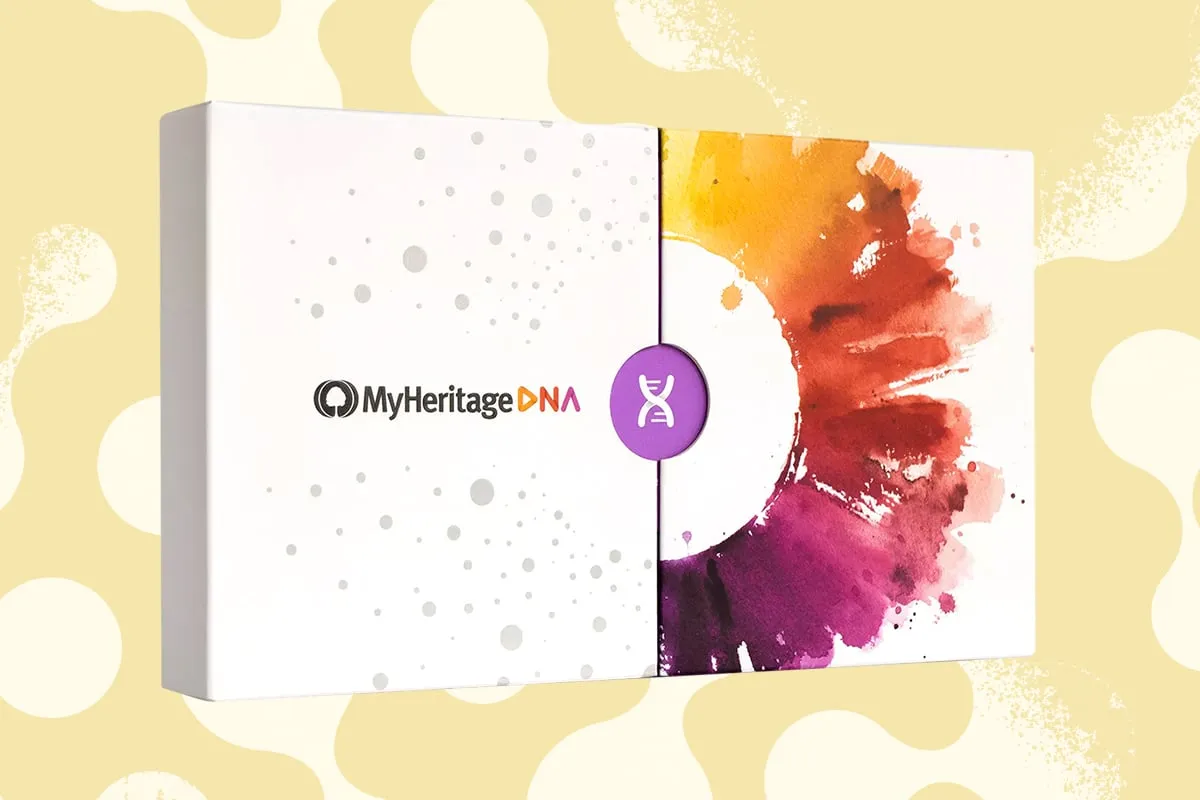
MyHeritage is both a primary DNA kit and an upload destination. If you tested with MyHeritage originally, your ancestry results are already in its native interface, so the upload path makes more sense for 23andMe or AncestryDNA customers. The MyHeritage DNA review covers the full comparison.
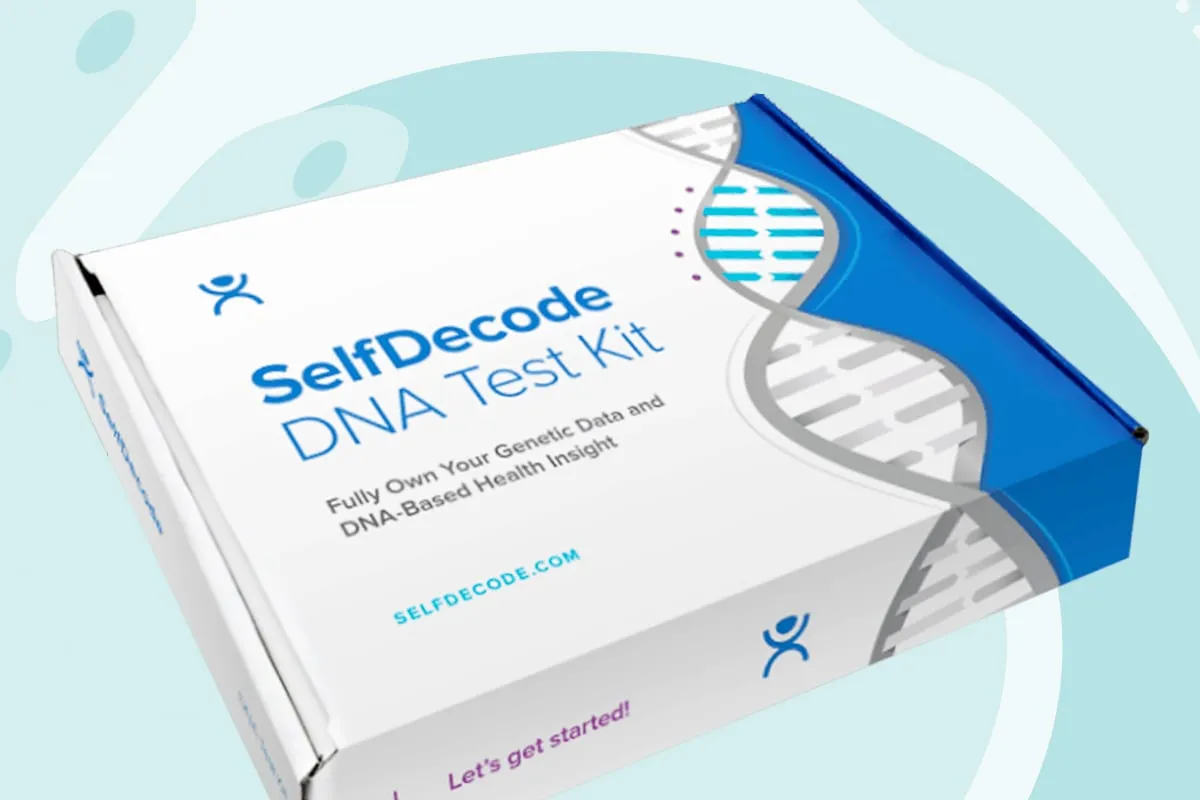
SelfDecode is the strongest alternative for guided health interpretation. The SelfDecode review sets out the difference in detail.
Net: Genomelink wins on trait variety and the free-trial hook. SelfDecode wins for health-oriented interpretation. GEDmatch wins for genealogy.
Pros and Cons
Pros
- Free upload with 100 traits lowers the risk of trying the platform
- 352-plus paid traits cover categories that primary testing services skip
- Accepts files from AncestryDNA, 23andMe, and MyHeritage with no new kit required
- Privacy controls include opt-in research consent, an explicit opt-out portal, and a documented deletion flow
Cons
- Paid value is unclear without a specific goal: subscribing to browse leads to wasted spend
- Ancestry composition is less detailed than native results from AncestryDNA or 23andMe
- No clinical health reports, carrier screening, or pharmacogenetics: this is not a health platform
- Accuracy is capped by your source kit, and some reports may show low coverage or no result
Who It Is Best For
If you tested with 23andMe or AncestryDNA, got the basics, and want more trait analysis without another saliva sample, Genomelink fills that gap. The free tier lets you evaluate before paying.
If you are curious about ancient ancestry or want a second composition estimate, the paid library is worth a closer look. Unlimited Traits makes sense if you want ongoing access to new reports; one-time individual reports make sense if you only care about a handful of specific traits, and the $29 one-time path remains the lowest-risk entry.
If you still need a primary DNA test, skip Genomelink for now. Start with the best DNA tests roundup or the 23andMe review. Our raw-DNA-data guide covers the upload landscape end to end if you already have a file.
The Bottom Line
Genomelink is a solid add-on for DNA data you already own. The free upload is worth trying, the 352-plus paid library goes deeper than most primary testing services, and the privacy documentation is more transparent than most upload competitors. Pay for premium access only when you know which reports you want; the $29 one-time path remains the safest entry, and any health-relevant finding still needs clinical confirmation.