
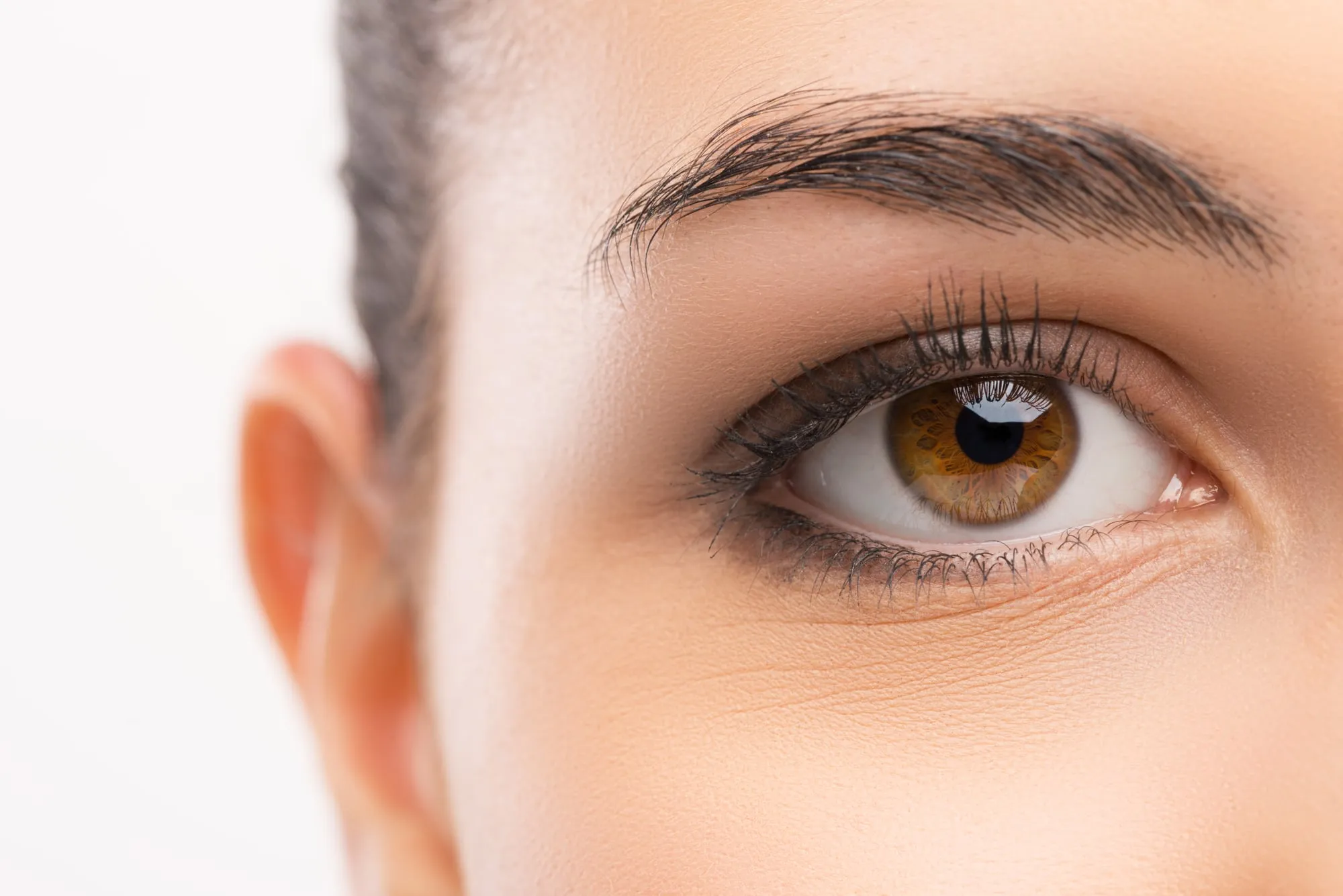

Your eye color comes down to one thing: melanin. The amount and type of this pigment in your iris is what makes your eyes brown, blue, green, or anything in between. But the genetics behind it are far more interesting than the simple “brown is dominant” model you may have learned in school.1
We’ll walk you through exactly how your genes shape your eye color, which genes matter most, and why two blue-eyed parents can sometimes have a brown-eyed child. Services like 23andMe even include trait reports that predict your likely eye color based on your DNA.
Key Takeaways
- Your eye color depends on melanin: The amount and type of pigment in your iris determines your eye color, not a single gene.
- Multiple genes are involved: At least 16 genes play a role, with OCA2 and HERC2 being the most influential.
- Inheritance is not simple: Two blue-eyed parents can have a brown-eyed child because eye color is polygenic.
- Eye color can change: Babies are often born with blue-gray eyes that darken as melanin builds up, usually stabilizing by age 6.
- Green is the rarest: Only about 2% of people worldwide have green eyes.
How Do Your Genes Determine Eye Color?
Your genes control how much melanin your body produces and where it ends up in your iris. Two types of pigment matter here: eumelanin (brown-black) and pheomelanin (red-yellow). The balance between them shapes the final color you see.
Here’s how the process works:
Melanin Production
Your genes direct how much melanin your body makes. Two genes matter most: OCA2, which helps produce and store melanin, and HERC2, which acts like a switch that controls how active OCA2 is. Variations in either gene can raise or lower your melanin levels.
Multiple Genes Working Together
Eye color is not a one-gene trait. Beyond OCA2 and HERC2, at least eight other genes — including ASIP, IRF4, SLC24A4, SLC24A5, SLC45A2, TPCN2, TYR, and TYRP1 — help manage melanin production and transport.2 These genes interact in layered ways, which is why you see such a wide spectrum of eye colors in the world.
Gene Regulation
Some genes don’t make pigment directly. Instead, they control other genes. HERC2, for example, regulates OCA2. Small changes in this regulatory relationship can shift how much melanin your iris produces — enough to tip the balance from blue eyes to brown.
Melanin Concentration
If your iris has more eumelanin, your eyes look brown. Less eumelanin means light scatters off the iris and your eyes appear blue or green. It’s a similar principle to why the sky looks blue — there’s no blue pigment, just the way light interacts with the structure.
Inheritance Patterns
You may have learned that brown eyes are “dominant” over blue. That’s a useful shorthand, but it’s incomplete. Because so many genes are involved, eye color doesn’t follow a strict dominant-recessive pattern. The result is a wide range of possible outcomes, even within the same family.
Ancestry and Population
Your genetic heritage plays a role too. Different populations carry different combinations of eye-color-related gene variants. If your ancestors came from Northern Europe, for instance, you’re more likely to carry variants linked to lighter eye colors. A DNA test can show you where your ancestors came from and which trait variants you carry — see our best DNA tests for ancestry for options.
Lighting and Perception
Your eye color can look slightly different depending on the lighting. This doesn’t mean your eyes are actually changing — it’s the way light reflects off the melanin in your iris.
Which Genes Shape Your Eye Color?
No single gene decides whether you’ll have blue, brown, or green eyes. Instead, a team of genes works together to control melanin production and distribution. Here’s what each one does:
The Key Eye Color Genes
- OCA2: Helps produce and store melanin in your iris. Variations in this gene can raise or lower your melanin levels, directly changing your eye color.
- HERC2: Acts as a control switch for OCA2. A single variation in HERC2 can dial down OCA2 activity, which is one of the strongest genetic predictors of blue eyes.
- ASIP: Influences the balance between eumelanin (dark pigment) and pheomelanin (reddish pigment). Changes here can shift your eye color toward warmer or cooler tones.
- IRF4: Affects overall melanin levels. Variations in this gene contribute to subtle differences in eye shade.
- SLC24A4 and SLC24A5: Help transport the ions your cells need to make melanin. Changes in these genes can alter both the type and amount of pigment in your iris.
- SLC45A2: Gives instructions to melanocytes — the specialized cells that produce melanin for your skin, hair, and eyes.
- TYR and TYRP1: Play central roles in melanin production. Variations can shift the balance between dark and light pigments.
- TPCN2: Helps move ions needed for melanin production, contributing to fine differences in eye color.
How Do Mutations Affect Eye Color?
Random changes in your DNA can produce unique eye colors and patterns. Here are the most common ways mutations influence what you see in the mirror:
- Disrupted gene function: A mutation can interfere with how a gene normally works, changing melanin production, transport, or storage.
- Altered melanin production: Mutations in TYR or TYRP1 can change how much pigment your body makes, leading to lighter or darker eyes.
- Regulatory changes: A mutation in HERC2 can change how active OCA2 is, which ripples through to your final eye color.
- Pigment balance shifts: ASIP mutations can change the ratio of eumelanin to pheomelanin, nudging your eye color toward a different shade.
- Heterochromia: This is when you have two different-colored eyes — for example, one blue and one brown. It happens when eye color genes express differently in each eye.
- Rare genetic conditions: Some mutations cause conditions like ocular albinism, where very little pigment reaches the iris, resulting in very light-colored eyes.
Is There a Single Gene for Blue or Brown Eyes?
No. There’s no single “blue eye gene” or “brown eye gene.”3 Eye color is a polygenic trait, meaning multiple genes interact to produce the final result.
Certain genetic variations have a stronger influence than others — especially those related to melanin processing — but they all work together. That’s why you see such a rich range of eye colors across the human population.
How Do You Inherit Your Eye Color?
You might remember learning that brown eyes are dominant and blue eyes are recessive. That model is useful as a starting point, but the reality is more complex because many genes are involved.
How Do Your Parents Influence Your Eye Color?
Both parents contribute to your eye color equally. Neither parent has a stronger influence than the other.
Two blue-eyed parents will often have a blue-eyed child, but not always. Because eye color involves so many genes, unexpected combinations can surface. It’s entirely possible for two blue-eyed parents to have a brown-eyed child.
Why Might Your Eye Color Differ From Both Parents?
This comes down to the complexity of polygenic traits. With multiple genes involved, you can inherit a combination of variants that neither parent visibly expresses.
Genetic variations carried silently for generations can resurface in unexpected ways. That’s why predicting exact eye color is difficult — and why family eye colors can surprise you.
Eye Color and Genetic Conditions
Certain genetic conditions can affect eye color. Here are the most notable ones:
- Albinism: A genetic condition that reduces melanin production throughout the body. People with albinism typically have very light-colored eyes, along with light skin and hair.
- Waardenburg syndrome: A genetic condition caused by mutations in pigmentation genes. It can produce strikingly pale blue eyes or eyes of two different colors.
- Heterochromia: Having two different-colored eyes. It can be genetic, or it can result from eye injury, surgery, or medication.
- Horner’s syndrome: A neurological condition that can cause differences in pupil size, which may affect how your eye color appears.
- Piebaldism: A genetic condition that produces patches of skin without pigmentation, a white forelock of hair, and sometimes lighter-colored eyes.
Common Questions About Eye Color
How Common Is Each Eye Color?
Eye color distribution varies by region and ancestry, but here’s a rough global breakdown:4
- Brown eyes: 70 to 80%
- Blue eyes: 8 to 10%
- Hazel eyes: 5%
- Amber eyes: 5%
- Gray eyes: 3%
- Green eyes: 2%
Brown is by far the most common eye color worldwide.
Can Your Eye Color Change Over Time?
Yes. Eye color changes are most common in early childhood.5 Most babies are born with bluish-gray eyes because their irises haven’t yet built up much melanin. As pigment accumulates, their eyes typically darken over the first few years.
For most people, eye color stabilizes around age 6. However, subtle shifts can happen throughout your life due to aging, certain medications, or medical conditions.
How Can You Predict Your Baby’s Eye Color?
You can make an educated guess based on the eye colors in both parents’ families, but it’s just that — a guess. Brown tends to be dominant over blue, and green or hazel can emerge from various gene combinations.
Because so many genes are involved, surprises are common. Your baby’s eye color may not match either parent’s.
What Is the Rarest Eye Color?
Green is the rarest, found in only about 2% of the world’s population.6
Green eyes get their color from a combination of low melanin levels and the way light scatters through the iris — similar to how the sky appears blue without any blue pigment.
Does Eye Color Affect Your Vision?
No. Eye color is a cosmetic trait and doesn’t affect how well you see. That said, melanin in your iris does help protect your eyes from UV light, so people with lighter eyes may be slightly more sensitive to bright sunlight.