

Our team spent 30+ hours researching the latest studies, surveys, and polls on the DNA testing market.
After gathering information from trusted sources, we compiled data on the following:
- Latest market trends and forecasts on the DNA testing industry
- Current and future demand for genetic testing services
- Number and percentage of companies providing DNA tests
- DNA database size of the largest DNA companies
- Demographics and consumer opinion around DNA testing
To ensure the reliability of the statistics presented here, we’ve only cited research from the last several years. All data was last reviewed in March 2026.
Market Trends in DNA Testing
The demand for genetic tests has increased in the last decade. More people purchased at-home DNA kits in 2018 than in all the previous years combined.
Purchases are still expected to rise worldwide.2
Global Market Trends in Genetic Testing
- In 2022, the DNA testing market reached a global market value of $14.36 billion. It’s projected to increase to $26.4 billion by 2027.3
- From 2017 to 2021, the at-home DNA test market grew by 15.6%. It made up $8 billion of the global genetic testing market.2
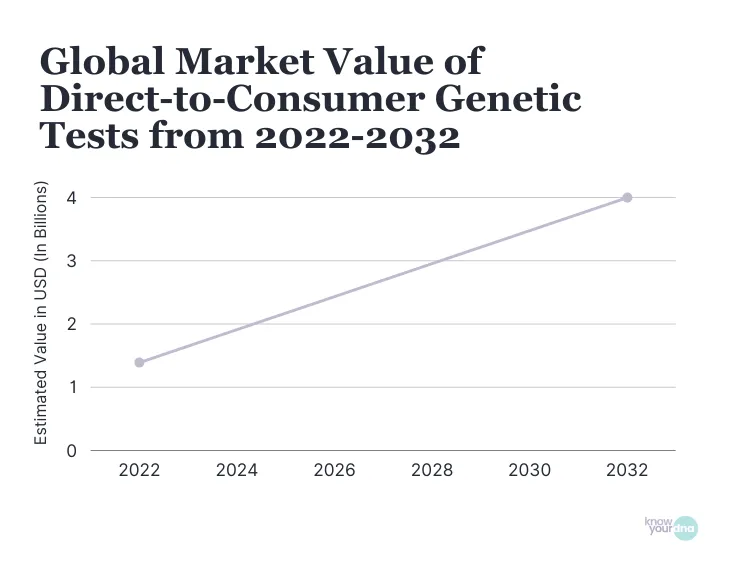
- The market size of direct-to-consumer (DTC) genetic tests was worth $1.29 billion in 2021 and $1.4 billion in 2022, respectively.2,4
- The global market value for DTC genetic testing is expected to rise at a compound annual growth rate (CAGR) of 11.2% from 2022 to 2032.2
- Analysts believe that at-home DNA tests will have a global market value of $4 billion by 2032.2
At-Home DNA Testing in the U.S. & Other Countries
The U.S. genetic testing market was worth $417.8 million in 2020.5
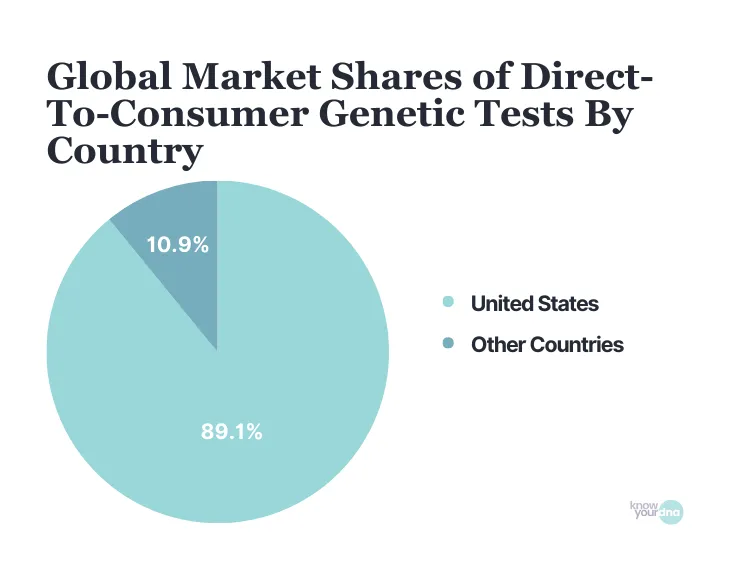
In 2021, the U.S. market accounted for 89.1% of the total shares—making it the largest in the world. It’s projected to continue dominating North America from 2022 to 2032.2
China has the world’s second-largest market share. In 2021, it accounted for 31.2% of the sales in East Asia.2
China’s market is projected to grow by 15.2% from 2020 to 2027 and reach a market size of $170.8 million.5
From 2020 to 2027, the market for at-home DNA testing is projected to increase by 11.3% in Japan, 12.6% in Germany, and 13.1% in Canada.5
Market Trends for Types of DTC Genetic Testing
The global market for direct-to-consumer DNA testing is comprised of three types of tests based on the DNA technology they use:
- Single nucleotide polymorphism (SNP) chips
- Targeted analysis
- Whole genome sequencing (WGS)
According to a report published by Emergen Research, whole genome sequencing tests have the largest revenue shares as of 2021.4
However, Future Market Insights says that SNP chips held the largest market shares in 2021. It accounted for 64.5% of the global market.2
Demand for At-Home DNA Tests
The global market growth of at-home DNA testing kits is driven by a few key factors. Experts have cited the following explanations:2
- The increasing number of people who are learning about these tests
- Growing demand for personalized DNA services
- Rising incidences of genetic diseases around the world
- More people can afford these tests
Due to the large number of DNA test providers selling at low costs, the U.S. market is expected to continue dominating North America from 2022 to 2032.2
Many international companies are also expected to enter China to sell affordable genetic testing kits. This might help drive the local market.2
Companies Providing At-Home DNA Tests
As of 2016, most DNA companies offer direct-to-consumer (DTC) kits for genetic relatedness, paternity, nutrigenetics, and ancestry.
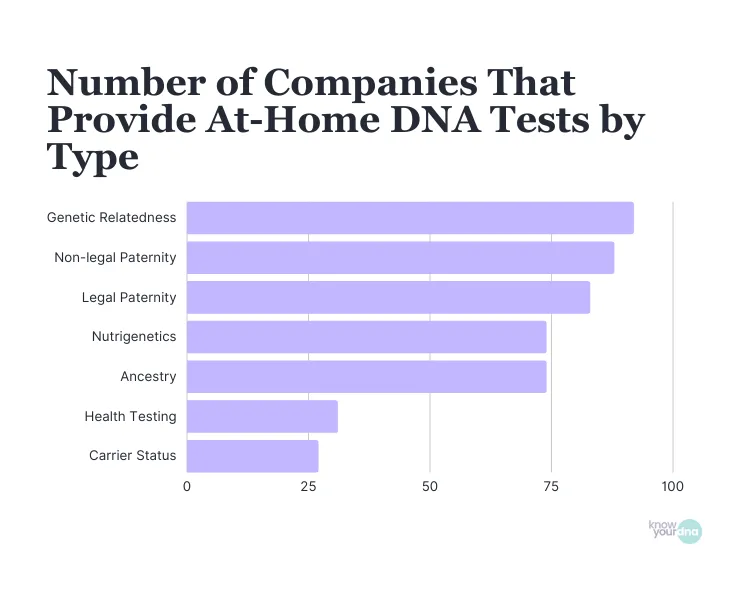
Out of all the companies:6,7
- 92 (37%) offered DNA tests for genetic relatedness
- 88 (36%) provided non-legal paternity tests
- 83 (34%) offered legal paternity testing kits
- 74 (30%) offered DNA kits for nutrigenetics
- 74 (30%) provided at-home ancestry tests
Fewer services provided health-related DNA testing. Only 31 companies (13%) offered health tests, and 27 (11%) offered carrier status tests.6,7
The leading at-home genetic testing companies in the U.S. are Ancestry, 23andMe, MyHeritage, and Family Tree DNA.1
In China, WeGene and 23mofang are the two leading providers of direct-to-consumer genetic tests.2
DNA Database Size of Testing Companies
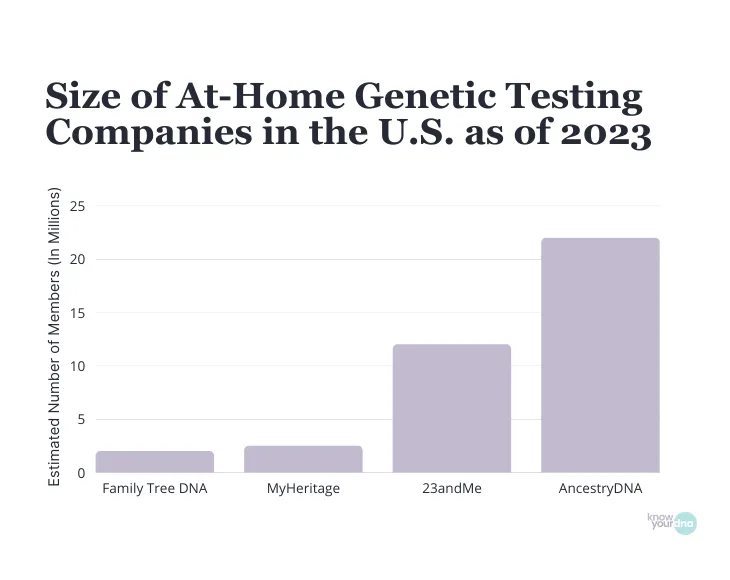
AncestryDNA remains the world’s largest provider of DNA test kits, with over 27 million users.8 It’s followed by 23andMe with approximately 14 million users, though that number has declined following the company’s 2025 bankruptcy and acquisition by TTAM Research Institute.9
MyHeritage and Family Tree DNA are the next largest DNA testing companies in the U.S., with more than 2.5 million and 2 million members in 2018—respectively.1
In China, several local DNA testing companies have a combined database of 12 million members as of 2020.2
People Who Have Taken A Home DNA Test (Global)
In 2019, it was estimated that 26 million people had taken a DNA test in the United States.1
However, it’s possible that at least 38.5 million to 50 million people worldwide have already taken a DNA test at home.
We came up with this estimate by adding the number of people who have tested with the six major providers of at-home DNA tests in the U.S. and China:
- Ancestry
- 23andMe
- My Heritage
- Family Tree DNA
- WeGene
- 23mofang
Americans Who Have Taken An At-Home Genetic Test
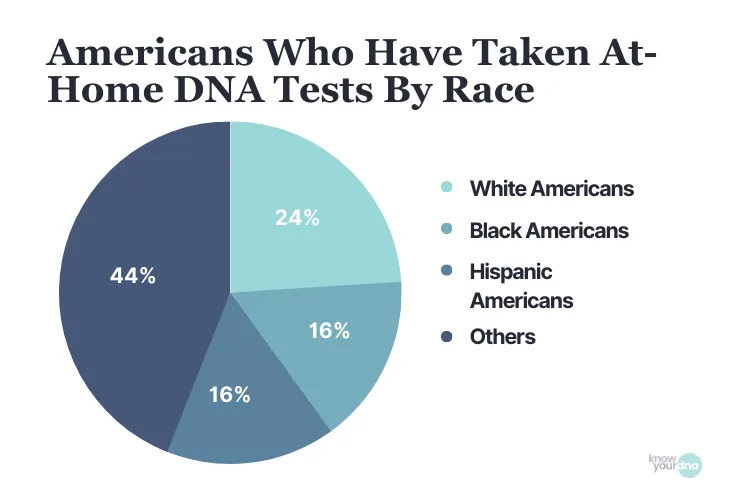
A 2022 survey involving 1,000 American adults revealed that only a small percentage have taken a DNA test at home.10
- Two out of 10 Americans (21%) have taken an at-home DNA test.10
- About 27% of Americans say a close family member (like a parent, child, or sibling) has taken a genetic test.10
- Most Americans (24%) who have taken an at-home DNA test are white.10
- White Americans (24%) are more likely to take an at-home genetic test than Black Americans (16%) or Hispanic Americans (16%).10
- Seniors are the most DNA-curious with 29% testing, as opposed to only 16% of people under the age of 30.10
American Interest in At-Home Genetic Tests
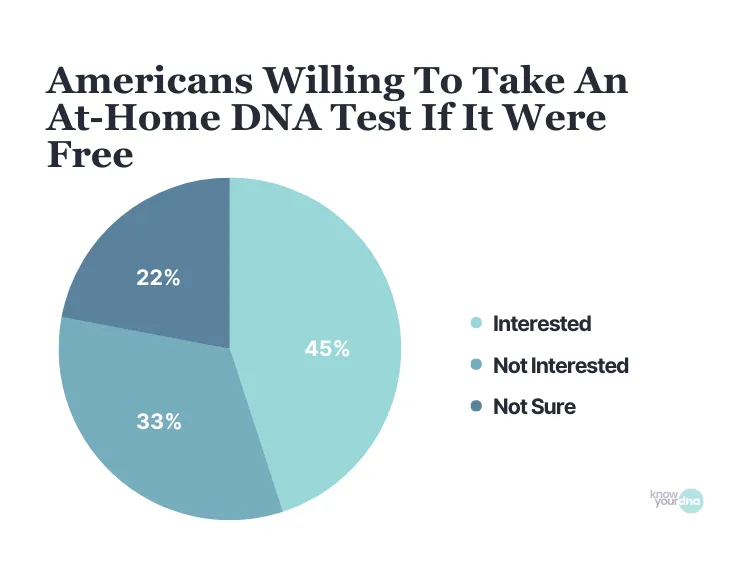
While most Americans surveyed in 2022 said they hadn’t taken a genetic test, many expressed interest in taking a test someday.10
Nearly half of the respondents (45%) who haven’t taken an at-home DNA test say they would take one if it were offered for free.10
22% are unsure, and 33% are not interested in the free test. Among those interested, they wanted to take the test for the following reasons:10
- Most Americans (80%) want to learn where their family comes from
- Many (63%) want to know about their health or family’s medical history
- Half of Americans (50%) want to connect with unknown relatives
Willingness To Take A DNA Test
Most surveyed Americans said they would take a genetic test under certain circumstances.
In general, Americans were more likely to take a DNA test if:10
It helped them find out their chances of developing a serious health condition
They were adopted or not biologically related to their father
They have a biological sibling they never met
Their ancestor was a slave owner
They turned out to be distantly related to their spouse or partner
A family member committed violent crimes
Adopted vs. Non-Adopted Americans
Fifty-five out of the 1,000 surveyed Americans said they were adopted.10
Adopted Americans are twice as likely to take an at-home DNA test (36%) than those who said they were not adopted (20%).10
Among adopted Americans who took a DNA test:10
- More than half said it helped them learn more about a close relative.
- 1 out of 3 said DNA testing made them rethink their race or ethnicity.
- 3 said it connected them to their birth families.
Why Americans Take DNA Tests
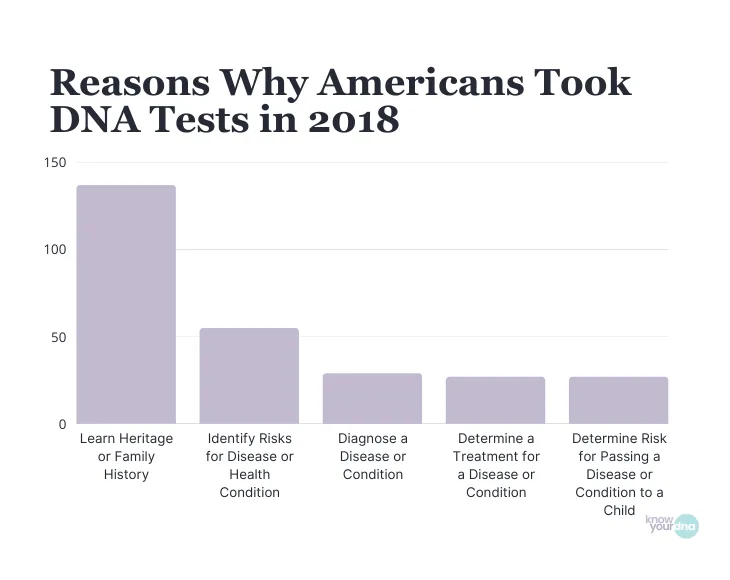
Most adult Americans who took a genetic test as of 2018 did it to learn more about their ancestry or other health reasons.
Out of the 210 respondents surveyed:11
- 137 (65%) wanted to learn about their heritage or family history
- 55 (26%) wanted to know if they were at risk for any disease or condition
- 29 (14%) wanted to determine the best way to treat a disease or condition
- 27 (13%) took a test to diagnose a specific disease or condition
- 27 (13%) wanted to find out if they had a risk of passing a disease or condition to their children
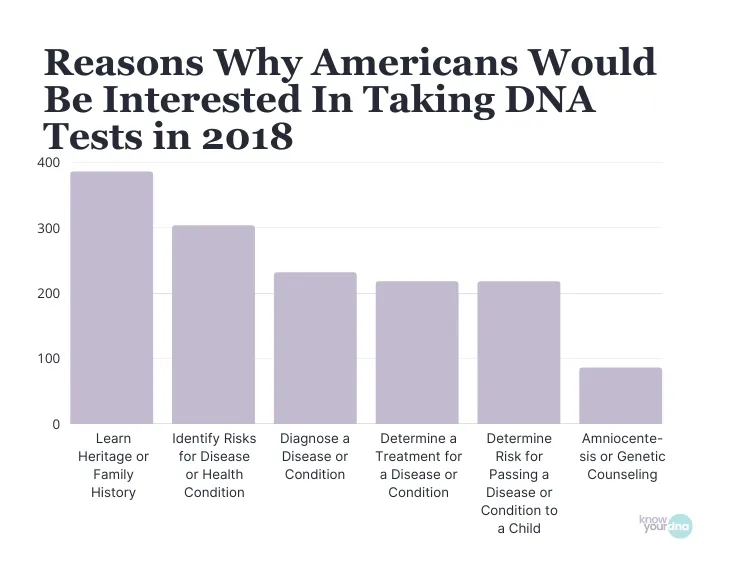
U.S. adults who haven’t undergone DNA testing as of 2018 have similar reasons for wanting to take a test. Out of 454 respondents surveyed:12
- 386 (85%) wanted to learn about their heritage or family history.
- 304 (67%) wanted to know if they were at risk for any disease or condition.
- 232 (51%) took a test to diagnose a specific disease or condition.
- 218 (48%) wanted to find out if they had a risk of passing a disease or condition to their children.
- 218 (48%) wanted to determine the best way to treat a disease or condition.
- 86 (19%) took the test for an amniocentesis or genetic counseling while they (or their partner) were pregnant.
Factors That Affect The Likelihood of Taking A DNA Test
Researchers found that certain situations increased a person’s likelihood of taking a DNA test.13 The 2018 survey also reveals whether they were more likely to take a medical genetic test or an at-home kit.13
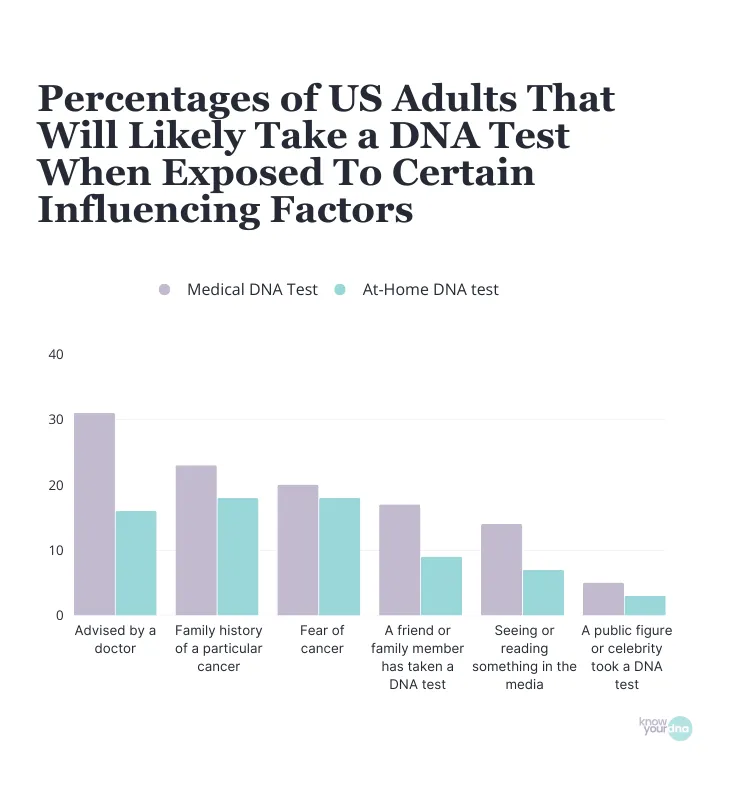
In general, American adults were more likely to take a medical DNA test than an at-home genetic test if:13
- It was advised by a doctor (31% vs. 16%)
- They have a family history of a particular cancer (23% vs. 18%)
- They have a general fear of cancer (20% vs. 18%)
However, American adults tended to prefer at-home DNA tests over medical genetic testing in the following situations:13
- A friend or a family member has taken a DNA test (17% vs. 9%)
- If they read about DNA testing in the media (14% vs. 7%)
- A public figure they follow has taken a genetic test (5% vs. 3%)
Common Concerns on DNA Testing
In 2018, 1,109 American adults took a poll on genetic testing. Many people who took the poll were (and are) concerned with the privacy of their data.14
According to a survey conducted in 2022, privacy concerns are common in people who have taken the test and those who haven’t. This affects their decision to take a DNA test.10
The 2018 poll also revealed that while up to 52% were interested in taking a genetic test, many Americans are not fully convinced of the reliability of DNA tests.14
Sharing of Genetic Data
- 554 out of 1,109 respondents (50%) were """extremely or very concerned""" that for-profit DNA companies who sell tests to the public would share their genetic information without consent.14
- 399 (36%) have the same concerns about medical researchers.14
- 355 (32%) were extremely worried that medical doctors would share their data.14
Access of Police to Genetic Information
- 566 (51%) out of 1,109 polled Americans believed genetic data should only be shared with the police if the person being tested consents to it.14
- 366 (33%) think that consent isn’t necessary for sharing genetic information with law enforcers.14
- 144 (13%) completely oppose the use of DNA data by police.14
Reliability of At-Home DNA Tests
- One-third of Americans who took the poll think that at-home DNA tests are reliable for identifying inherited diseases or determining the best treatment for an illness.14
- 4 out of 10 Americans think that an at-home DNA kit is reliable for identifying ethnic backgrounds, diagnosing diseases, or revealing carrier status for a genetic disorder they might pass on to future children.14
American Trust in Sharing DNA Data with Law Enforcers
Most Americans (48%) think it’s acceptable to share a person’s DNA profile with law enforcement. However, a significant number (33%) think it’s unacceptable.15
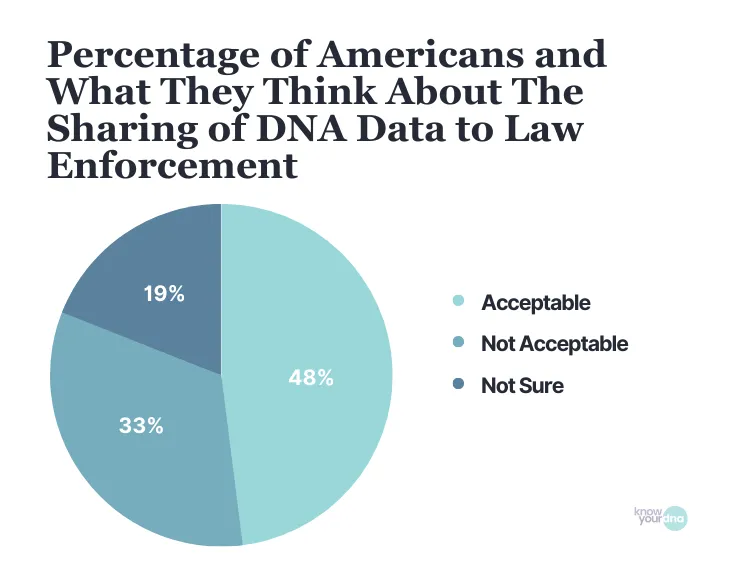
Differences in opinion were observed depending on the age group and sex of the people who took the survey. For example:15
- A higher percentage of American women find it acceptable to share DNA information than American men (53% vs. 43%).
- American men are divided about the sharing of DNA data with law enforcers. Forty-three percent find it acceptable, while 40% think it’s not.
- American adults aged 18 to 49 are likelier to think that sharing genetic information with law enforcers is unacceptable compared to those aged 50 and above (36% vs. 29%).
- Majority of Americans aged 50+ believe that sharing genetic data with law enforcement is acceptable (56%). Only 29% of people from this age group find it unacceptable.
Opinions on DNA Test Results
People who have taken a DNA test usually have varying opinions on their test results. However, most find them helpful.14
- Among those who have taken a DNA test, 85% find their results to be useful.14
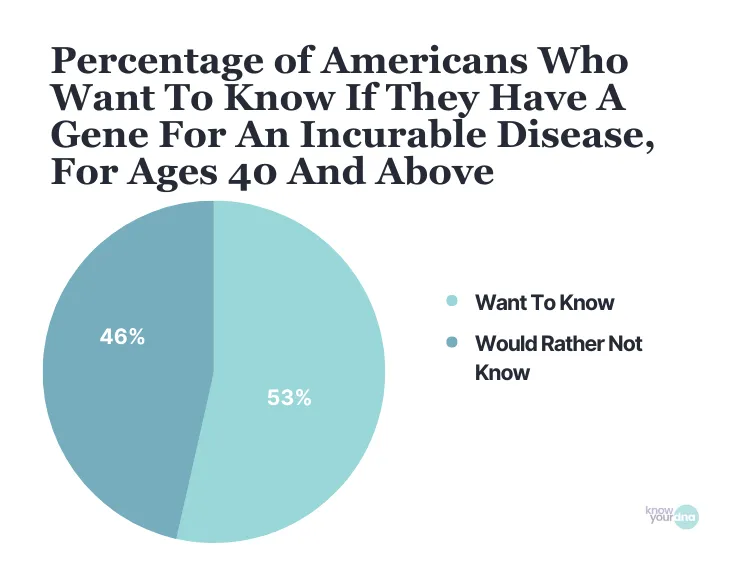
- Sixty percent would want to be informed if they have genetic variants linked to incurable diseases. Thirty-nine percent say they don’t want to know if they have such genes.14
Regardless of their preference around test results, most people (82%) would inform their siblings and children if they have a hereditary condition.14
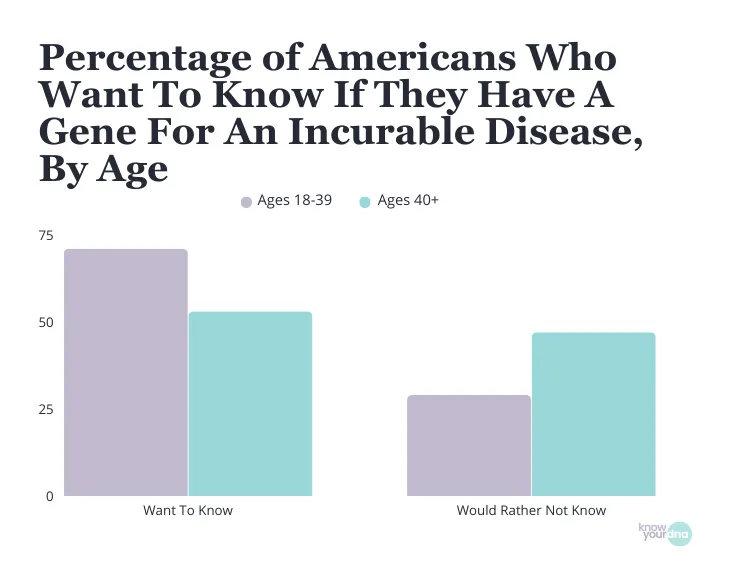
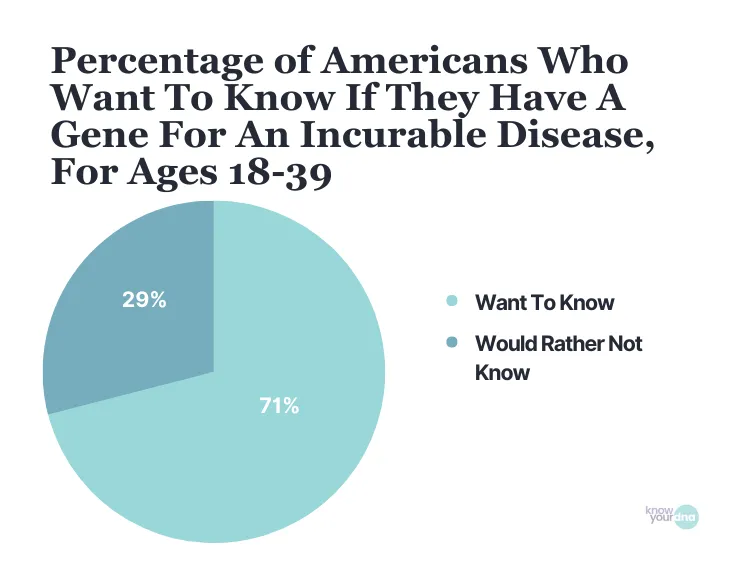
Young American adults under 40 are usually more interested in finding their predisposition for a genetic disease. Up to 71% will want to know if they are at risk of developing a health condition.14
Older Americans who are aged 40 and over are divided. Fifty-three percent want to determine if they are genetically predisposed to a disease. Forty-six percent would rather not know.14