






Skip to content
KnowYourDNA
The Best DNA Tests for Health in 2026

The Best DNA Tests for Health in 2026

Updated May 20, 2026

Katrina Canlas

Written by

Katrina Canlas

Sources

18 cited
Health DNA Picks

We organized our picks by what you actually want to learn (disease risk, carrier status, pharmacogenomics, or biological age), not by brand.

The Bottom Line

23andMe is still the most accessible DTC starting point and the only consumer kit with FDA-authorized and FDA-cleared health reports. For hereditary cancer and carrier screening, Color and Invitae are the clinical-grade alternatives. ClarityX leads on pharmacogenomics; TruDiagnostic measures biological age.

Best for: People who want to match a health DNA test to a specific question, instead of buying the most-marketed kit and hoping it fits

  • Picks are organized by use case (disease risk, carrier, pharmacogenomics, biological age), not brand
  • Regulatory status uses precise FDA terms: De Novo, 510(k), or none, instead of blanket 'FDA cleared'
  • Includes the clinical-grade tier (Color, Invitae) most DTC roundups skip

Everything We Recommend

We grouped our picks by use case. Pick the section that matches the question you're actually trying to answer.

  1. 1
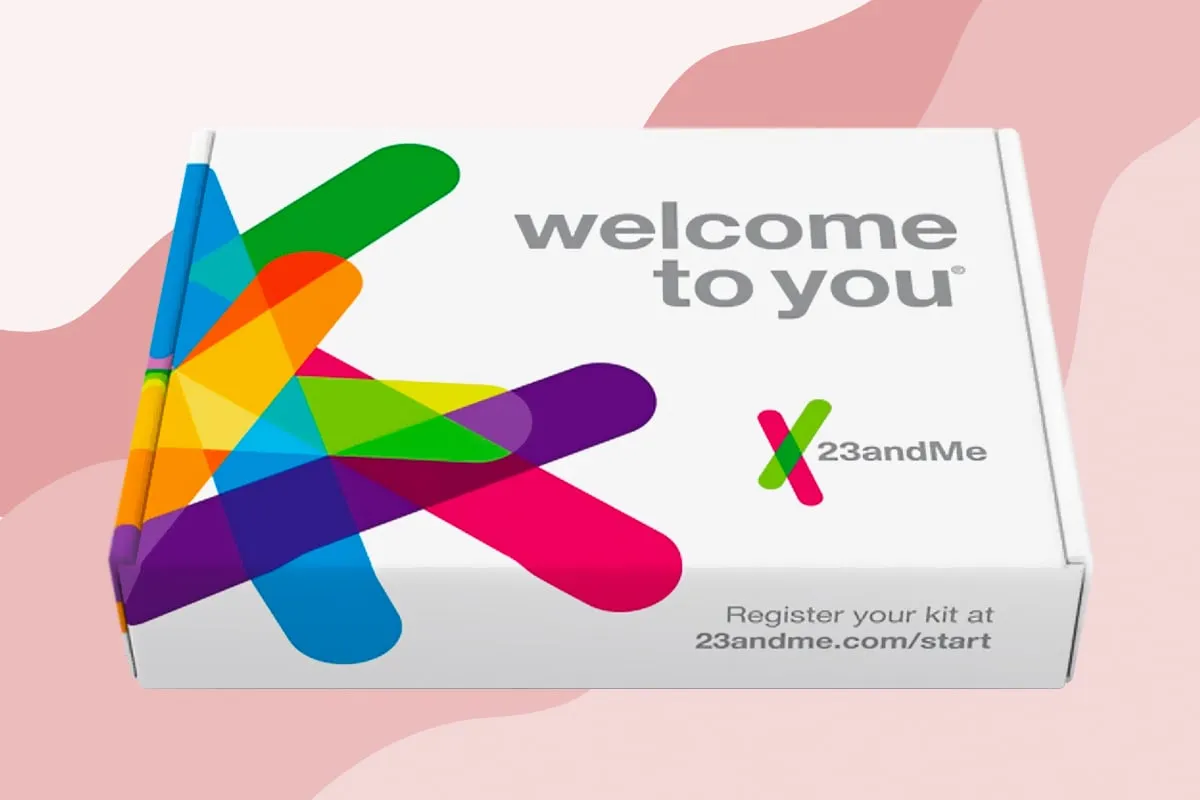
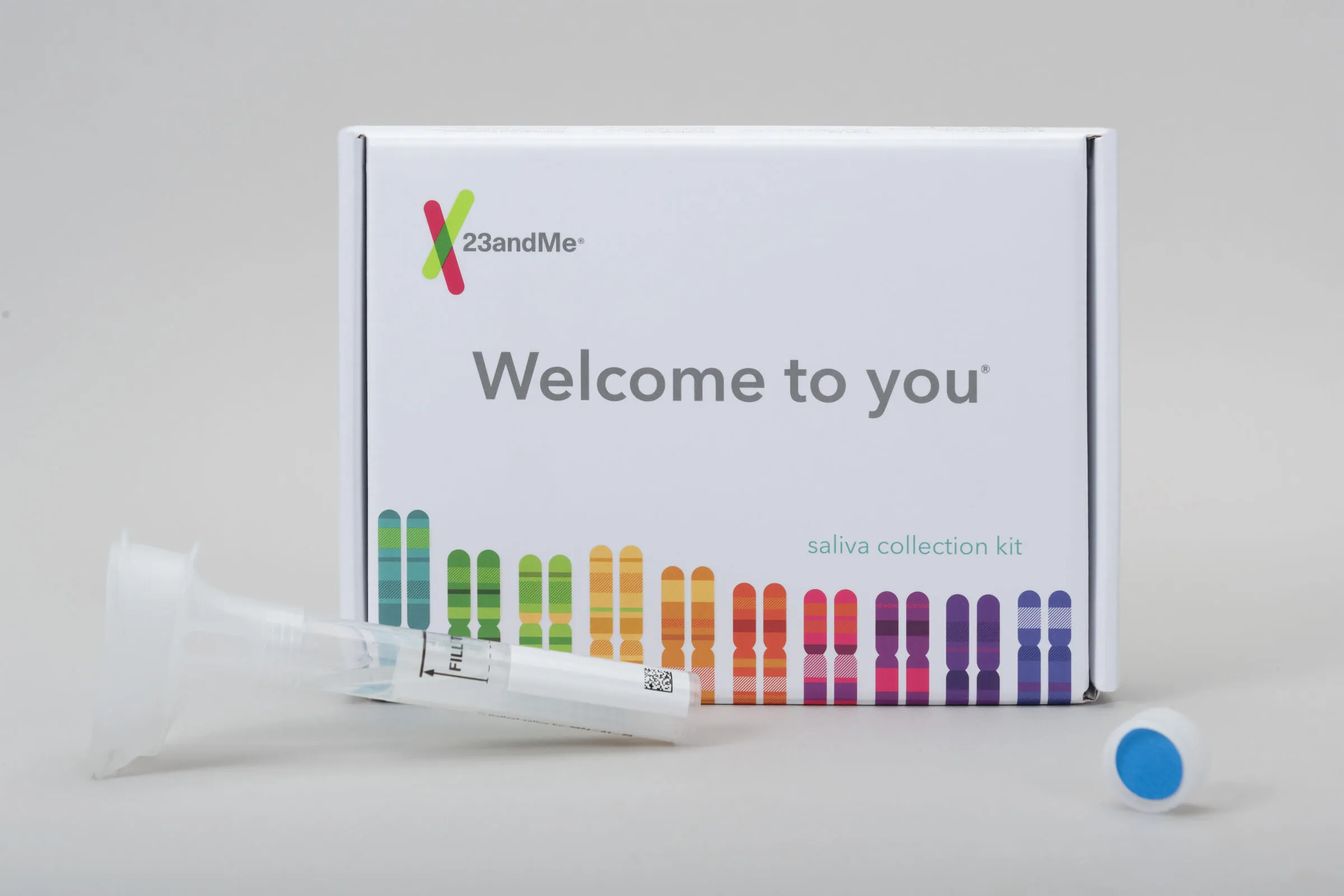
    Photo of the 23andMe DNA test kit
    Best DTC for FDA-Reviewed Health Reports

    23andMe

    The only consumer DNA test with FDA-authorized and FDA-cleared health reports. Strongest starting point if you want general disease-risk context plus carrier status and pharmacogenetics in one kit.

    $119 (Ancestry) / $199 (Premium) / $499 (Total Health)
  2. 2
    Best Clinical-Grade for Hereditary Cancer

    Color Health

    Physician-ordered, ACMG-aligned hereditary cancer panel covering BRCA1/2, ATM, CHEK2, PALB2, and 24 other genes. Genetic counselor included. Clinical-grade pathway, not DTC.

  3. 3
    Best Clinical-Grade for Carrier Screening

    Invitae (now part of Labcorp)

    Clinical-grade carrier and hereditary cancer panels frequently covered by insurance. Now part of Labcorp's genetic-testing portfolio after the 2024 Chapter 11 sale, with Inheritest carrier panels in the 300+ and 500+ tiers.

  4. 4
    Photo of the ClarityX DNA DNA test kit
    Best for Pharmacogenomics

    ClarityX DNA

    Dedicated pharmacogenomic panel that reports how you may metabolize medications across psychiatry, cardiology, and pain management. Physician-ordered model.

  5. 5
    Photo of the Sequencing.com DNA test kit
    Best for Whole Genome Data

    Sequencing.com

    Whole genome sequencing with an app marketplace that adds reports without retesting. The deepest raw data you can buy as a consumer, with the caveat that depth is not the same as clinical validity.

    $69 (DNA Test) / $399 (Whole Genome)
  6. 6
    Photo of the SelfDecode DNA test kit
    Best Interpretation Layer

    SelfDecode

    AI interpretation layer over your genotyping data or a kit purchase. Cross-references variants with research to recommend supplements and lifestyle changes.

    $199 (Reports) / $299 (Reports + Kit)
  7. 7
    Photo of the TellMeGen DNA test kit
    Best International Alternative

    TellMeGen

    Spanish-headquartered DTC with 400+ reports across health, pharmacogenetics, carrier status, and ancestry. Better international availability than 23andMe.

    $149
  8. 8
    Photo of the TruDiagnostic DNA test kit
    Best for Biological Age

    TruDiagnostic

    Epigenetic testing that measures biological age and pace of aging through DNA methylation. A different lens (not inherited disease risk).

    $499
  9. 9
    Photo of the LifeDNA DNA test kit
    Best for Wellness and Lifestyle

    LifeDNA

    Genetics translated into nutrition, fitness, sleep, and supplement guidance. Reports are wellness-statistical-association style, not clinical.

    $99 (Methylation) / $199 (Wellness) / $249 (Bundle + Kit)
  10. 10
    Biomarker Complement (Not a DNA Test)

    InsideTracker

    Blood biomarkers, not DNA, included because it competes in the same SERP. Pairs well with a DNA kit when you want both inherited and current-state context.

How They Compare by Use Case

Use case first, then risk class, FDA action, lab certification, and price. The 'FDA action' column uses precise filing terms instead of a blanket Yes/No. Pricing verified as of May 2026.

23andMeColor HealthInvitae / LabcorpClarityXSequencing.comTruDiagnosticTellMeGenSelfDecodeLifeDNA
Use caseDTC disease-risk + PGx + carrierHereditary cancer (clinical)Carrier + hereditary cancer (clinical)PharmacogenomicsWhole-genome raw dataBiological ageInternational DTC health + ancestryInterpretation layerWellness / lifestyle
Risk class reportedMostly statistical-association + selected monogenic (BRCA, carrier)MonogenicMonogenicPharmacogenomicDepends on app: full rangeEpigenetic (not inherited risk)Statistical-association + carrierPolygenic / statistical-associationStatistical-association
FDA actionDe Novo authorized (GHR + carrier) + 510(k) cleared (PGx, BRCA)None (lab-developed test)None (lab-developed test)None (lab-developed test)NoneNoneNoneNoneNone
Lab certificationCLIACLIA + CAPCLIA + CAPCLIACLIA (partner labs)CLIA (partner lab)CLIA + ISO 15189CLIA (partner lab)CLIA (partner lab)
Starting price (as of May 2026)$199 Health + Ancestry$249 Hereditary CancerInsurance-dependent; ~$250 cash$249$69 upload / $399 WGS$499$149$199 reports / $299 reports + kit$99 / $199
Sample typeSalivaSalivaSaliva or bloodCheek swabSaliva or uploadBlood spotSalivaSaliva or uploadSaliva or upload

The best DNA test for your health depends on what you actually want to learn. For general disease-risk context with the strongest regulatory backing in the consumer market, 23andMe is the starting point. For clinical-grade hereditary cancer or carrier screening your doctor can act on, Color and Invitae are the picks. For pharmacogenomics (how your body processes medications), ClarityX is the focused option. For biological age, TruDiagnostic. For the deepest raw data, Sequencing.com’s whole genome kit.

We grouped this roundup by use case rather than by brand because the same word (“health”) covers four different products with four different evidence bars. Most roundups don’t make that distinction, which is why people end up buying a wellness kit when they wanted a carrier panel.

What “best for health” actually means

Consumer genetic testing sells under one banner but reports four very different things. Matching the test to the question matters more than the price or the brand.

The four use cases:

  • Disease-risk screening. Probabilistic information about common conditions like Type 2 diabetes, late-onset Alzheimer’s, or hereditary thrombophilia. Mostly statistical-association results, occasionally backed by specific FDA-authorized reports.
  • Carrier screening. Whether you carry a recessive variant for conditions like cystic fibrosis or sickle cell disease that you could pass to a child. Useful for family planning. ACMG recommends expanded carrier screening for any pregnancy or preconception conversation.
  • Pharmacogenomics (PGx). How your genes affect drug metabolism, relevant for psychiatric medications, blood thinners, pain medication, and several cancer drugs.
  • Biological age and wellness. Epigenetic measurements that estimate how quickly your body is aging, or lifestyle reports that translate genetics into nutrition and fitness guidance. These are not inherited-risk tests.

The three risk classes (and why they matter)

Every health DNA claim falls into one of three categories. Mixing them up is the single most common source of confusion when people read a DNA report.

  • Monogenic. A change in one gene is the main driver of risk or disease, but how much risk, and how likely you are to develop the condition, varies by gene and inheritance pattern. A pathogenic BRCA1 or BRCA2 variant raises the chance of hereditary breast and ovarian cancer significantly, but having one doesn’t guarantee cancer: the National Cancer Institute’s BRCA fact sheet notes a positive result cannot tell whether or when someone will develop cancer. Cystic fibrosis is recessive: it usually requires changes in both copies of the CFTR gene, so a single CFTR variant typically means carrier status, not the disease. Huntington’s is the cleanest high-penetrance example, with some reduced-penetrance repeat ranges at the boundary. Clinical-grade panels from Color and Invitae specialize in this tier. 23andMe’s BRCA report is a partial monogenic readout against a narrow variant list.
  • Polygenic. Many variants each contribute a small effect, and the combined number is called a polygenic risk score (PRS). PRS estimates likelihood of developing a common disease relative to the population average. The National Human Genome Research Institute notes PRS expresses relative risk rather than baseline or timeframe, and shows correlation rather than causation.
  • Statistical association. Small-effect variants tied to a trait at the population level. Most DTC “health” reports (including the bulk of what 23andMe, TellMeGen, SelfDecode, and LifeDNA show) fall in this class. Useful as context, not for medical decisions.

Most direct-to-consumer kits report the third class, with selected exceptions in the first (BRCA, carrier status) and second (PRS-style risk for common diseases). Clinical-grade panels report the first. A “PRS for breast cancer” is not the same finding as a “BRCA1 pathogenic variant,” even though both can appear under a “breast cancer risk” headline.

A short disclaimer worth taking seriously

DTC genetic health reports don’t diagnose disease. A flagged variant is a starting point for a conversation with a healthcare provider, not a treatment change. The FDA’s special controls for genetic health risk reports state these tests do not determine overall disease risk and are not intended to diagnose disease or make medical decisions. Clinical genetic tests (the kind your doctor orders through a lab like Color or Invitae) are a different category: in the right clinical context, they can sometimes establish or confirm a hereditary diagnosis or predisposition. Even then, results still need medical interpretation before any screening, prevention, or treatment decision follows. Use DTC kits as screening and education; let clinical-grade tests do the diagnostic work.

Our picks by use case

Best DTC for disease-risk screening: 23andMe

23andMe is still the most accessible DTC starting point and the only consumer kit with FDA-authorized and FDA-cleared health reports. As of May 2026, the Health + Ancestry kit is $199 with saliva collection.

The regulatory picture matters because “FDA cleared” gets used too loosely across the rest of this category. 23andMe has earned three distinct types of FDA action, and the filing terms are not interchangeable:

  • Genetic Health Risk reports (late-onset Alzheimer’s/APOE, Parkinson’s, celiac disease, hereditary hemochromatosis, hereditary thrombophilia, and others) are De Novo authorized under DEN160026 (2017). FDA-authorized, not FDA-cleared.
  • Carrier status reports (cystic fibrosis, spinal muscular atrophy, sickle cell anemia, and others) started with De Novo authorization under DEN140044 (2015) for the Bloom Syndrome test, followed by expanded authorizations.
  • The BRCA1/BRCA2 Selected Variants Report is 510(k) cleared under K223597 (2023). It covers 44 variants: the FDA’s own decision summary notes that’s out of more than 4,000 BRCA1/BRCA2 variants known to increase cancer risk. Appropriate for general population screening, not for people with a personal or family history of hereditary breast or ovarian cancer, who should pursue clinical-grade testing.
  • Pharmacogenetic reports (CYP2D6, CYP2C19, and similar genes) are 510(k) cleared under K193492 (2020).

What the kit actually reads: a genotyping chip covering roughly 0.03% of your genome at selected positions. That’s enough for the reports the FDA has authorized or cleared, but it is not whole-genome data, and most of the wellness-style reports in the rest of the 23andMe catalog are research-based rather than FDA-reviewed. 23andMe’s own report list flags that distinction.

Status note: 23andMe filed for Chapter 11 in March 2025; TTAM Research Institute completed the asset purchase in July 2025. The consumer service continues under TTAM ownership, and the privacy statement was re-issued. Review it before ordering. We cover privacy specifics below.

Our 23andMe review walks through the kit experience and report quality in detail.

Best clinical-grade for hereditary cancer: Color Health

Color (now Color Health) is the cleanest answer for hereditary cancer risk that a doctor can act on. As of May 2026, the Hereditary Cancer Genetic Test runs $249 and covers 29 genes including BRCA1, BRCA2, ATM, CHEK2, PALB2, MLH1, MSH2, MSH6, and PMS2 mapped to the major hereditary cancer syndromes. The lab is CLIA-certified and CAP-accredited, the report uses ACMG/AMP-aligned variant interpretation, and a board-certified genetic counselor is included with every result.

Color runs as a Laboratory Developed Test (LDT) rather than an FDA-authorized or FDA-cleared device. That’s the standard pathway for clinical-grade panels, and the quality chain runs through CLIA certification, CAP accreditation, and ACMG/AMP-aligned variant interpretation, not through FDA premarket review. The FDA has not reviewed Color’s test through a premarket pathway the way it has 23andMe’s De Novo and 510(k) filings. The trade-off versus a DTC kit is the physician-ordered model: you complete a brief telehealth review before the kit ships. Color handles physician ordering through its own medical team if you don’t have a referring doctor.

This is the canonical answer to “I have a family history of breast or ovarian cancer: which test should I take?” 23andMe’s 44-variant BRCA report can rule certain things in for the variants it covers, but cannot rule them out. A clinical-grade panel covers the variants 23andMe doesn’t, plus the other syndrome-defining genes. The National Cancer Institute’s BRCA fact sheet is the standard reference for what BRCA changes mean and what testing is appropriate. Color also sells a Hereditary Heart Health panel ($249) and a combined Cardio+Cancer bundle ($349).

Best clinical-grade for carrier screening: Invitae

Invitae (now operating as part of Labcorp) is the clinical-grade carrier-screening pathway worth knowing about. Labcorp’s current Inheritest carrier-screening panels include broad options covering 300+ and 500+ conditions, aligned with ACMG’s expanded carrier-screening practice resource, which recommends this kind of screening for everyone considering pregnancy. That depth covers cystic fibrosis, spinal muscular atrophy, fragile X, and many others at a level DTC kits cannot match.

Status note: Invitae filed for Chapter 11 in early 2024; Labcorp acquired the U.S. clinical-testing business, and the Invitae test menu now sits inside Labcorp’s broader genetic-testing portfolio. Post-acquisition pricing has shifted: roughly $250 out-of-pocket for the carrier panel as of May 2026, frequently fully covered by insurance when ordered for a documented clinical indication.

Pick the Labcorp/Invitae pathway when you want the broadest carrier panel available outside academic medical centers, or to confirm a hereditary cancer finding from a consumer kit. DTC results cannot provide clinical-grade variant interpretation on their own.

Best for pharmacogenomics: ClarityX DNA

ClarityX is a focused pharmacogenomic test rather than a generalist DTC kit. The panel reports how your genes affect the metabolism of medications across psychiatry (SSRIs, SNRIs, antipsychotics), cardiology (beta-blockers, statins), pain management (opioids, NSAIDs), and gastroenterology. As of May 2026, it runs $249 with a cheek-swab sample and a physician-ordered review.

If pharmacogenomics is the question you’re actually trying to answer, ClarityX is more useful than buying 23andMe just for its PGx panel. 23andMe’s pharmacogenetic reports are 510(k) cleared under K193492, but the indication covers a narrower set of variants and gene–drug pairs than a focused PGx panel. The 23andMe PGx report explicitly notes it is not intended to recommend medication changes on its own; the same is true here, but a dedicated PGx report is built around physician handoff in a way the DTC product isn’t.

Read our ClarityX DNA review for the kit-experience walk-through and a closer look at the gene–drug list.

Best for whole genome data: Sequencing.com

Sequencing.com is the right pick when you want the deepest raw data a consumer can take home. The 30x whole genome sequencing kit reads roughly six billion bases (the diploid human genome) rather than a selection of known positions. NHGRI’s fact sheet on human genome sequencing is the right authority for what WGS is and what one representative human genome looks like (~3 billion bases haploid, ~6 billion diploid). As of May 2026, the WGS kit is $399, with a $69 raw-data upload tier if you’ve sequenced elsewhere.

The health reporting comes through an app-based marketplace that adds new reports as research is published; you don’t retest to get new findings. The marketplace covers 15,000+ conditions, but none of those reports carry FDA authorization or clearance, and depth of raw data is not the same as clinical validity. Use Sequencing.com when you want a foundation dataset to revisit over time, not when you want a single regulatory-anchored answer.

Worth noting: Nebula Genomics is another whole-genome-sequencing option to compare against. Nebula’s consumer product changed in 2024 and now sells DNA Complete at 1x, 30x, and 100x coverage tiers. See our Nebula Genomics guide for the current product line.

Our Sequencing.com review covers the WGS workflow, app marketplace, and privacy framing in more depth.

Best interpretation layer: SelfDecode

SelfDecode is the interpretation layer rather than a kit-first product. You can buy its kit or upload raw data from 23andMe, AncestryDNA, or another genotyping service. The platform covers 200+ health topics and cross-references your variants with peer-reviewed research to surface supplement, diet, and lifestyle suggestions. Reports update as new research lands without retesting.

The output is polygenic and statistical-association in nature, useful as a lifestyle input, not a clinical input. SelfDecode is not FDA-authorized or cleared. We treat it as an interpretation layer rather than a stand-alone kit because the underlying genotyping data is what 23andMe (or a similar chip) gives you; the differentiation is the interpretation engine. As of May 2026, reports are $199 or $299 with a new kit. Read our SelfDecode review for the kit-experience side.

Best international DTC alternative: TellMeGen

TellMeGen is the strongest international alternative when 23andMe is unavailable in your country. As of May 2026, the kit is $149 and reports 400+ items spanning health predispositions, hereditary conditions, pharmacogenetics, carrier status, traits, and ancestry. The lab is CLIA-certified and ISO 15189 accredited.

TellMeGen is not FDA-authorized or cleared; U.S. customers should treat the health reports as educational and statistical-association in nature. The pharmacogenetics section is among the more useful international PGx options if your prescriber will accept it as a starting point. Our TellMeGen review covers the regional availability nuances and the ancestry side of the kit.

Best for biological age: TruDiagnostic

TruDiagnostic measures something fundamentally different from the rest of this list. TruAge analyzes DNA methylation patterns (chemical markers that change over time with lifestyle, environment, and aging) rather than your inherited DNA sequence. As of May 2026, the test is $499 with a blood-spot sample. The lab is CLIA-certified.

The report blends two algorithm families. OMICmAge, developed with Harvard researchers, drives the biological-age number alongside the DunedinPACE pace-of-aging measurement. SYMPHONYAge, developed with Yale researchers, drives the organ-system age estimates across 11 systems. None of this is inherited disease risk. The CDC’s epigenetics overview explains the sequence-vs-methylation distinction at a clinical level. The National Institute on Aging notes DNAm-based biological-age estimates show association with health outcomes and mortality, while demographic, socioeconomic, mental-health, and behavioral measures can be as predictive or more so. Treat the number as a tracking lens for lifestyle change, not a clinical diagnosis. Read our TruDiagnostic review for the kit-experience walk-through.

Best for wellness and lifestyle reports: LifeDNA

LifeDNA translates genetics into wellness-style reports across 130+ traits spanning nutrition, fitness, sleep, skincare, supplements, and cognition. As of May 2026, it starts at $99 for the methylation tier and $199 for the full wellness panel. Raw-data upload from 23andMe, AncestryDNA, or other providers is supported.

LifeDNA’s reports are statistical-association style and are not FDA-authorized or cleared. The differentiator is a private phone consultation that walks you through the report and recommended actions. Per LifeDNA’s posted privacy policy, genetic data is not sold to third parties or shared with insurance companies, with deletion control retained by the customer. If you want lifestyle guidance rather than disease-risk screening, LifeDNA fits, but it’s a wellness adjacency, not a substitute for clinical-grade screening or FDA-anchored DTC reports. Our LifeDNA review covers the kit experience.

DNA health tests that are no longer available: what to do instead

Several services that show up in older roundups have been discontinued or restructured. Knowing what happened to each is part of picking the right active replacement.

  • AncestryDNA Health (AncestryHealth Core, AncestryHealth Plus): discontinued 2021. Ancestry sunset its DTC health products in early 2021 and now sells only the ancestry-only kit. For the DTC health use case, 23andMe is the canonical successor. For clinical-grade carrier or cancer screening (what AncestryHealth Plus tried to be), Color or Invitae fit better.
  • Sema4 (consumer-genetic-testing arm): restructured 2022. Sema4 merged into the GeneDx AI/data business in 2022; the consumer-clinical-genetic-testing assets were restructured. Sema4 is no longer a viable consumer recommendation. Invitae (now under Labcorp) is the closest active analog for carrier and hereditary cancer testing.
  • MyHeritage Health: discontinued. MyHeritage retired its health add-on; the platform now sells ancestry only.

What about at-home health labs?

At-home health labs aren’t DNA tests, but they show up in the same SERP because the buying intent overlaps. Worth naming so the taxonomy stays honest.

  • InsideTracker. Blood biomarker testing (cholesterol, glucose, hormones, inflammation markers) with an optional DNA add-on. As of May 2026, kits start at $189 (Essentials) and reach $589 (Ultimate). A natural complement to a DNA kit when you want both inherited-risk context and current-state biomarker data; not a substitute for a DNA test.
  • Everlywell. Individual at-home lab tests for food sensitivity, hormones, thyroid, STI panels, and others. Pricing ranges roughly $49 to $259 per test as of May 2026. Useful for targeted lab follow-ups, unrelated to inherited-risk testing.

Neither is a DNA test; treat them as adjacent rather than competitive.

What health DNA tests can and cannot tell you
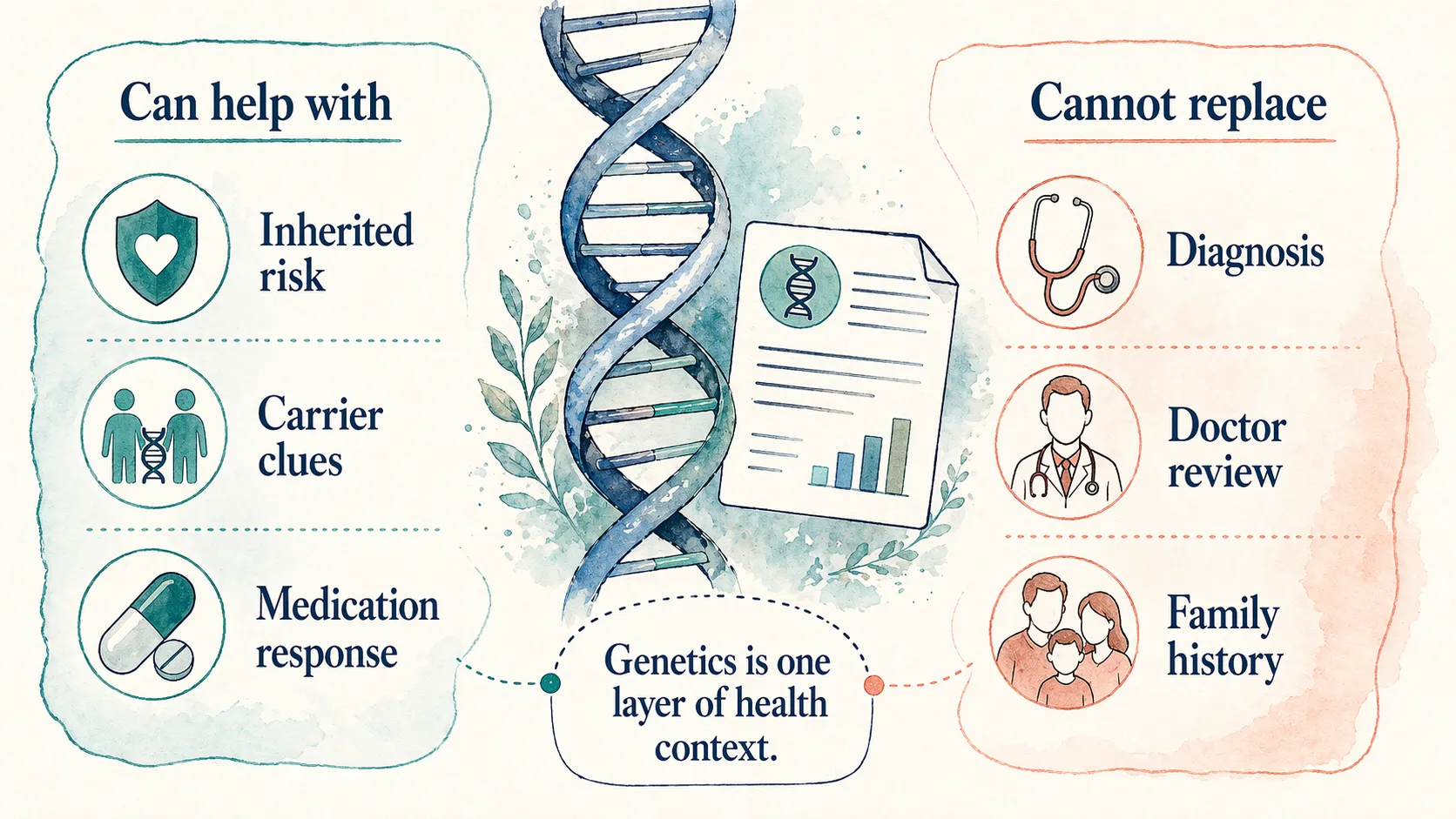
Health DNA explainer showing what consumer tests can help with and what they cannot replace.
Health DNA reports add context, but they do not replace clinical diagnosis, medical review, or family history evaluation.

The limits look different for each risk class. Treating “DTC kit” and “clinical-grade panel” as the same kind of test is where most misunderstandings start.

What DTC statistical-association tests can do

  • Flag broad risk patterns for common conditions like Type 2 diabetes, certain cancers, or cardiovascular conditions. The signal is probabilistic and population-level.
  • Surface useful carrier status for the conditions a kit’s selected-variant panel covers, with the caveat that a negative result only rules out the variants on that panel, not all carrier variants.
  • Provide pharmacogenetic context for a handful of variant–drug pairs.
  • Estimate biological age (epigenetic tests like TruDiagnostic) or quantify lifestyle effects on aging trajectory.
  • Establish a baseline raw dataset you can revisit as research grows.

What DTC tests cannot do

  • They cannot diagnose a disease. A flagged variant prompts a conversation with a healthcare provider.
  • They cannot cover the full variant landscape for a given condition. 23andMe’s BRCA report includes 44 variants; the FDA notes that’s out of more than 4,000 known BRCA1/BRCA2 variants linked to cancer risk. The same logic applies to most selected-variant panels.
  • They cannot replace clinical-grade testing for a confirmed medical question. A negative DTC result is not a negative clinical result.
  • They cannot escape false positives. Peer-reviewed work in Genetics in Medicine documented false-positive results from DTC raw-data and third-party interpretation, especially for clinically relevant variants sent for confirmation. Clinical-lab confirmation is the appropriate next step before any decision changes.

What clinical-grade monogenic tests can do that DTC kits cannot

  • Analyze the relevant genes more comprehensively than selected-variant DTC kits, and interpret pathogenic or likely pathogenic variants under ACMG/AMP-aligned criteria, with stated assay limitations.
  • Provide a clinically actionable result a physician can build a screening or surveillance plan around.
  • Run inside an evidence chain (CLIA + CAP lab, ACMG-aligned variant interpretation, genetic counselor handoff) designed for medical decision-making.

If a clinical decision rests on the answer, the clinical-grade pathway is the correct one.

When to talk to a genetic counselor

A genetic counselor is the right next step when a result could affect a medical decision, during pregnancy planning, with a serious family-history pattern, or whenever a DTC result raises more questions than it answers. The CDC’s genetic counseling guidance treats counseling as the appropriate gate between a screening result and clinical follow-up. Most clinical-grade labs (Color, Invitae) include counseling with the panel; for a DTC result, finding a counselor through the National Society of Genetic Counselors directory is the standard path. The counselor translates a probabilistic or selected-variant result into clinical context: what to confirm, what to ignore, what to share with family, and whether confirmatory testing is appropriate.

Privacy and your DNA data

Genetic data is sensitive in ways credit-card data is not. The bankruptcy and acquisition cycle in this category over the past two years has made privacy review a non-optional step.

  • 23andMe under TTAM ownership. Following the March 2025 Chapter 11 filing, TTAM Research Institute closed the asset purchase in July 2025. The privacy policy was re-issued under TTAM. Review the current policy and confirm your deletion and data-sharing preferences. Existing accounts carried over to the new ownership; pay attention to data retention, third-party research opt-in or opt-out controls, and law-enforcement access policies.
  • Clinical-grade labs (Color, Invitae/Labcorp). Operate under HIPAA as covered entities, which is a meaningfully different privacy regime than the DTC framework most consumer kits use. Deletion and data-sharing rights are governed by HIPAA and lab-specific policies.
  • DTC labs (Sequencing.com, SelfDecode, TellMeGen, TruDiagnostic, LifeDNA). Operate outside HIPAA for the DTC product line. Confirm the posted privacy policy with an access date, check for explicit “data is not sold” language, and confirm deletion rights and law-enforcement-access framing before submitting a sample. Upload scenarios involve a second company processing your genetic information. Review that company’s policy too.
  • Insurance and employment protections. The Genetic Information Nondiscrimination Act (GINA) covers health insurance and employment, but does not cover life, disability, or long-term-care insurance. That distinction matters when deciding whether to test.

Our most private DNA tests guide covers the per-company privacy comparison in more depth.

How we evaluated these tests

We weight regulatory precision, evidence chain, and use-case fit ahead of feature counts.

  • Precise FDA terminology. PMA approval, De Novo authorization, 510(k) clearance, and no FDA action carry different evidentiary bars. We use the exact filing terms (DEN160026, K223597, K193492, DEN140044) rather than a generic “FDA cleared.”
  • Risk-class separation. Monogenic, polygenic, and statistical-association results report different things; we don’t blur them.
  • Evidence chain per pick. Per Know Your DNA’s Hard Rule, every pick is backed either by a sibling KYD review (documented editorial evaluation) or by Tier 3 third-party reporting. For Color, Invitae, and the at-home lab adjacencies, we lean on Tier 3 third-party validation pending direct walk-throughs.
  • Privacy review. Each company’s posted privacy policy is reviewed with an access date; marketing copy alone never validates a privacy claim.
  • Pricing currency. Prices are access-date stamped to May 2026 because pricing in this segment changes monthly.

We did not include affiliate-marketing roundups, brand-sponsored reviews, or repackaged press releases.

The bottom line

Match the test to the question.

  • DTC disease-risk plus PGx plus selected carrier reports → 23andMe, the only consumer kit with FDA-authorized and FDA-cleared reports.
  • Hereditary cancer with a clinical evidence chain → Color Health.
  • Carrier screening with insurance coverage potential → Invitae (now under Labcorp).
  • Focused pharmacogenomic reporting → ClarityX DNA.
  • Deepest raw data to revisit over time → Sequencing.com.
  • Interpretation over an existing genotyping file → SelfDecode.
  • International DTC availability → TellMeGen.
  • Biological age and lifestyle tracking → TruDiagnostic.
  • Wellness and lifestyle reports → LifeDNA.
  • Biomarker context alongside DNA → InsideTracker (not a DNA test).

If you want one direct next step:

How We Evaluated Health DNA Tests

We weight regulatory precision, evidence chain, and use-case fit ahead of feature counts.

  • We use precise FDA terminology (PMA, De Novo, 510(k), or none), not blanket 'FDA cleared', because the categories carry different evidentiary bars
  • We separate the three risk classes (monogenic, polygenic, statistical-association) because a DTC kit and a clinical-grade panel report fundamentally different things
  • Per Know Your DNA's Hard Rule, every pick is backed either by a sibling KYD review (documented editorial evaluation) or by Tier 3 third-party reporting
  • Privacy is evaluated against each company's posted privacy policy with an access date, plus EFF or journalist analysis where available
  • Pricing is access-date stamped because this segment changes monthly

Common Questions

What is the difference between a clinical-grade genetic test and a DTC kit?

A clinical-grade test (Color, Invitae) is physician-ordered, uses an ACMG/AMP-aligned variant interpretation framework, runs in a CLIA/CAP-certified lab, often comes with genetic counseling, and is frequently covered by insurance. A DTC kit (23andMe, TellMeGen) is sold directly to consumers, typically uses a genotyping chip that reads selected positions, and reports limited variant panels for screening, not diagnosis. The reporting language, variant lists, and follow-up pathways are different at each tier.

Is AncestryDNA Health still available?

No. Ancestry sunset its AncestryHealth Core and AncestryHealth Plus products in early 2021 and now sells only the ancestry-only kit. If you want a similar DTC health experience, 23andMe is the canonical replacement. If you want clinical-grade carrier or cancer screening (what AncestryHealth Plus tried to be), Color or Invitae are the closest successors.

Can I use insurance for a DNA health test?

DTC kits are out-of-pocket. Clinical-grade panels from Color, Invitae, and similar labs are frequently covered by insurance when ordered by a physician and tied to a documented family history or clinical indication. Coverage depends on your plan, your physician's order, and the medical necessity criteria. If your clinical situation might justify coverage, ask your doctor to order testing through Labcorp/Invitae or a comparable clinical-grade service rather than buying a consumer kit.

What is a polygenic risk score, and should I trust one from a DTC kit?

A polygenic risk score (PRS) adds up the small effects of many genetic variants to estimate your statistical likelihood of developing a condition compared with the population average. DTC kits often report PRS-like results for common conditions like heart disease or Type 2 diabetes. These scores are probabilistic and correlational, not deterministic. The National Human Genome Research Institute notes that PRS explains relative risk rather than baseline or timeframe, and shows correlation rather than causation. A high score is a conversation starter with your doctor, not a diagnosis.

Are 23andMe health reports still available after the bankruptcy?

Yes. TTAM Research Institute completed the purchase of 23andMe's assets in July 2025, and the consumer health and ancestry services continue to operate. If data privacy is a priority, review the current data handling policies and privacy statement under the new ownership before submitting a sample.

Can a consumer DNA test diagnose a disease?

No. DTC genetic health reports are screening tools, not diagnostic tests. A flagged variant is a starting point for a conversation with a healthcare provider, not a confirmed condition. Clinical genetic tests, by contrast, can sometimes establish or confirm a hereditary diagnosis when interpreted in the right clinical context, but those results still need a physician's review before any screening, prevention, or treatment decision.

When should I talk to a genetic counselor about my results?

When a result could affect medical decisions, during pregnancy planning, if you see serious family-history patterns, or whenever a direct-to-consumer result raises more questions than it answers. The CDC and ACMG both treat counseling as the appropriate gate between a screening result and any clinical follow-up.

Is epigenetic testing the same as genetic testing for health?

No. Genetic tests look at your fixed DNA sequence for risk variants. Epigenetic tests like TruDiagnostic measure DNA methylation patterns, which change over time based on lifestyle, environment, and aging. They measure biological age and pace of aging, not inherited disease risk.

Updated May 20, 2026

18 sources cited

Updated on May 20, 2026

  1. 1.
    Direct-to-Consumer Genetic Testing FAQ for Healthcare Professionals. National Human Genome Research Institute. https://www.genome.gov/For-Health-Professionals/Provider-Genomics-Education-Resources/Healthcare-Provider-Direct-to-Consumer-Genetic-Testing-FAQ
  2. 2.
    What are the benefits and risks of direct-to-consumer genetic testing? MedlinePlus Genetics. https://medlineplus.gov/genetics/understanding/dtcgenetictesting/dtcrisksbenefits/
  3. 3.
    Genetic Testing. Centers for Disease Control and Prevention. https://www.cdc.gov/genomics-and-health/counseling-testing/genetic-testing.html
  4. 4.
    DEN160026 Decision Summary: 23andMe Personal Genome Service Genetic Health Risk Test. U.S. Food and Drug Administration. https://www.accessdata.fda.gov/cdrh_docs/reviews/den160026.pdf
  5. 5.
    K223597 Decision Summary: 23andMe PGS Genetic Health Risk Report for BRCA1/BRCA2 (Selected Variants). U.S. Food and Drug Administration. https://www.accessdata.fda.gov/cdrh_docs/reviews/K223597.pdf
  6. 6.
    K193492 510(k) Premarket Notification: 23andMe Personal Genome Service Pharmacogenetic Reports. U.S. Food and Drug Administration. https://www.accessdata.fda.gov/scripts/cdrh/cfdocs/cfpmn/pmn.cfm?id=K193492
  7. 7.
    DEN140044 Decision Summary: 23andMe Personal Genome Service Carrier Screening Test for Bloom Syndrome. U.S. Food and Drug Administration. https://www.accessdata.fda.gov/cdrh_docs/reviews/den140044.pdf
  8. 8.
    BRCA Gene Changes: Cancer Risk and Genetic Testing Fact Sheet. National Cancer Institute. https://www.cancer.gov/about-cancer/causes-prevention/genetics/brca-fact-sheet
  9. 9.
    Screening for autosomal recessive and X-linked conditions during pregnancy and preconception: a practice resource of the American College of Medical Genetics and Genomics. Genetics in Medicine. https://www.nature.com/articles/s41436-021-01203-z
  10. 10.
    Polygenic Risk Scores. National Human Genome Research Institute. https://www.genome.gov/Health/Genomics-and-Medicine/Polygenic-risk-scores
  11. 11.
    The Cost of Sequencing a Human Genome. National Human Genome Research Institute. https://www.genome.gov/about-genomics/fact-sheets/Sequencing-Human-Genome-cost
  12. 12.
    Epigenetics, Health, and Disease. Centers for Disease Control and Prevention. https://www.cdc.gov/genomics-and-health/epigenetics/index.html
  13. 13.
    Age estimated by changes to DNA can help predict health outcomes, mortality in older adults. National Institute on Aging. https://www.nia.nih.gov/news/age-estimated-changes-dna-can-help-predict-health-outcomes-mortality-older-adults
  14. 14.
    False-positive results released by direct-to-consumer genetic tests highlight the importance of clinical confirmation testing for appropriate patient care. Genetics in Medicine. https://www.nature.com/articles/gim201838
  15. 15.
    Genetic Counseling. Centers for Disease Control and Prevention. https://www.cdc.gov/genomics-and-health/counseling-testing/genetic-counseling.html
  16. 16.
    23andMe Personalized Genetic Reports List (accessed May 20, 2026). 23andMe. https://www.23andme.com/dna-reports-list/
  17. 17.
    Whole Genome Sequencing (accessed May 20, 2026). Sequencing.com. https://sequencing.com/our-difference/whole-genome-sequencing
  18. 18.
    TruAge Epigenetic Testing (accessed May 20, 2026). TruDiagnostic. https://www.trudiagnostic.com/truage
Katrina Canlas

Written by

Katrina Canlas

KC Canlas is an experienced content writer for Know Your DNA. She combines her passion for storytelling with a deep understanding of DNA and genetics....