
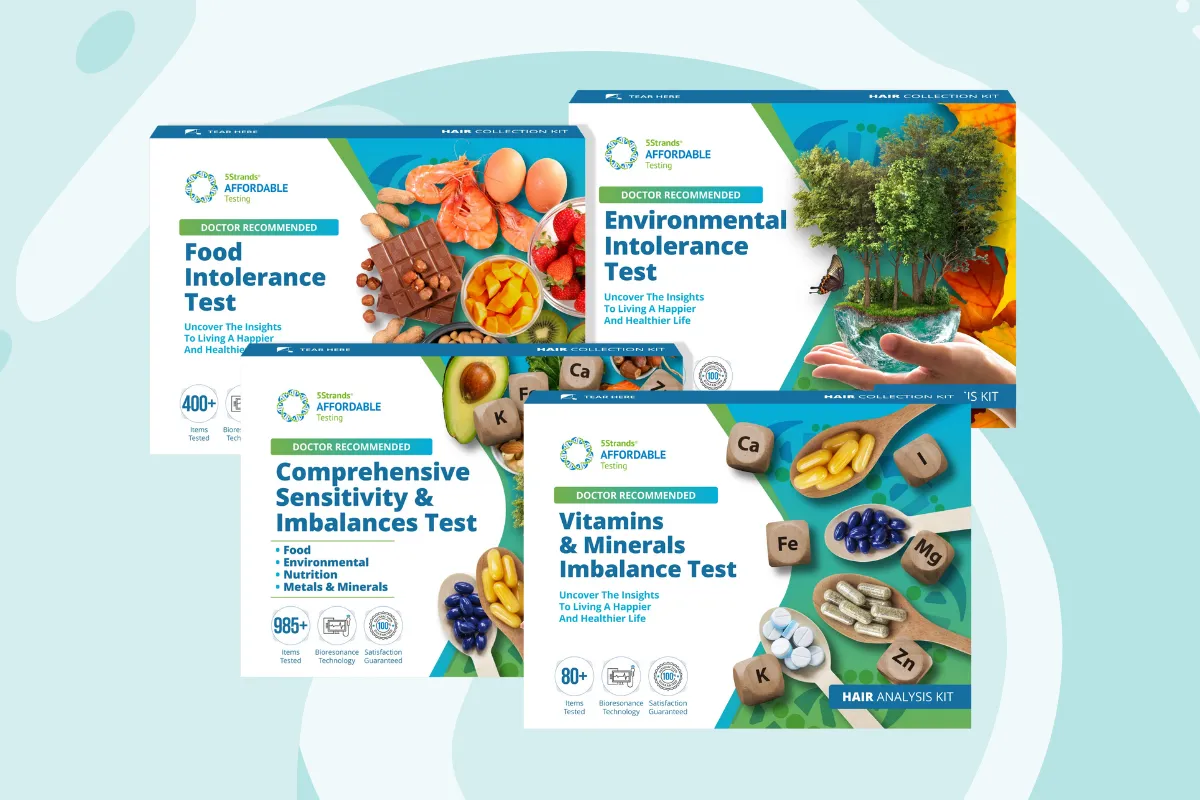


5Strands sells hair-based intolerance screening kits priced from $88 to $188. You mail in a small hair sample, and the lab uses bioresonance technology to test it against 600+ food and environmental items. Results arrive in 7 to 10 business days. This is not a DNA test and not a medical diagnosis.
That distinction shapes everything else in this review. Below, we cover what 5Strands tests, how bioresonance works, and who this product actually fits.
Key Takeaways
Here is what matters before you buy.
- Not a DNA test. 5Strands uses bioresonance hair analysis, not genotyping, sequencing, or antibody testing.
- Pricing runs $88 to $188. The basic food intolerance kit is $88. Bundles adding environmental, nutritional, and metals screening cost $148 or $188.
- Screens 350+ food items and 200+ environmental items. Categories include grains, dairy, fruits, metals, molds, fabrics, and pet dander.
- Turnaround is 7 to 10 business days from the day the lab receives your sample.
- No FDA authorization. The AAAAI does not recognize bioresonance as a validated method for diagnosing allergies or intolerances.
Our Verdict
5Strands fills a narrow role. It gives you a structured elimination list for under $100, which is cheaper than a clinical IgE panel that typically runs $200 to $1,000 out of pocket. The tradeoff is that bioresonance lacks the peer-reviewed validation behind blood-based allergy testing.
If you buy it, treat the results as hypotheses to test through your own elimination process. The report ranks items as high, moderate, or low intolerance, but those rankings reflect energy-frequency readings, not immune-system measurements. That is a real limitation.
What You Get
5Strands sells three main test packages. All use the same bioresonance hair-analysis method and the same mail-in process.
Test Packages and Pricing
The Food Intolerance Test ($88) screens your hair sample against 350+ food items. Categories cover grains, dairy, seafood, fruits, vegetables, additives, and preservatives. Each item is ranked as high, moderate, or low intolerance.
The Food and Environmental Bundle ($148) adds 200+ environmental items. These include common triggers like mold, pollen, dust mites, pet dander, cleaning chemicals, and fabrics.
The Deluxe Bundle ($188) includes everything above plus a nutritional imbalance panel covering vitamins, minerals, fatty acids, and amino acids, along with a metals sensitivity screen for items like aluminum, lead, and mercury.
How Bioresonance Testing Works
You collect 10 to 15 strands of hair and mail them to the 5Strands lab using the included prepaid envelope. The lab exposes your sample to the electromagnetic frequencies associated with each test item and measures the response pattern.
Results appear in your online dashboard within 7 to 10 business days. The report suggests a 6-week elimination period for high-intolerance items. After that window, you reintroduce items one at a time to track symptom changes.
What This Method Is Not
Bioresonance does not measure IgE antibodies, IgG antibodies, or DNA. Clinical allergy testing uses blood draws to measure IgE-mediated immune responses. The AAAAI does not recognize bioresonance as a validated diagnostic method for food allergies or intolerances. The Cleveland Clinic distinguishes true food allergies (immune-mediated) from food intolerances (digestive), and neither category aligns with what bioresonance claims to measure.
Pros and Cons
Here is the practical tradeoff.
Pros
- Low entry cost: $88 for the basic food screen undercuts most clinical allergy panels
- Noninvasive: A small hair sample replaces blood draws or skin-prick tests
- Broad coverage: 350+ food items and 200+ environmental items in the deluxe package
- Structured output: The elimination-period framework gives you a clear next step
Cons
- No FDA authorization: Bioresonance is not cleared for diagnosing allergies or intolerances
- Thin scientific backing: Peer-reviewed evidence supporting bioresonance hair analysis is limited
- Misleading confidence: The report looks definitive, but the underlying method is exploratory
- Not genetic testing: Buyers expecting DNA-based health insights will not find them here
Who It Is Best For
If you have mild, recurring digestive symptoms and want a cheap starting point for elimination experiments, 5Strands gives you a structured list for $88. It fits people who already understand this is a screening tool and plan to validate results through dietary changes.
Skip it if your symptoms are severe or medically concerning. An allergist with access to validated IgE blood panels is the right path in those cases. If you want actual genetic health data, start with our best health DNA tests roundup instead.
The Bottom Line
5Strands is a $88 to $188 bioresonance screening tool that tests hair samples against 350+ food items and 200+ environmental triggers. It carries no FDA authorization and no peer-reviewed validation as a diagnostic method.
The value is in the structured elimination framework, not the precision of the readings. If that narrow use case fits your situation, the price is fair. If you need clinical answers, see a clinician first.